After School Martial Arts for Kids in Windham
After-school martial arts in Windham can give children and teens a structured way to practice discipline, focus, confidence, self-control, and respect. They build these habits by learning skills, listening to instructors, working with others, and persevering when a move takes practice. It offers more than physical activity.
Families often want an after-school activity that supports growth as well as movement. Martial arts can offer both: students practice skills while developing perseverance, coordination, and respect for others. The right fit depends on a child’s interests, so it helps to understand what training involves and how it may fit into everyday life. Renzo Gracie NH offers a Kids Jiu Jitsu Program in Windham, Manchester, and Exeter, with a welcoming, family-oriented approach. Here’s what to consider when choosing a class and how training can support children’s development.
Key Takeaways
- See how repeatable routines and gradual skill goals can help children practice persistence beyond class.
- Learn how partner drills and instructor guidance give kids opportunities to practice emotional control and respectful interaction.
- Use your child’s interests and individual needs to judge whether martial arts is a comfortable, motivating fit.
- Discover how a kids’ Jiu Jitsu program and a free introductory class can help families explore a first step.
Discipline and focus
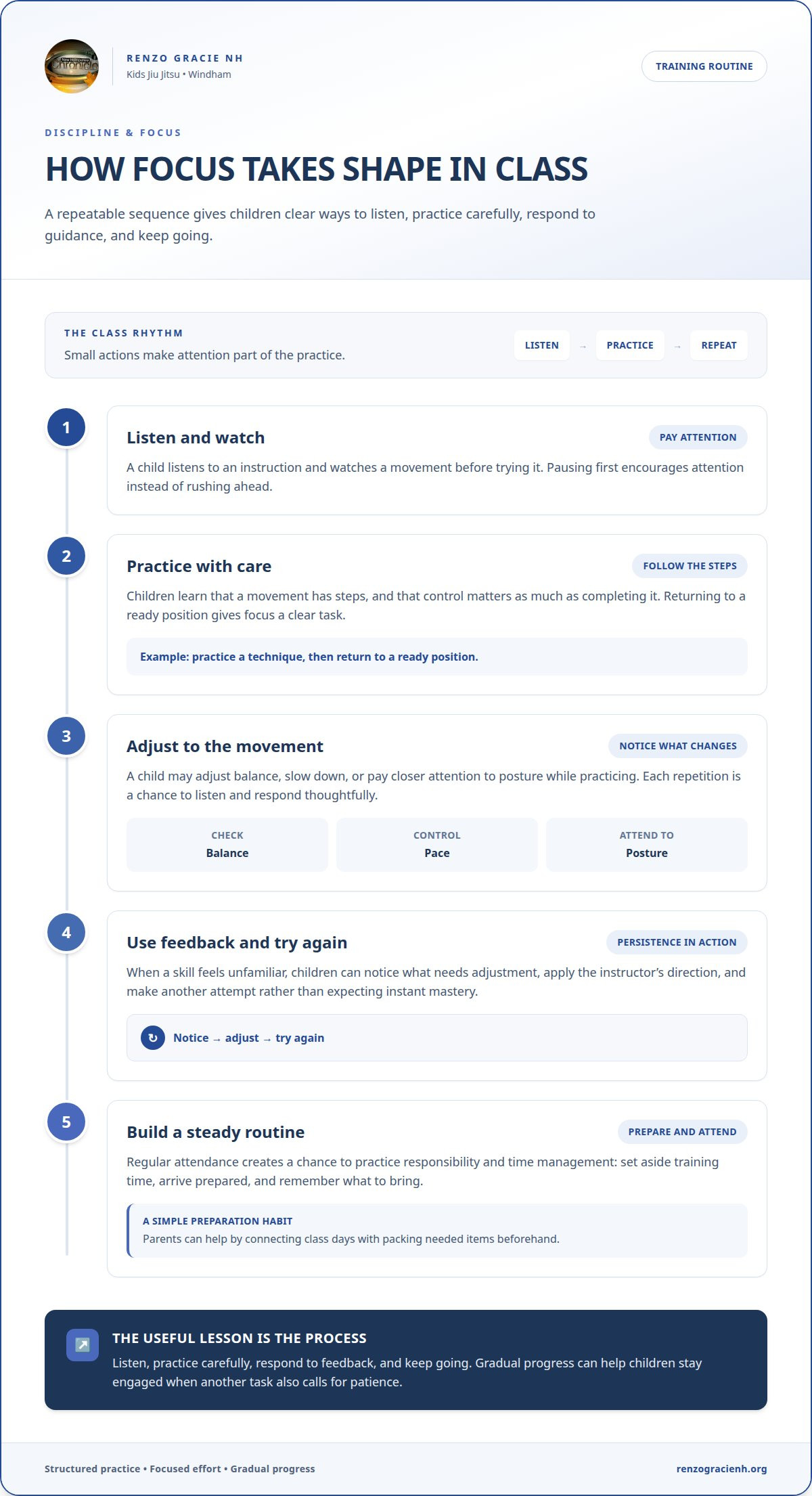
In martial arts training, discipline starts with small, repeatable actions. A child listens to an instruction, watches a movement, then practices it with care. That sequence encourages children to pause, pay attention, and follow through rather than rushing ahead. For example, returning to a ready position after practicing a technique gives focus a clear task. Repeating this process makes concentration part of the training routine, not just a reminder from an adult.
Technique also gives discipline a practical purpose. Children learn that a movement has steps, and that control matters as much as completing it. They may need to adjust their balance, try again, or slow down to follow the instructor’s direction. This kind of structured practice can help children develop concentration and mental clarity. It can also help them notice how their minds and bodies work together, such as staying attentive to posture while practicing a movement. Each repetition becomes an opportunity to listen and respond thoughtfully.
Progress takes persistence. A new skill may feel unfamiliar at first, and children build determination by returning to it rather than expecting instant mastery. Working toward higher belt levels or improving a particular skill can give practice a meaningful goal. The useful lesson is the process: notice what needs adjustment, apply the instruction, and try again. That approach can help children stay engaged when schoolwork or another challenging task also requires patience. Progress can be gradual, but every focused attempt helps make the next one more purposeful.
Regular attendance adds another useful routine. Setting aside time for training, arriving prepared, and remembering what to bring can help children practice responsibility and time management. Parents can support this habit by connecting class days with a simple preparation step, such as packing needed items beforehand. In Windham, families can look for clear instruction and progress built through practice. Discipline grows through manageable actions: listen, practice carefully, respond to feedback, and keep going.
Confidence, self-control, and respect
Confidence grows through participation, while self-control and respect shape how children use their skills. At Renzo Gracie NH, students practice individually and with others in a supportive, family-oriented environment.
Building Confidence
Students can build confidence by learning a technique, practicing it, and noticing their progress. A child who hesitates to try a movement may feel more assured after following an instructor’s example and completing the attempt. Small successes matter because they show that effort can lead to improvement. Look for instruction that recognizes learning and persistence, not only who performs a skill first or best.
Practicing Self-Control and Respect
Self-control means pausing, listening, and responding thoughtfully, especially when practicing with a partner. Children learn that their actions affect others, making respect part of training. An instructor’s guidance can help students manage frustration when a movement feels difficult and reset before trying again. Notice whether respectful interaction and controlled practice are part of the learning experience.
Martial arts can give children a structured way to work through frustration and strong emotions. For example, a student finding a technique challenging can pause, listen to feedback, and try again. That process offers practice in managing emotions rather than reacting immediately. The same pause-and-respond habit can be useful beyond class, such as during a disagreement or a difficult task.
Training with peers adds a social dimension. Taking turns, listening to an instructor, and cooperating during practice give children opportunities to build teamwork and camaraderie. Respect is visible in everyday choices, such as allowing a partner space to practice and paying attention when someone else receives guidance. A welcoming setting helps students participate without treating every interaction as a contest. Families can explore a supportive martial arts environment as they consider what kind of experience would suit their child.
Progress also gives children reasons to trust their own effort. When they remember a technique or approach a new challenge with greater composure, they can recognize a specific change in themselves. Encourage children to describe what they practiced, what felt challenging, and how they responded. This keeps confidence grounded in real actions while reinforcing self-control and consideration for others.
Kids martial arts in Windham
For families in Windham, New Hampshire, a kids’ martial arts class can combine movement, skill practice, and character-building. The key is choosing an activity and schedule that suit the child’s interests and the family’s after-school routine.
Windham Program Options
Compare the actual experience offered: a scheduled martial arts class teaches skills, while a full after-school program may also involve care or transportation. These are different arrangements. Before deciding, map out when the school day ends, travel needs, class timing, and pickup plans. A child who enjoys partner activities may prefer guided practice, while another may feel more comfortable starting with basic movements.
Safety, Credentials, and Class Ratios
Safety policies, instructor credentials, and student-to-instructor ratios vary by program; there is no single ratio that describes every Windham class. Look for clear instruction, age-appropriate practice, and active supervision during partner drills. For example, an instructor should explain how students take turns and control their movements before practice begins. These details help families understand how a class is organized.
Do Windham martial arts programs provide school pickup, transportation, or extended care? Martial arts instruction alone doesn’t mean those services are included. Pickup, transportation, and extended care are separate logistics, so families should distinguish them from class participation when planning an after-school routine.
Consider what a child wants to develop. Martial arts practice can help children build strength, endurance, flexibility, and coordination through repeated movement and technique practice. It can also emphasize avoiding confrontations and using nonviolent conflict resolution. For example, a child can learn to step back, communicate calmly, and seek help rather than turn a disagreement into a physical challenge. A good fit starts with the child’s interests and comfort; enthusiasm for learning makes it easier to stay engaged and practice consistently.
Which martial arts schools in Windham, Maine offer after-school programs?
While some searchers look for options in Maine, this section focuses on Windham, New Hampshire, as well as the surrounding area. Families in Windham, Manchester, or Exeter, New Hampshire can consider how after school martial arts Windham fits their child’s interests and their family’s daily routine.
Start by distinguishing martial arts instruction from a full after-school arrangement. A scheduled class does not automatically include school pickup, transportation, or extended care. Plan for those logistics, especially if school, home, and training are in different communities.
Use these practical points to assess whether a class fits your family:
- Location: Consider travel between your child’s school, home, and the training location.
- Program format: Clarify whether you’re considering martial arts instruction or a broader care arrangement.
- Child’s interests: Think about whether your child enjoys learning movement skills and practicing with others.
- Class structure: Look for clear instruction and active guidance during activities such as partner practice.
These distinctions help families in Windham, Manchester, and Exeter make a practical choice without assuming that a class also provides transportation or care. The child’s interest, travel needs, and family schedule all shape whether training fits comfortably into the week.
For families considering training in Windham, New Hampshire, explore a local martial arts option and consider how its location fits your routine.
Karate training emphasizes discipline, self-control, and concentration, which may help children develop focus for studying and classroom attention. For a family weighing an after-school class, these qualities can be part of the reason to consider karate alongside the child’s interests and routine. Ask what children practice and how the instruction reflects those aims, rather than assuming that every class will suit every child. The potential benefit is related to training, not a replacement for checking the program’s format and fit.
Martial arts often emphasize mindfulness and the connection between the mind and body, which may help children develop concentration and mental clarity. Families can consider whether this aspect of practice appeals to their child and ask how it appears during instruction. These possible outcomes may help inform a decision, but they do not establish that a class includes pickup, transportation, or extended care. Keeping the distinction between instruction and after-school arrangements clear can help families decide whether training works with the child’s interests and the family’s schedule.
Renzo Gracie NH: Kids Jiu Jitsu Program
Renzo Gracie NH offers a Kids Jiu Jitsu Program for families seeking structured martial arts training for children. Jiu Jitsu gives students an opportunity to learn techniques, practice with others, and develop discipline, confidence, and respect through continued participation. It can be a fit for a child who enjoys movement and learning practical skills in a guided setting.
A Free Introductory Class lets your child experience the training before you decide whether it feels like a good fit. Families who want to train together can also explore the Adult Jiu Jitsu Program. Choose the option that matches your family’s interests and the experience you want to share.
Contact Renzo Gracie NH to learn more about the Kids Jiu Jitsu Program and book a Free Introductory Class.
Choose a First Step That Fits Your Child
Turn your interest into a manageable plan. Talk with your child about what they would like to learn, then consider how a class could fit their after-school routine. A welcoming place to start gives them room to learn at their own pace.
For families exploring after-school martial arts in Windham, a first class can make the experience more familiar and help you decide whether the training feels right for your child. Renzo Gracie NH offers a Free Introductory Class so families can experience the setting before choosing what comes next.
Contact Renzo Gracie NH about classes and take the next step when your family is ready. Every student begins somewhere, and steady progress starts with showing up willing to learn.
Frequently Asked Questions
What ages can enroll in after-school martial arts classes in Windham?
Children and teens can explore martial arts; readiness depends on their interest and ability to follow instruction, take turns, and participate respectfully. Renzo Gracie NH offers a Kids Jiu Jitsu Program for young students in the Windham, Manchester, and Exeter area. Families can use the Free Introductory Class to see whether the training environment feels comfortable for their child.
Which martial arts styles do after-school programs in Windham teach?
One option mentioned is a kids’ Jiu Jitsu program.
How can families register for an after-school martial arts program in Windham, and are trial classes available?
A Free Introductory Class gives families a chance to experience the program.