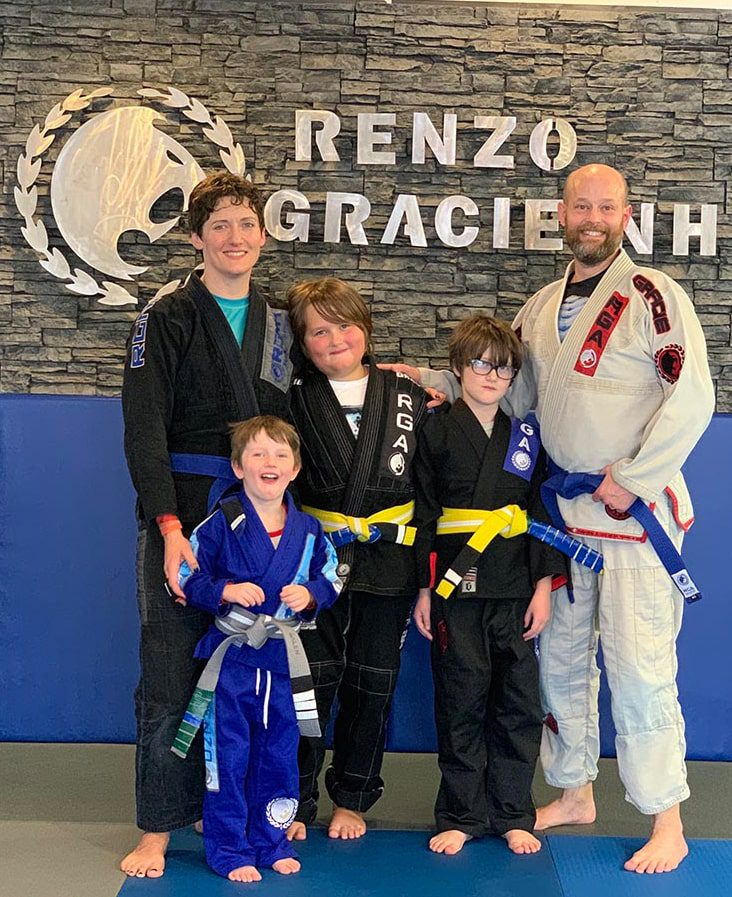
Martial Arts Classes for Families in Exeter
A first class doesn’t have to start with experience. Martial arts for families in Exeter can be a welcoming starting point for children, teens, and adults, and complete beginners can join without prior experience. The right class gives each family member room to learn at a comfortable pace.
It’s natural to want an activity that builds skills as well as confidence and focus. This guide explores what families can expect from martial arts classes in Exeter, with a closer look at kids’ Brazilian Jiu-Jitsu and how structured practice can support young learners. You’ll also learn what to consider when choosing a class and what a first step into training can look like.
Key Takeaways
- Compare classes by age group and learning approach to find a comfortable entry point for each family member.
- Look for structured practice that gives children opportunities to work on focus, respect, and steady progress.
- Explore how kids’ Brazilian Jiu-Jitsu introduces young learners to martial arts through guided practice.
- Consider a free introductory class as a practical first step toward trying training for yourself or your child.
Martial arts classes for children, teens, and adults
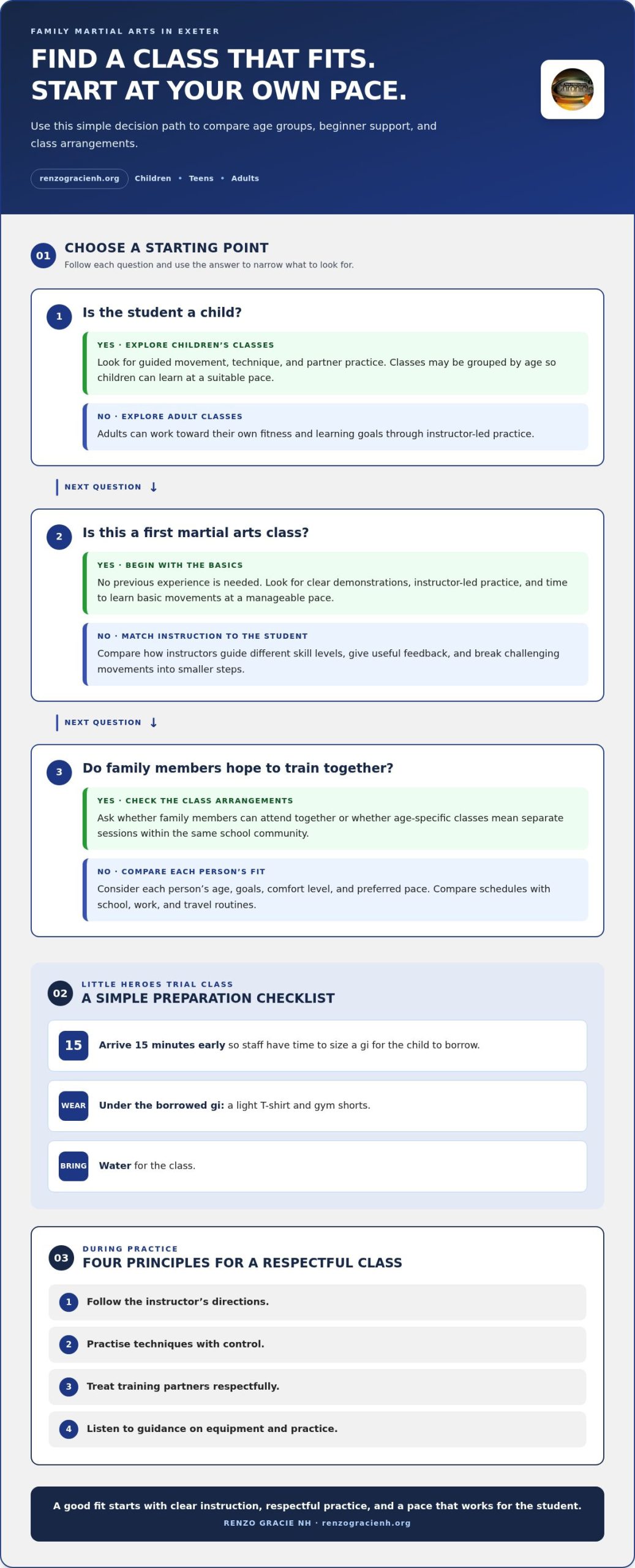
Martial arts for families in Exeter can include Brazilian Jiu-Jitsu, with options for children and adults. Complete beginners can start without previous experience, learning basic movements through instructor-led practice. Classes may group students by age, so family members can develop skills at a pace that suits them.
Children’s classes introduce movement and partner practice, while adults can work toward their own fitness and learning goals. Brazilian Jiu-Jitsu is one style families can explore. To find a suitable school, consider the age groups taught, how instructors guide beginners, and whether family members can train together or attend separate classes.
Families exploring martial arts for families in Exeter can also make the first visit easier with a little planning. A free introductory class offers a chance to experience instruction before choosing whether to continue. Plan the route and parking before leaving, and allow time to arrive without rushing. Compare class locations and schedules with the family’s usual school, work, and travel routines.
Beginner Brazilian Jiu-Jitsu for Children
Beginner Brazilian Jiu-Jitsu introduces children to movement, technique, and partner practice through guided instruction. During a Little Heroes trial class, arrive 15 minutes early so staff can size a gi to borrow. Children should wear a light T-shirt and gym shorts under the gi, and bring water. These simple steps help families prepare for the class.
Family Class Safety and Equipment
Follow the instructor’s directions, practise techniques with control, and treat training partners respectfully. For the Little Heroes trial, children wear the borrowed gi over a light T-shirt and gym shorts and bring water. Listen to the instructor’s guidance on equipment and practice throughout class.
A separate consideration when comparing activities is how uncommon professional league selection is for children who play team sports. The page states that an average of 168 children are drafted into professional leagues for every 1 million U.S. children ages 8-12 who play team sports, and gives the proportion of children drafted into professional leagues as 0.00016%. These figures provide context, but families can choose classes for learning, enjoyment, and fitness rather than professional outcomes.
Confidence, discipline, and focus
A structured class gives children and adults clear tasks to practise and improve. Remembering a movement sequence or following a partner drill makes progress easier to see.
Fitness and Confidence Benefits
Martial arts combines movement, technique, and focus, so students can develop fitness while learning. A beginner might practise a basic movement, repeat it, and apply the instructor’s feedback. That visible progress can build confidence through effort rather than comparison with others.
For children, discipline can mean listening to instructions, taking turns, and focusing on the next drill. Adults may value the concentration needed to learn a technique after a busy day. Look for classes where instructors explain activities clearly and students have time to practise at a manageable pace.
Personal Growth and Self-Defense
Self-belief grows through repeated chances to try, adjust, and keep going. A student struggling to remember a sequence, for example, can practise each movement separately before joining the full drill. This process supports patience and perseverance in training, at school, and at work.
Self-defense instruction can introduce practical skills alongside awareness, control, and respect for training partners. It cannot promise that a student will prevent every threat. Look for responsible teaching that emphasizes controlled practice, and make sure beginners understand how to follow directions before attempting unfamiliar movements.
To explore a structured approach to Brazilian Jiu-Jitsu, families can review Brazilian Jiu-Jitsu training as one possible next step.
Instruction for different ages and skill levels
Good instruction gives students a clear next step, whether they’re new or experienced. In Exeter, families can look for classes that support age-appropriate learning and individual progress.
Watch how instructors demonstrate a skill, explain it, and guide practice. A child learning a movement might practise it slowly before using it in a partner drill. Teens and adults may be ready for more complex sequences, but beginners still need clear explanations and time to build skills gradually.
When choosing a martial arts school in Exeter, look for age-appropriate teaching, respectful communication, and support for different skill levels. Notice whether instructions are clear and students receive useful feedback during class.
An instructor needs to know both the technique and how to teach it. Look for information about their martial arts background and experience with the age group your family member would join. Effective teaching breaks challenging movements into smaller steps instead of expecting students to master them immediately.
Consider background checks separately when evaluating a school. Review its stated screening practices rather than assuming a title or training history explains them. Also notice how instructors supervise practice, help students who need support, and set expectations for respectful behavior. These details offer practical insight into the learning environment.
Families hoping to share martial arts as family time can compare class arrangements alongside teaching style. Some family members may train in age-specific classes while building skills within the same school community. Consider each person’s goals, comfort level, and preferred pace, then choose instruction that supports steady learning and character development without treating beginners as though they should already know the movements.
Kids’ Brazilian Jiu-Jitsu
Brazilian Jiu-Jitsu teaches grappling, positioning, and control, often with practice on the ground. Children can explore these ideas through guided movement and partner drills, such as moving from one position to another. The focus is on learning technique, not relying on size or strength alone.
Good teaching breaks unfamiliar movements into manageable steps. An instructor might demonstrate a movement, have students practise it slowly, then offer feedback. Children learn to listen, take turns, and work respectfully with partners. Parents can look for clear explanations and practice suited to the group’s age and experience.
New students don’t need to know the techniques before they arrive. They can follow demonstrations, learn class routines, and ask for help when a movement feels unfamiliar. Progress comes through repetition: a child may learn a position first, then practise moving between positions. This gradual approach gives beginners a clear starting point.
Before choosing a program, consider what your child wants from an academy. A child who enjoys movement and problem-solving may like learning how position and timing affect a partner drill. Consider whether the class supports respectful practice and steady participation to help decide if the teaching approach suits your child.
Brazilian Jiu-Jitsu can offer children a structured way to develop skills, focus, and confidence through practice with other members. The clearest takeaway is to look beyond the style’s name: notice how instructors explain techniques, guide partner work, and help beginners participate. To explore a kids’ Brazilian Jiu-Jitsu class, take the next step and arrange an introduction.
Renzo Gracie NH: Adult Jiu Jitsu Program
Renzo Gracie NH is a next step for Exeter adults who want to begin Brazilian Jiu-Jitsu through a dedicated Adult Jiu Jitsu Program. Families can also explore the Kids Jiu Jitsu Program, making it possible for adults and children to pursue training within the same academy community. A Free Introductory Class offers a practical way to experience instruction before deciding whether to continue. The right time to start is when you’re ready to learn, practise consistently, and build skills at your own pace. The academy also provides Law Enforcement Jiu-Jitsu Training for that professional audience. For a welcoming first step, visit Renzo Gracie NH to learn about its introductory class.
Take the First Step Toward Training Together
Choosing martial arts for families in Exeter can start a shared routine while each person follows individual goals and progress. Decide what matters most to your household, whether that’s a new challenge for an adult, a positive activity for a child, or training connected to professional duties. Then explore the class that fits and experience what getting started is like.
Renzo Gracie NH offers an Adult Jiu Jitsu Program, a Kids Jiu Jitsu Program, and Law Enforcement Jiu-Jitsu Training. Each offers a different starting point, so the whole family doesn’t need to follow the same path. Begin by showing up, learning, and returning to practise.
If you’re ready to explore your next step, contact Renzo Gracie NH. Start at your own pace, and let each class be an opportunity to grow.
Frequently Asked Questions
What are the age requirements for family martial arts classes in Exeter?
Exeter programs include separate Jiu-Jitsu instruction for children and adults, rather than one age cutoff for every student. A child would begin with the Kids Jiu Jitsu Program, while an adult can choose the Adult Jiu Jitsu Program. New students can use the free introductory class to experience the instruction and see which program fits their stage of life.
What are the class schedules and locations for Exeter family martial arts schools?
Renzo Gracie NH has academy locations in Exeter, Windham, and Manchester, New Hampshire, with classes on varied days and at varied times. Choose a location that fits your regular travel and school or work routines. Consider the drive and find a class time your family can attend consistently.