
Managing work stress with exercise Windham: ways to support mood and ease stress
Exercise can support the body’s response to stress, not just use up restless energy. For people managing work stress with exercise in Windham, starting with 10-15 minutes of light activity a day can be a practical first step. Regular movement may help you feel calmer, improve mood and clear your mind.
Work pressure can affect how you feel long after the workday ends. It makes sense to choose an activity that helps release tension and feels manageable, rather than adding another demanding task to your schedule.
Here, you’ll learn how movement can affect mood and the body’s stress response, how to choose activities you enjoy, and how to set realistic goals. Small steps count. The right routine is one you can fit into your life and return to regularly.
Key Takeaways
- Use movement as one practical way to release tension and support a calmer mood.
- Choose an activity you enjoy, then build a routine that fits your workday and life.
- Set a manageable starting goal and increase your activity gradually to support consistency.
- Learn how exercise can influence mood and the body’s response to stress.
1. How does exercise help with stress?
Aerobic exercise gives your body a practical way to use energy that can build during a demanding workday. Walking, jogging, cycling, and dancing raise your heart rate. A comfortable pace can make movement feel sustainable. Regular activity can help you relax, improve your mood, and support sleep, which stress and anxiety can disrupt.
Cardio may also influence how your body responds to pressure. With regular activity, the body’s systems can work together more effectively during stress, and resting heart rate and blood pressure may improve. It isn’t a quick fix: choose a routine you can repeat and notice how movement affects your focus and tension over time.
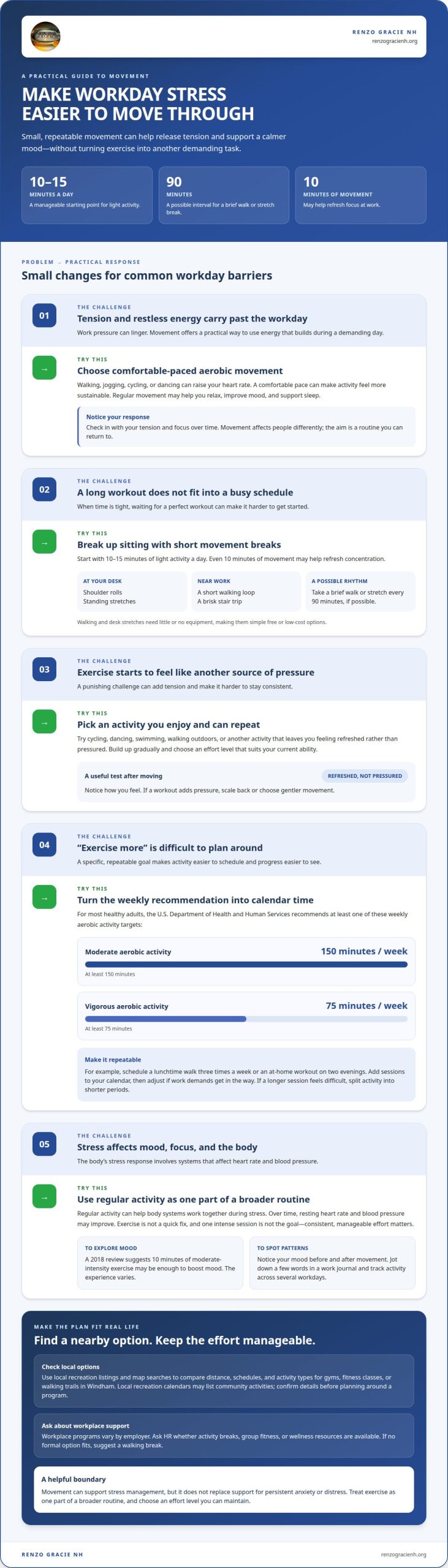
Start small. Light physical activity for 10-15 minutes a day can be an approachable first step. A walk around the block, a brisk trip up and down stairs, or quick desk stretches can break up prolonged sitting. A short activity break can also refresh concentration; even 10 minutes of movement may help you focus at work.
Quick workday options include shoulder rolls, standing stretches, and a short walking loop near your workplace. If possible, take a brief walk or stretch every 90 minutes to reset your body and attention.
To find gyms, fitness classes, or walking trails in Windham, use local recreation listings and map searches to identify nearby options. Compare distance, schedules, and activity types to find a good fit for your workday.
Walking and desk stretches need little or no equipment, making them simple options for free or low-cost exercise. Local recreation calendars may also list community activities. Confirm the details before planning around a program.
Workplace exercise programs vary by employer, whether in corporate offices or on active project sites managed by firms like Pronamic Construction Limited. Ask your HR team whether your workplace offers activity breaks, group fitness, or wellness resources. If no formal option fits, suggest a walking break.
Movement can help release stress, but it doesn’t replace support for persistent anxiety or distress. Treat exercise as one part of a broader routine, and choose an effort level you can maintain.
2. Choosing enjoyable activities and setting exercise goals
You’re more likely to make an enjoyable activity part of your routine. Try cycling, dancing, swimming, or walking outdoors, then notice which leaves you feeling refreshed rather than pressured. Enjoyment matters: a punishing challenge can add tension and make it harder to stay consistent.
For a weekly target, most healthy adults should get at least 150 minutes of moderate aerobic activity weekly, according to the U.S. Department of Health and Human Services. Most healthy adults should get at least 75 minutes of vigorous aerobic activity weekly, according to the U.S. Department of Health and Human Services. Choose an effort level that suits your current ability, and build up gradually if you’re starting out.
Turn the recommendation into a clear action. For example, schedule a lunchtime walk three times a week or an at-home workout on two evenings. Add the sessions to your calendar, then adjust the plan if work demands get in the way. A specific, repeatable goal makes progress easier to see than a broad intention to “exercise more.”
Regular physical activity can support mental health by reducing symptoms of anxiety and depression associated with high stress. It may also help build resilience: following a manageable plan gives you a steady practice for responding to everyday challenges. Outdoor activity offers a change of scene, while mindful movement encourages you to focus on your breathing and body position.
Choose a goal that leaves room for real life. If a longer session feels difficult, split activity into shorter periods and keep returning to your routine. If you’re drawn to coached, structured practice, the Adult Jiu Jitsu Program offers one way to engage with regular physical activity.
3. Endorphins and mood
Movement can affect mood through changes in brain chemicals, including endorphins. These chemicals are associated with feeling better after activity, though the experience varies. A 2018 review suggests that 10 minutes of moderate-intensity exercise may be enough to boost mood. A brisk walk between work tasks is one practical way to test how movement affects your own feeling.
Keep the effort manageable. For example, walk at a pace that raises your breathing while still allowing you to talk. Notice your mood before and after, then jot down a few words in a work journal. This can help you identify whether walking, cycling, or another activity supports your concentration and eases tension.
Exercise may also influence hormones involved in the body’s stress response. Regular activity can lower stress hormone levels over time, but it won’t switch off stress immediately. A consistent routine matters more than one intense session. Choose a familiar option, such as a lunchtime walk, and repeat it often enough to notice patterns.
Chronic stress can affect mood and make recovery feel harder. Physical activity can be one helpful part of managing that strain, but it isn’t a substitute for mental health care when distress persists. If a workout leaves you feeling more energized, use that response to shape a routine you can maintain. If it adds pressure, scale back or choose gentler movement.
For an American worker with a packed calendar, a short movement break may feel more realistic than a long workout. Try walking outside, taking the stairs, or stretching after a demanding meeting. Track your activity and mood across several workdays. That record can help you see which choices support your wellbeing and which changes are worth keeping.
4. Exercise and the body’s stress response
Stress activates several body systems, including those that affect heart rate and blood pressure. Regular physical activity can help these systems work together during a stress response. Over time, exercise can also lower resting heart rate and blood pressure, supporting a healthier baseline between demanding work moments.
Imagine a tense meeting followed by a brisk walk. Your breathing and heart rate rise during movement, then settle as you recover. That shift gives you a chance to notice physical tension and bring your attention back to the present. A gentle pace is enough to begin. Fitness grows through consistent effort, not one punishing workout.
Choose movement you can repeat regularly. Walking after work, dancing to music at home, or taking a strength-focused session can all provide structured activity. The best choice is one that fits your schedule without adding another source of pressure. Track how you feel before and after, then use that response to adjust your routine.
For a simple reset, pause after a stressful work block and take a short walk. Let your breathing find a steady rhythm, relax your shoulders, and return with a clearer sense of your stress levels. This won’t remove a difficult workload, but it can interrupt the cycle of sitting tensely and carrying that tension into your next task.
Exercise supports the body’s stress response; it doesn’t replace changes that address ongoing workplace strain. If structured movement helps you stay engaged, try a Free Introductory Class as a first step toward regular practice.
Renzo Gracie NH
Renzo Gracie NH offers structured Brazilian Jiu-Jitsu training as an active way to build a consistent movement routine. Adults looking for coached physical activity can use the Adult Jiu Jitsu Program to practice focus, discipline, and steady progress. Try a free introductory class to experience the training before deciding whether it fits your goals.
Jiu-Jitsu isn’t a substitute for aerobic exercise or mental health care, but structured practice may suit people who want to learn skills while moving. Families can also explore the Kids Jiu Jitsu Program, and Law Enforcement Jiu-Jitsu Training is designed for professional defensive tactics.
If you’re ready to explore whether training fits your routine, contact Renzo Gracie NH.
Make your next step one you can sustain
A routine should support your wellbeing, not become another work demand. For managing work stress with exercise in Windham, choose movement that fits your energy, schedule, and goals, then give yourself room to build consistency. Progress can mean finding an activity you look forward to and making space for it in everyday life.
Renzo Gracie NH offers structured Jiu-Jitsu programs for adults and children, along with Law Enforcement Jiu-Jitsu Training. These programs provide purposeful, guided physical practice. Your needs and circumstances will shape which activity feels like a good fit.
If you’d like to explore whether training could support your routine, contact Renzo Gracie NH today. Take the next step at your own pace and keep building a routine that works for you.
Frequently Asked Questions
How does exercise help with stress?
Exercise gives you a structured way to shift attention away from work pressure and reconnect with your body. For managing work stress with exercise in Windham, choose an activity that fits your energy after work, then notice how you feel afterward. That can help you decide whether to repeat the activity or try a different pace or movement.
What are effective exercises for managing work stress?
Walking, running, cycling, and dancing are accessible ways to raise your heart rate and break up a sedentary day. Choose what suits your preferences and setting: a walk may fit an outdoor break, while dancing at home can make movement feel less like another task. The most useful activity is one you can return to without making your schedule harder.
How often and how long should adults exercise to reduce stress?
The U.S. Department of Health and Human Services recommends that most healthy adults get at least 150 minutes of moderate aerobic activity weekly, or at least 75 minutes of vigorous aerobic activity weekly. You can distribute activity across your schedule rather than completing it all at once. For example, make a weekly calendar and reserve realistic windows that suit your workload and energy.
How does exercise help relieve work-related stress and anxiety?
Physical activity can improve mood and may reduce symptoms of mild anxiety and depression. It can also shift your focus after a demanding work situation. For example, take a walk after logging off and notice whether your breathing and thoughts settle. Exercise can support wellbeing, but persistent or overwhelming anxiety needs attention beyond a workout routine.
What precautions should people take before exercising to manage stress?
If you haven’t exercised for some time or have health concerns, speak with a healthcare professional before starting a new exercise plan. Begin at a manageable effort and build gradually, rather than turning a stressful week into an intense training challenge. Pay attention to how your body responds, and adjust your plan if the pace feels uncomfortable.
How can beginners build an exercise routine around a demanding work schedule?
Connect movement to an existing part of your day, such as walking after a regular meeting or stretching before leaving your desk. Add the activity to your calendar and choose a backup for especially busy days, such as a short walk near work. A flexible plan helps you maintain momentum without treating a missed session as failure.