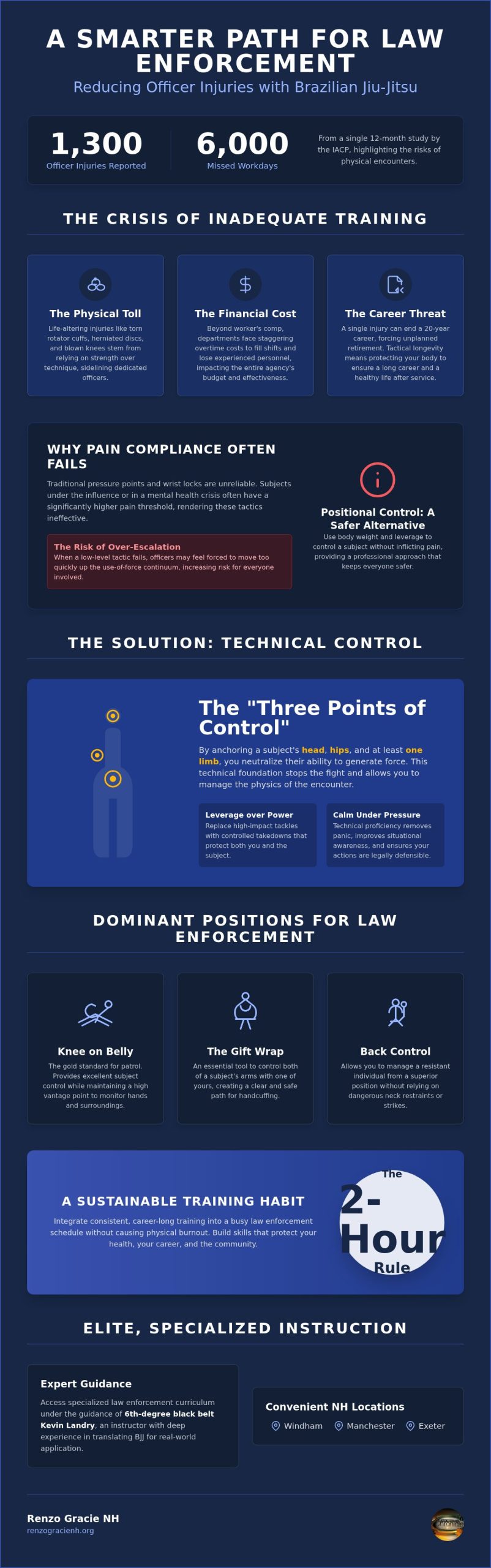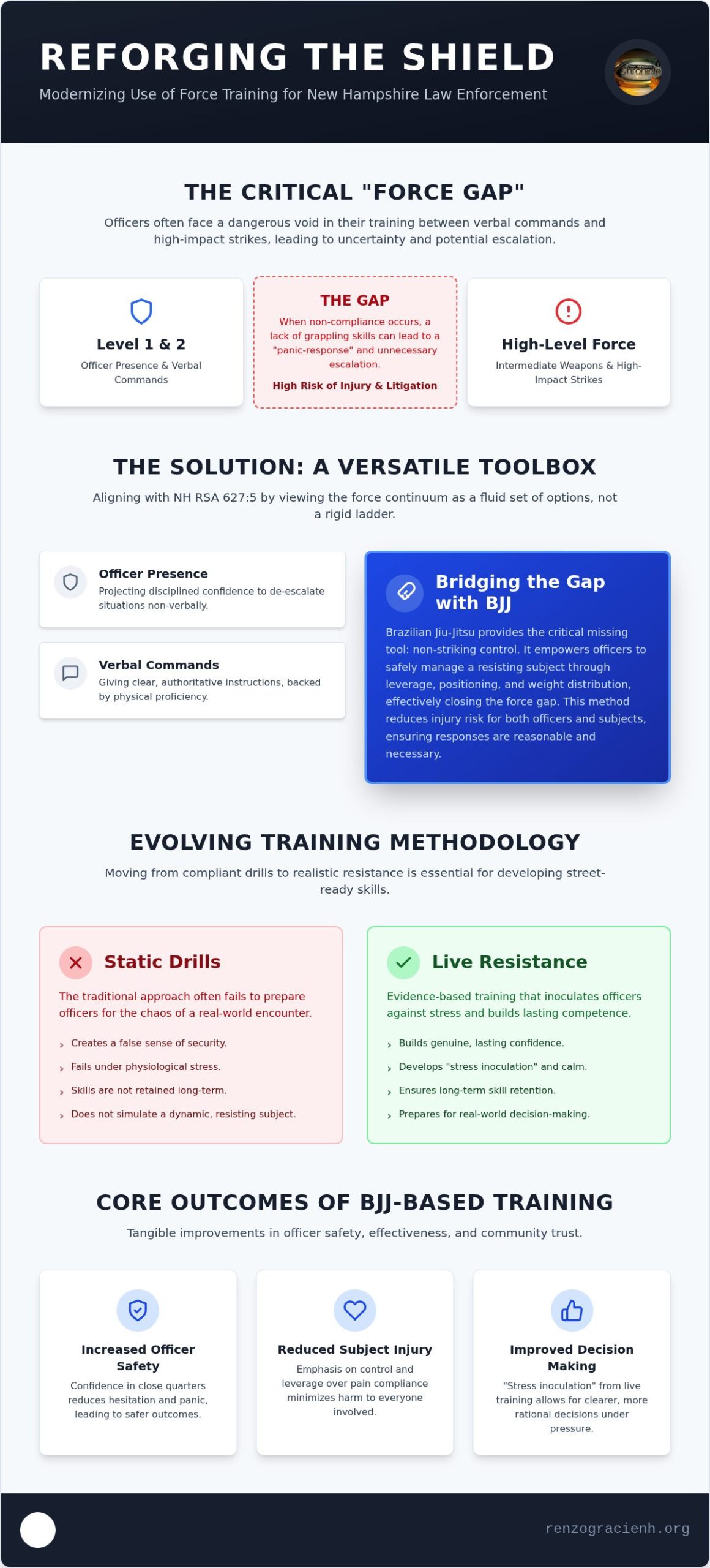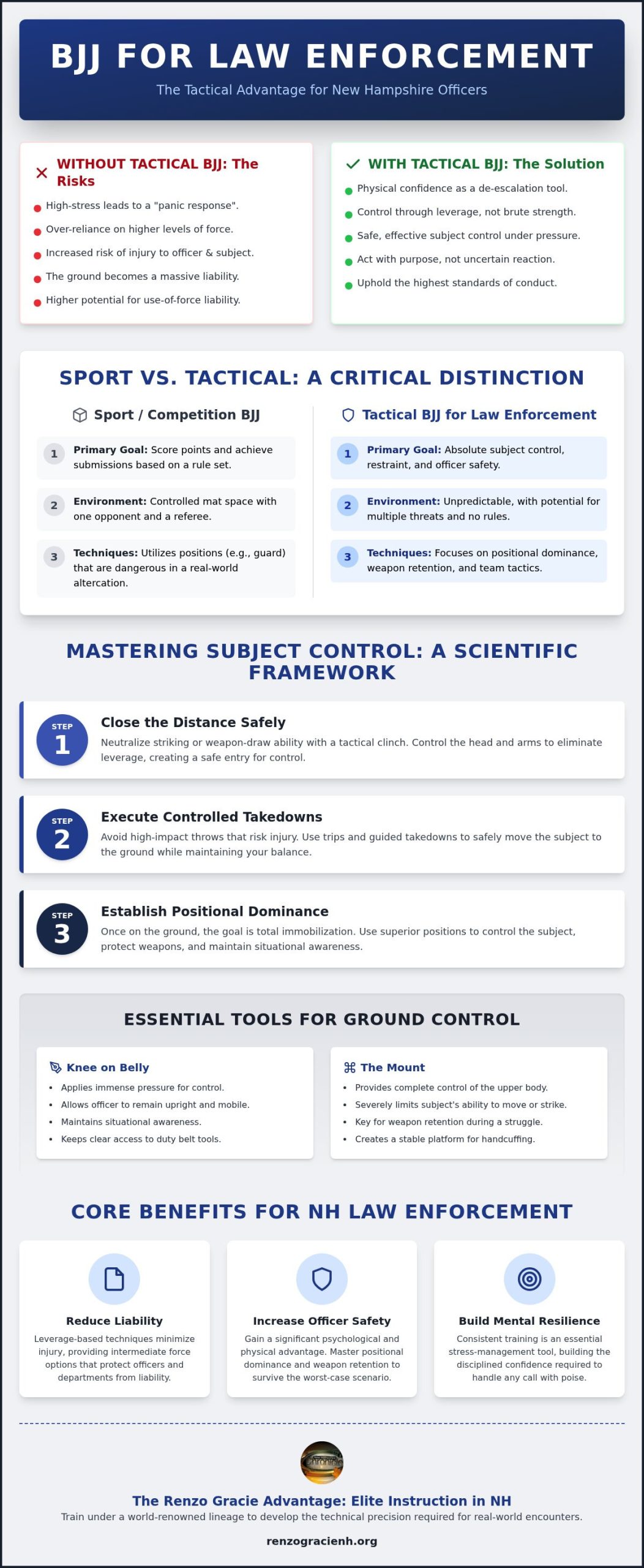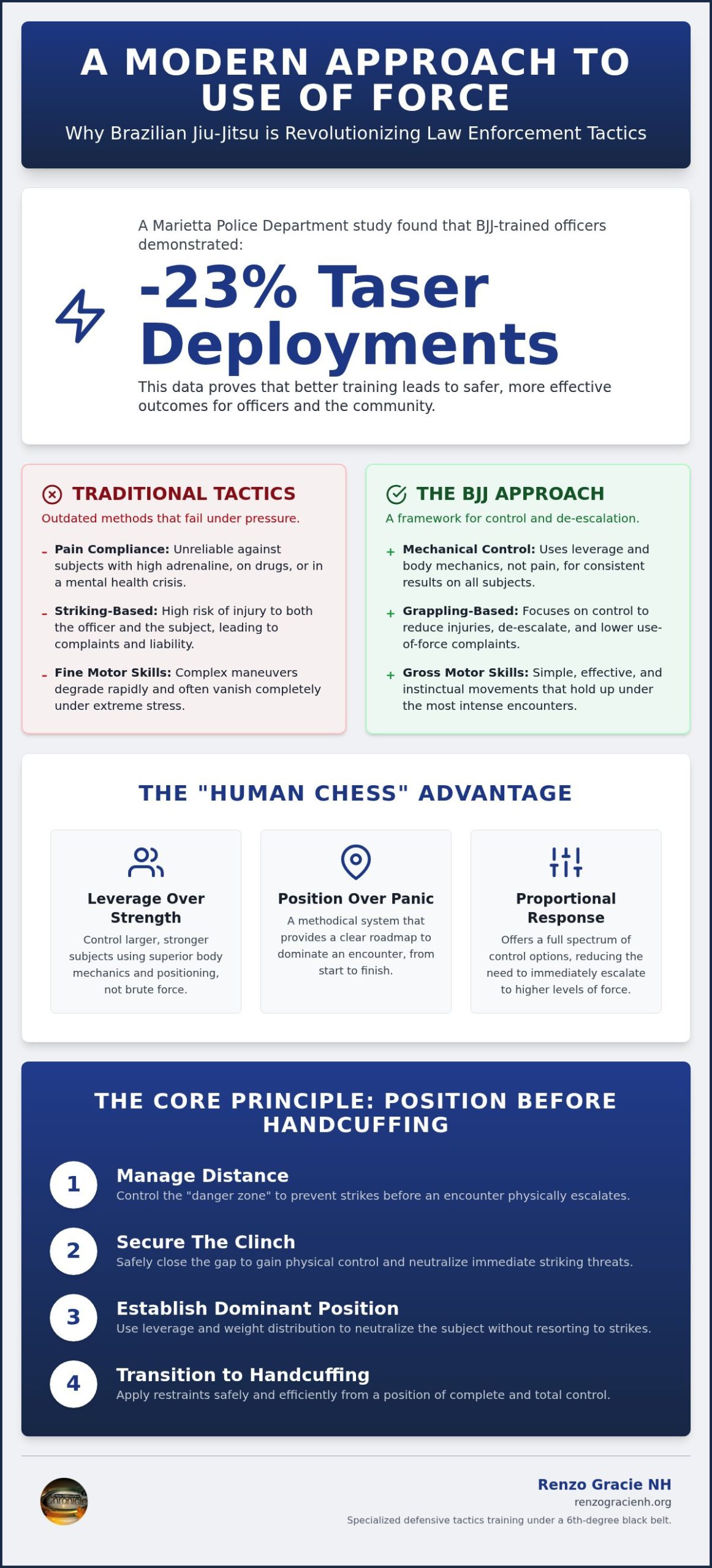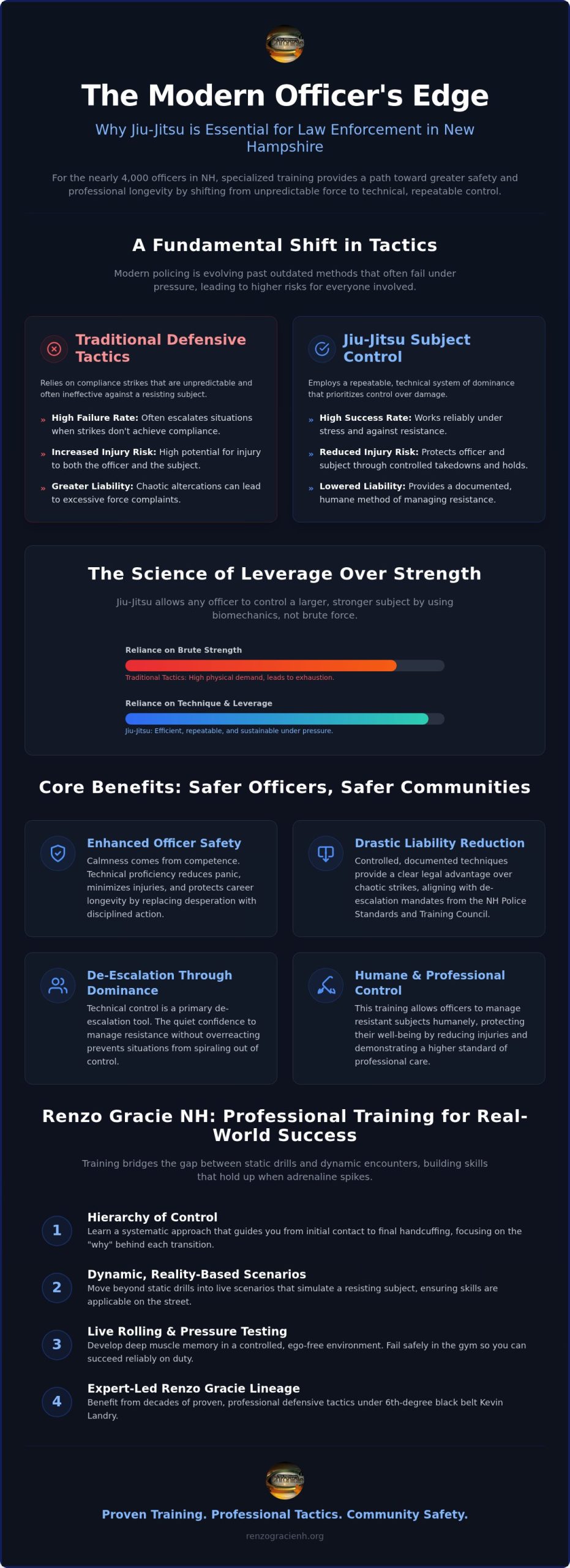
Law Enforcement Subject Control Training: Practical Guide
Choosing subject control training law enforcement officers can use in professional practice means looking beyond a list of techniques. Does the training help participants notice changes, make decisions, and practise control skills in a supervised setting? Grappling practice can develop useful skills, but applying them in a professional context takes structured instruction that keeps safety and judgment in focus.
That distinction matters. Officers with different backgrounds and experience levels need room to learn, practise, and improve without assuming one technique or outcome fits every encounter. Effective training connects movement with decision-making. It gives participants opportunities to work through changing practice situations while respecting the demands of professional work.
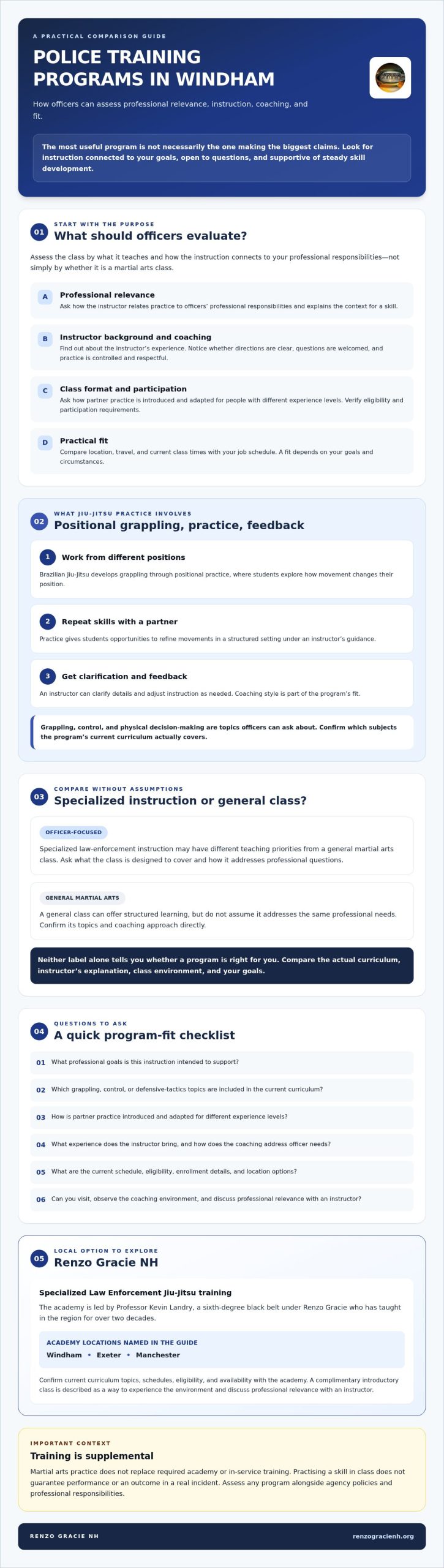
This guide explains what structured subject-control practice can develop and what to look for when assessing whether instruction suits your needs. It also explores how Brazilian Jiu-Jitsu can support grappling, control, and decision-making through consistent practice. For officers in Windham, Manchester, and Exeter, Renzo Gracie NH offers specialized Law Enforcement Jiu-Jitsu training led by Professor Kevin Landry, a sixth-degree black belt under Renzo Gracie who has taught in the region for over two decades. Read on to learn how to assess training and take a practical next step.
Key Takeaways
- Understand what structured subject-control practice can help develop, and why it complements rather than replaces policy, legal instruction, and sound judgment.
- See how coached Brazilian Jiu-Jitsu practice can build grappling skills through progressive, controlled training with active partners.
- Assess subject control training law enforcement programs by looking at coaching, progression, supervision, safety, and professional relevance.
- Prepare to train with clear goals, instructor guidance, and a plan to share relevant experience or limitations privately.
- Explore specialized Law Enforcement Jiu-Jitsu training at Renzo Gracie NH, led by Professor Kevin Landry, a sixth-degree black belt with over two decades of regional teaching experience.
What Subject Control Training for Law Enforcement Is Designed to Develop
Subject control training is supervised practice in managing physical encounters and developing skills to guide, stabilize, or restrain a person when appropriate. It isn’t a single technique or named system. Its purpose is to help officers practise movement, control, communication, and decision-making in a structured setting. When assessing subject control training law enforcement officers can apply in practice, focus on the quality and relevance of the practice, not the number of techniques covered.
Training can support professional development, but it doesn’t replace department policy, legal instruction, or sound judgment. Officers must operate within their agency’s rules and applicable requirements. A general overview of the Use of Force Continuum can provide context for how force options are discussed, but it isn’t a substitute for an officer’s department-specific direction.
Professional defensive-tactics development also has a different purpose from general fitness, sport competition, or academy certification. Fitness may improve conditioning, while competition tests performance within its own rules. Neither, by itself, establishes readiness for professional encounters. Subject-control practice develops skills in a coached environment and helps participants consider how those skills relate to an officer’s role.
How subject control training differs from general martial arts
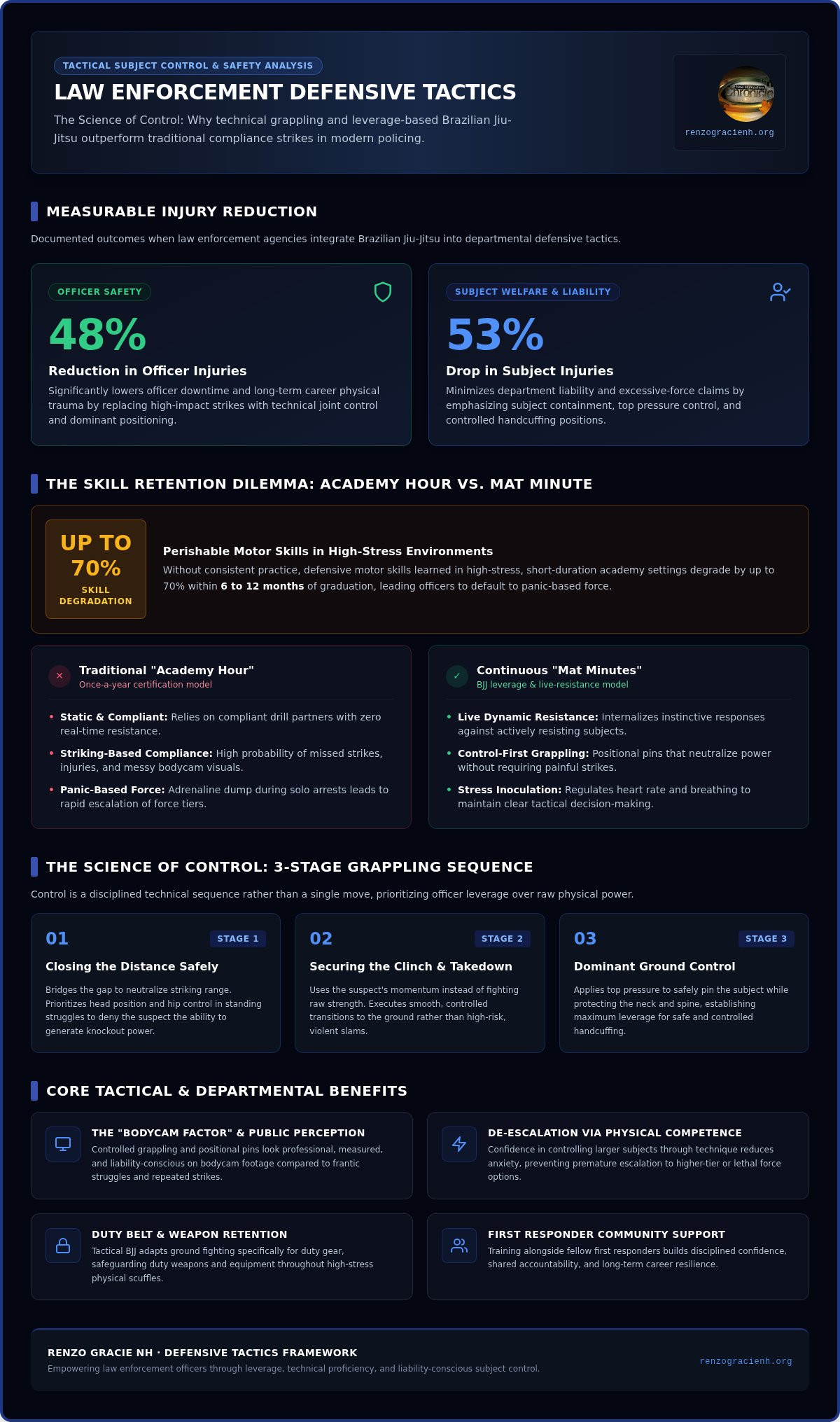
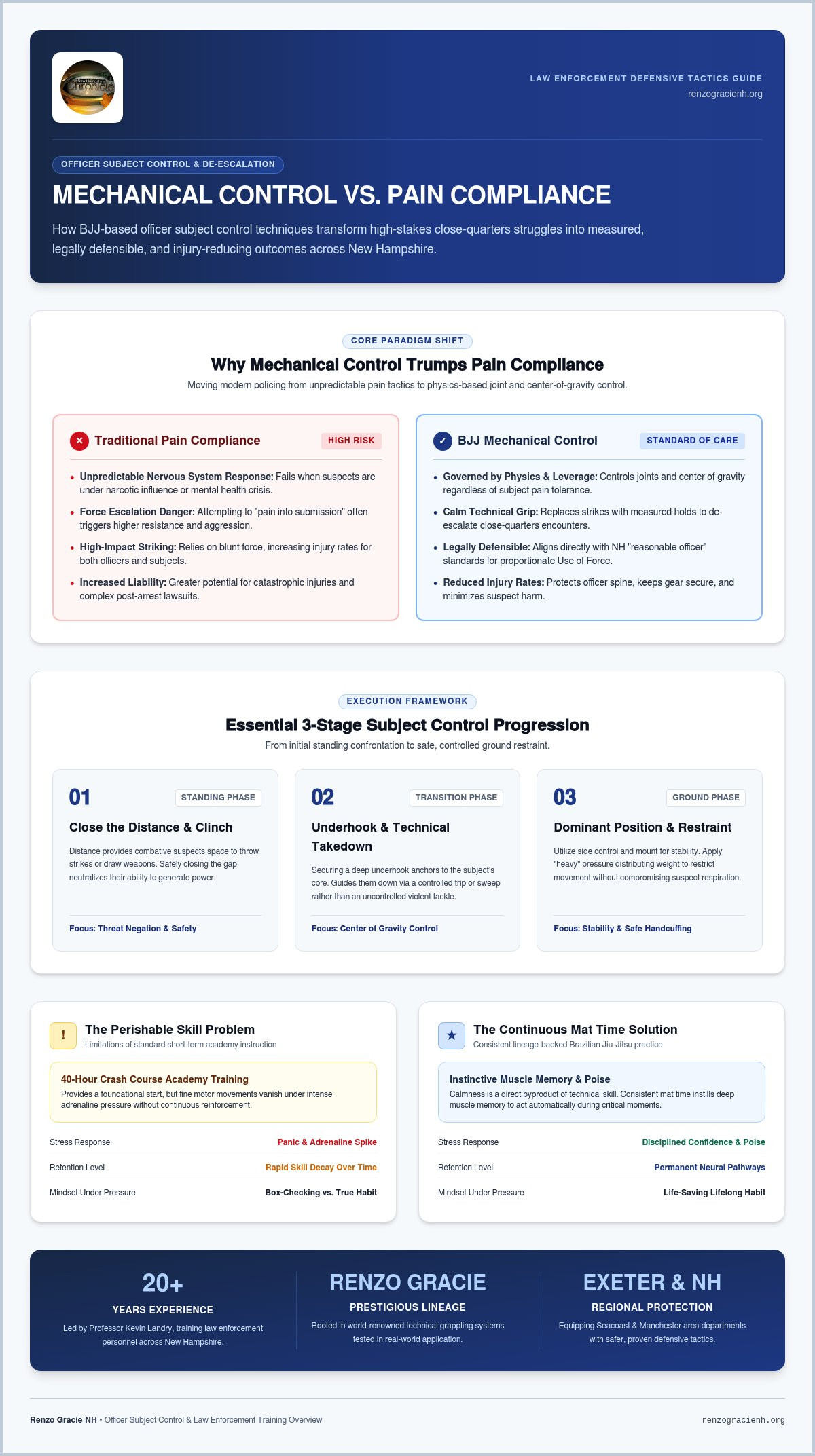
Professional context shapes training goals, communication, and practice scenarios. Brazilian Jiu-Jitsu offers grappling-based practice in which partners work through changing positions and learn to manage balance, space, and control. That can be a useful foundation for skill development, but it doesn’t cover every situation an officer may face. Sport rules and competition success aren’t proof of operational readiness. Training needs to be understood alongside policy and professional judgment.
Who may benefit from professional control training?
Sworn officers can use structured practice to develop or revisit physical control skills. Beginners may need time to learn basic movement and get comfortable training with a partner. Experienced practitioners may focus on refining skills or working toward new learning goals. Training coordinators and agencies can assess whether instruction supports their development priorities. Individual departments determine the policies and training requirements that apply to their personnel.
How Brazilian Jiu-Jitsu Practice Can Build Subject Control Skills
Brazilian Jiu-Jitsu gives students a structured way to practise grappling with an active partner rather than repeating movements in isolation. As partners shift position or respond differently, students practise noticing changes, adjusting their balance, and staying composed. That can support physical control skills as well as communication and decision-making. Practice won’t make every encounter predictable, but coaching and clear safety expectations give learners a way to work through changing conditions.
A review in The Sport Journal on the utility of martial arts in American policing examines research on martial arts, including Brazilian Jiu-Jitsu, in law enforcement. The practical takeaway is to treat grappling as a method of practice, not a guarantee of a particular outcome. Subject control training law enforcement officers take part in should connect physical skills to professional context and sound judgment.
From fundamentals to adaptable practice
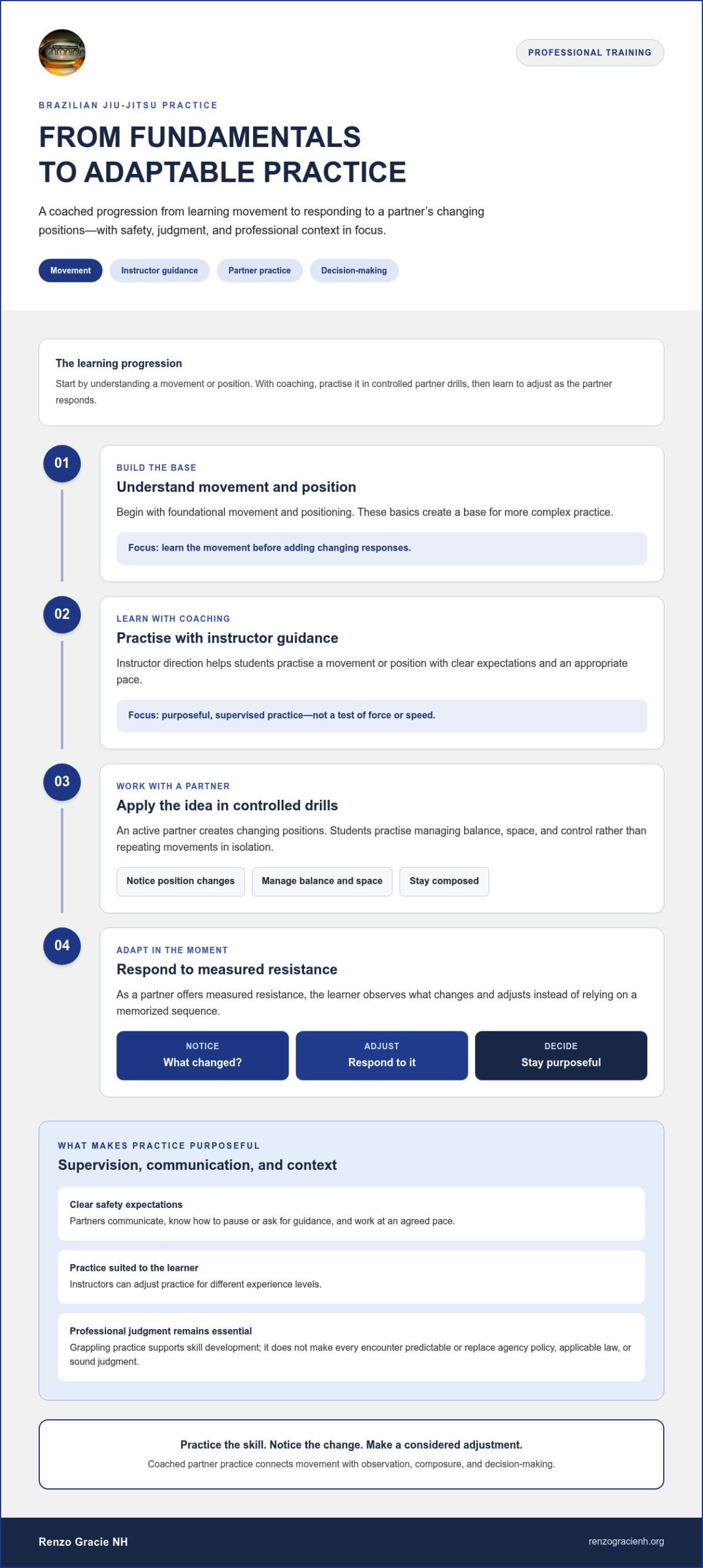
Learning can progress in stages. Students first work to understand a movement or position, then practise it with instructor guidance, and later apply the idea in controlled partner drills. Foundational movement and positioning create a base for more complex practice. As a partner offers measured resistance, the student must notice what changes and adapt instead of relying on a memorized sequence.
Resistance-based practice differs from rehearsing alone because a partner’s changing responses require the learner to observe, adjust, and make decisions in the moment. That doesn’t mean training should become a test of force or speed. Instructor direction and an agreed pace help keep practice purposeful and controlled.
Safety, judgment, and professional context
Good practice needs supervision, clear expectations, and communication between partners. Students should know how to pause or ask for guidance, and instructors should be able to adjust practice for different experience levels. Composure matters, too: physical skill is only one part of responding thoughtfully under pressure.
For officers, grappling practice must remain connected to professional responsibilities. Training should reinforce communication and decision-making, not frame force as the first resort. Agency policy and applicable law govern officers’ actions. Martial arts practice cannot replace either. Officers in Windham, Manchester, and Exeter can explore Law Enforcement Jiu-Jitsu training at Renzo Gracie NH, where Professor Kevin Landry brings more than two decades of regional teaching experience.
How to Evaluate Subject Control Training for Law Enforcement
A useful program should make its teaching approach clear. Look for details you can assess, such as the instructor’s experience, how skills are introduced, and how practice is supervised. Claims about confidence or performance may sound appealing, but they don’t tell you whether the curriculum is structured or relevant to your agency’s needs.
Use these criteria to guide a practical evaluation. They’re prompts for assessing instruction, not a ranking system or a promise of results.
| Area | What to look for | What to verify |
|---|---|---|
| Coaching | Clear explanations, demonstrations, and room for questions. | Who leads instruction and what relevant experience they bring. |
| Progression | Skills build from foundational movements toward more complex practice. | How the program describes its learning sequence. |
| Supervised practice | Students have coached opportunities to practise and receive feedback. | How instruction is supervised and how students get guidance. |
| Safety | Controlled practice, clear expectations, and respect for training partners. | How the instructor communicates safety expectations and manages practice. |
| Professional relevance | Training acknowledges the demands and context of law enforcement work. | How the program describes its relevance, without treating practice as a substitute for policy. |
Look for structure, not guarantees
A well-organized academy can explain how instruction works, how students progress, and how practice is guided. It should welcome participants with varied experience and make it possible to ask questions without pressure. These are qualities you can observe. Claims that a method guarantees control or prepares every officer for every encounter aren’t a reliable way to assess instruction.
When comparing subject control training law enforcement officers may consider, separate specific details from broad promotional claims. Instructor background, teaching experience, and a clearly explained training structure are concrete points to consider. Promised outcomes don’t prove that a program suits a particular officer or agency.
Consider safety and agency fit
Consider whether instructors emphasize controlled practice and care for training partners, and whether they explain how physical skills relate to responsible professional conduct. Applying skills in practice is an ongoing learning process, not automatic readiness for every situation. An agency should assess how the training relates to its goals and aligns with existing policy. Department approval and policy alignment are agency-specific decisions.
Quick checklist: “Can I understand who teaches, how skills progress, how practice is supervised, what safety expectations apply, and how my agency will assess relevance and policy alignment?”
How Officers Can Prepare for Subject Control Training
You don’t need a grappling background to arrive ready to learn. Approach subject control training with curiosity, consistency, and a willingness to follow coaching. Preparation isn’t about proving what you already know. It’s about setting a clear learning goal and participating responsibly.
Before the first session
Start with a practical goal, such as becoming more comfortable with grappling fundamentals or gaining experience in structured partner practice. Keep it focused. A specific goal gives you something useful to reflect on afterward without expecting mastery from one session.
- Share relevant information privately. Let the instructor know about your previous training experience and any physical limitations that may affect participation. This helps them guide your learning appropriately.
- Understand safety expectations. Listen to the instructor’s guidance, follow the agreed pace, and speak up if you’re unsure how to participate safely.
- Follow gear guidance. Wear or bring the training gear the academy requests. Don’t assume equipment from another activity is appropriate.
- Keep agency guidance in view. Treat practice as skill development, not permission to create or use new procedures. Your department’s policy and applicable law continue to govern your professional actions.
During and after practice
Stay engaged with the coaching. If a movement, drill, or safety expectation isn’t clear, pause and ask for clarification rather than guessing. Good learning depends on communication, patience, and respect for your training partner. Beginners and experienced practitioners alike benefit from being coachable.
After practice, take a few minutes to reflect. What felt unfamiliar? Which fundamentals would you like to revisit? Note questions for a future session or for discussion through the appropriate channels at your agency. This simple habit helps turn a single class into an ongoing learning process.
Training can support professional development, but it doesn’t establish instant mastery or automatically prepare anyone for every encounter. Use what you learn as a starting point for continued practice, and keep agency guidance central when considering how it relates to your role.
Ready to build grappling fundamentals through coached practice? Explore Law Enforcement Jiu-Jitsu training at Renzo Gracie NH.
Explore Law Enforcement Jiu-Jitsu Training in Southern New Hampshire
For officers in Windham, Manchester, and Exeter, Renzo Gracie NH offers a local way to explore Brazilian Jiu-Jitsu through specialized Law Enforcement Jiu-Jitsu training. The instruction connects coached grappling practice with professional defensive-tactics development, giving officers a structured setting to continue learning. It supports ongoing education and does not replace agency training, policy, or sound professional judgment.
What makes Renzo Gracie NH relevant to officers
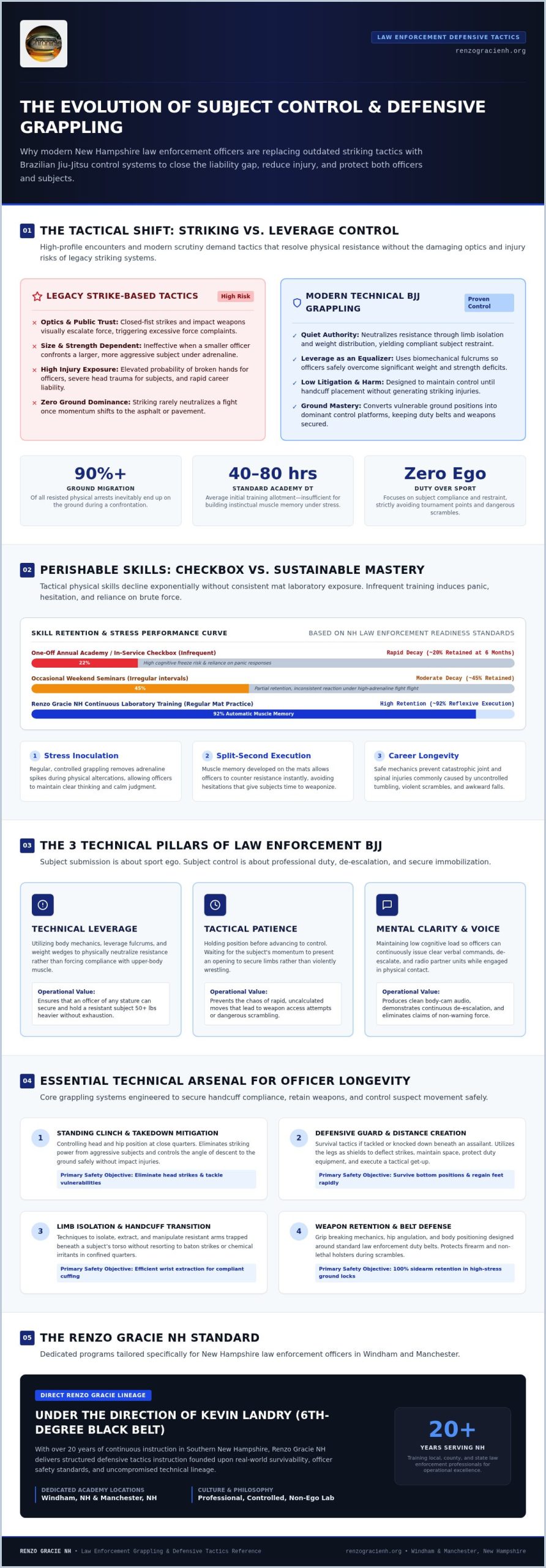
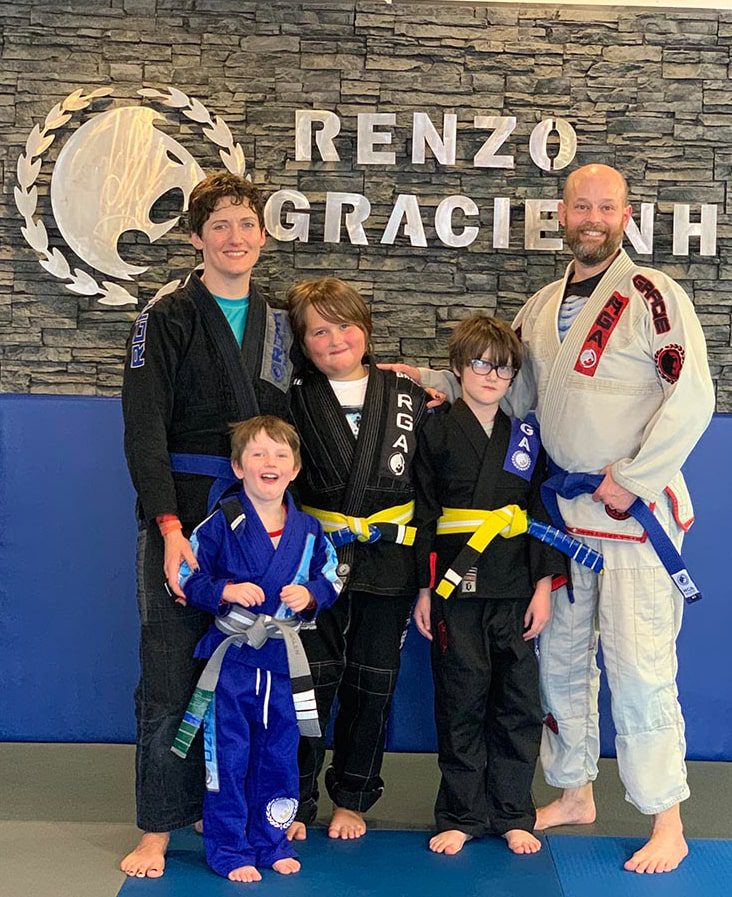
Renzo Gracie NH is owned and operated by Professor Kevin Landry, a sixth-degree black belt under Renzo Gracie who has taught in the region for over two decades. His experience informs the academy’s specialized instruction. Students can build familiarity with grappling and control through practice while developing at an individual pace in a disciplined, supportive environment. Training can contribute to ongoing skill development, but it can’t promise a particular result or prepare someone for every situation.
Learn more about the academy’s law enforcement Jiu-Jitsu training overview to understand how this instruction relates to officers’ professional development.
A practical next step for New Hampshire officers
A first class can help you experience the instruction and decide how Brazilian Jiu-Jitsu practice fits your learning goals. Renzo Gracie NH offers new students a complimentary introductory class, providing a low-pressure opportunity to step onto the mat, learn, and get a feel for the training environment. You don’t need prior grappling experience. A willingness to listen, practise, and ask questions is a useful place to start.
For more background on the principles behind the academy’s approach, explore the Renzo Gracie teaching philosophy. Whether you’re beginning or adding to years of practice, progress comes through consistent learning. Keep professional judgment central, and align skills development with your agency’s policies and guidance.
Build Skills Through Consistent, Responsible Practice
Effective subject control training law enforcement officers can use is about more than memorizing techniques. Look for coached, progressive practice that develops grappling, communication, and composure while keeping safety and professional context in view. Agency policy, applicable law, and sound judgment must continue to guide officers’ actions.
Brazilian Jiu-Jitsu offers a structured way to practise with active partners and learn through steady repetition. The right starting point isn’t prior experience. It’s a willingness to listen, ask questions, and keep learning.
Renzo Gracie NH offers specialized Law Enforcement Jiu-Jitsu training led by Professor Kevin Landry, a sixth-degree black belt under Renzo Gracie who has taught in the region for over two decades. Officers in Windham, Manchester, and Exeter can explore Law Enforcement Jiu-Jitsu training as a practical next step. Build at your own pace, stay aligned with your agency’s guidance, and keep moving forward with purpose.
Frequently Asked Questions
What is subject control training for law enforcement?
Subject control training for law enforcement is supervised professional skills development for managing physical encounters. It can include communication, controlled partner practice, and reflection on how decisions relate to professional responsibilities. Training isn’t legal authorization, a replacement for department instruction, or a guarantee of any outcome. Programs differ, so officers should understand the instructor’s approach and learning goals while keeping agency policy central.
How can Brazilian Jiu-Jitsu help with subject control training?
Brazilian Jiu-Jitsu can provide coached grappling practice that builds familiarity with balance, positioning, and adapting as a partner responds. Progressive instruction lets students explore movement and control in a supervised setting, with safety expectations guiding practice. This can support skill development, but it doesn’t make every encounter predictable or replace department training. The value is in continued learning, not in assuming practice guarantees a particular result.
Is Jiu-Jitsu training appropriate for law enforcement officers with no grappling experience?
Yes. Officers new to grappling can learn foundational movements through progressive instruction, though each person develops at a different pace. Tell the instructor privately about relevant experience and any physical limitations that could affect participation. Follow the class’s safety guidance, ask questions, and focus on learning rather than keeping up with more experienced partners. A beginner mindset and consistent practice can help make training productive from the start.
What should a law enforcement subject control training program include?
A useful program should make its learning goals clear and offer knowledgeable instruction, progressive practice, supervised drills, partner-safety expectations, and opportunities to ask questions. For subject control training law enforcement officers consider, relevance depends on the officer’s role and agency requirements. Departments should assess the program against their policies and training priorities. A general checklist can guide that review, but it can’t replace agency-level evaluation or approval.
Can Jiu-Jitsu training replace department defensive tactics training?
No. Jiu-Jitsu should be treated as additional coached grappling practice, not a replacement for department instruction, policy, legal education, or required qualifications. It can support ongoing skill development, but agencies determine which training applies to their officers and how outside practice fits their requirements. Keep professional decisions grounded in department guidance and applicable law. Training on the mat doesn’t authorize new procedures or guarantee readiness for every encounter.
How should officers prepare for their first subject control training session?
Before your first session, choose a realistic learning goal, follow the academy’s guidance on what to wear or bring, and privately share relevant experience or physical limitations with the instructor. Pay close attention to safety directions, and ask for clarification if a movement or drill is unclear. Treat the session as an introduction to structured practice. It isn’t proof of operational readiness or mastery, but it can help you identify what to keep learning.
Where can New Hampshire officers find law enforcement Jiu-Jitsu training?
Renzo Gracie NH offers specialized Law Enforcement Jiu-Jitsu training for officers interested in grappling and subject-control practice. Officers in Windham, Manchester, and Exeter can explore the academy as a local training option. New students can experience the instruction through a complimentary introductory class. Take that first step to learn, ask questions, and see how coached Jiu-Jitsu practice can support ongoing development alongside agency guidance.