Introductory BJJ lesson in Exeter: Free Class and Trial Details
Kids don’t need previous Brazilian Jiu-Jitsu experience or a gi to get started. An introductory BJJ lesson in Exeter gives beginners a chance to learn the basics in comfortable athletic clothing. Renzo Gracie NH welcomes students who are completely new to the sport.
It’s natural to wonder what a child will do in a trial class, or whether they need to arrive fit, confident, or familiar with martial arts. They don’t need to have everything figured out before stepping onto the mat. A first lesson is a chance to try new movements, listen to instruction, and see how the class feels.
This guide explains what kids can wear and bring, what to expect during a trial, and how Brazilian Jiu-Jitsu practice can support fitness, focus, and confidence over time. You’ll also learn how a free introductory class can help your family decide whether BJJ feels like a good fit.
Key Takeaways
- The beginner course lasts five weeks and introduces the core goals and concepts of Brazilian Jiu-Jitsu.
- Expect to explore foundational positions, basic submissions, escapes, and takedowns through guided practice.
- Learn how a controlled first class can help a child get comfortable with partner-based training and class routines.
- Use the arrival and orientation tips to help your child feel prepared, settle in, and focus on learning.
- Regular practice can give children opportunities to build fitness, focus, and confidence at their own pace.
Free introductory class and trial schedule
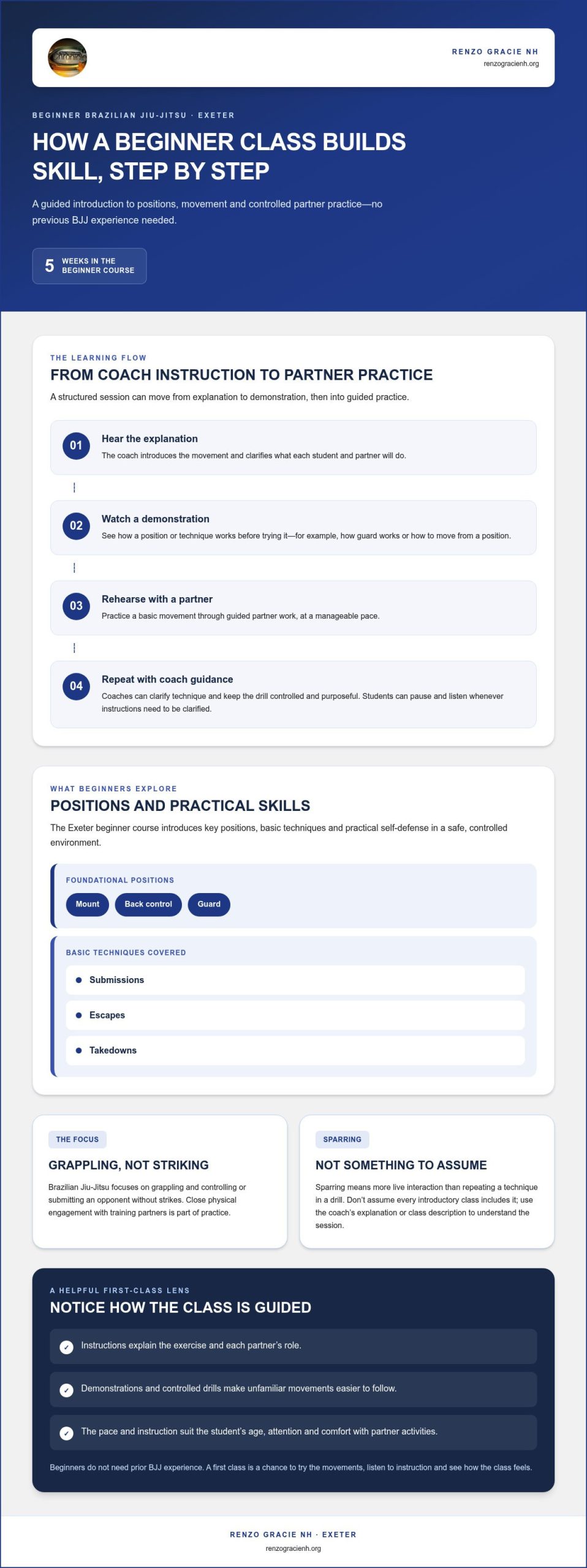
In Exeter, Renzo Gracie NH’s beginner Brazilian Jiu-Jitsu course runs for five weeks. It’s designed for people new to the sport and takes place at the academy.
The course gives beginners a structured option, while a free introductory class offers a way to experience BJJ. For either route, consider the class type, course sequence, and how each session fits your routine. These details help families decide whether to start with a trial or a structured beginner course.
Free trial availability
A free introductory class lets a beginner experience instruction before choosing a longer course. When planning, consider the class type and how it fits the student’s age and routine. A parent might compare a child’s school commitments with suitable kids’ classes. An adult beginner can look for a session that fits work and family plans.
Use the trial to notice how instruction, partner practice, and class pacing feel. The goal is to experience a first session, not to arrive with prior BJJ knowledge.
Course dates
The Renzo Gracie NH beginner course lasts five weeks and covers key goals and concepts of Brazilian Jiu-Jitsu. The course dates matter because attending the sequence helps beginners build understanding from one session to the next. Consider the start date and session timetable together when planning around school, work, or family commitments.
A course schedule differs from a single free trial: it maps a beginner’s learning across the full five-week period. Consider whether the planned sessions fit the student’s regular routine before starting.
For the general class schedule, match the student’s needs with the purpose of each session. Kids’ classes suit families seeking a dedicated children’s program; adults can look for beginner instruction that introduces BJJ fundamentals. Women new to training can consider beginner classes designed for people without prior experience. A women-only schedule differs from an adult beginner class, so read the class description to understand the format.
Course dates and trial sessions help with different decisions. A trial lets a beginner sample instruction; the five-week course gives new students a structured introduction. If a child is unsure, starting with a free introductory class can make the first step more manageable. If the goal is to learn foundational concepts over time, the course schedule offers a defined path.
Before choosing, note the student’s age group, available days, and preferred starting point. Then compare those needs with the trial or course timetable. This simple planning step helps families choose a suitable class format without assuming children’s, adults’, and women’s sessions follow the same schedule.
Class structure, technique practice, and sparring
A beginner BJJ class combines guided technique practice with close partner work. In Exeter, the beginner course introduces key positions, basic techniques, and practical self-defense in a safe, controlled environment.
Adult and children’s classes
Adults and children benefit from instruction suited to their learning needs. A beginner class should make its focus clear, such as learning a position before practicing how to move from it. The Exeter beginner course covers mount, back control, and guard, giving new students specific positions to recognize and explore.
Age-appropriate instruction matters, too. A child learning to follow a coach’s demonstration may need a different pace from an adult practicing the same guard movement. Choose a class format that matches the student’s age, attention, and comfort with partner activities. Prior BJJ experience isn’t needed for a beginner course.
A structured session can move from explanation to demonstration, then partner practice. For example, students might first see how guard works, then rehearse a basic movement with a partner. The course also covers basic submissions, escapes, and takedowns. Each skill gives beginners a practical example of how BJJ uses positioning and movement.
Brazilian Jiu-Jitsu focuses on grappling and controlling or submitting an opponent without strikes. It is still a full-contact martial art, with close physical engagement between training partners. That distinction helps families understand what practice involves: contact is part of learning, but striking isn’t the focus.
Safety and coach supervision
Look for clear demonstrations, controlled partner drills, and coaches who guide students through each technique. During a beginner lesson, a student should understand the exercise, their partner’s role, and when to pause. The course’s practical self-defense training takes place in a safe, controlled environment, so beginners can learn through structured practice.
Before a drill begins, students can listen to the instructions, watch the movement, and practice at a manageable pace. For instance, learn an escape technique step by step before trying to link it with another movement. This approach gives coaches opportunities to clarify technique and keep practice purposeful.
Sparring involves more live interaction than repeating a technique in a drill. Beginners can use a trial to understand how partner work is introduced and whether instructions clearly explain the activity. A class description or coach’s demonstration can show how a session balances technique practice with closer grappling. Don’t assume every introductory class includes sparring.
For adults considering whether to sign up, the Free Introductory Class offers a first look at BJJ instruction. Notice how coaches explain positions, organize partner practice, and guide beginners through unfamiliar movements. Those details help a new student understand the class structure and decide what learning environment feels right.
What to wear and bring to a trial
For a first jiu jitsu class, choose comfortable athletic clothing that allows easy movement. The Exeter beginner course is taught without a gi, so beginners don’t need to buy a uniform before trying the class. A T-shirt and athletic shorts or leggings are practical options, provided they fit securely during movement.
Check clothing for pockets, zippers, and metal details before leaving home. These can catch or press against a training partner during close-contact practice. Choose simple, smooth clothing instead. For example, swap zippered track pants for plain athletic bottoms and leave metal accessories off the training area.
A quick packing check can keep the arrival straightforward:
- Wear comfortable athletic clothing without pockets, zippers, or metal.
- Bring a change of clothes for after class if you prefer.
- Pack water for before or after the session.
- Tie back long hair so it stays clear during movement.
The right clothing supports the way a beginner class works. Brazilian Jiu-Jitsu involves grappling and close partner practice, so loose fabric or hard details can distract from learning. A well-fitting shirt and stretchable bottoms make it easier to bend, turn, and follow a coach’s demonstration. Choose comfort and freedom of movement over a particular style.
Keep the first-day bag simple. A water bottle and a change of clothes are useful personal items, while special equipment isn’t needed for a no-gi introductory session. Avoid bringing valuables onto the mat. Before class begins, set personal items aside and focus on the instructor’s directions and the movements being taught.
Parents can help children prepare by letting them choose between suitable athletic outfits the night before. Check that shorts or leggings stay secure during bending and stretching, and that shirts don’t hang loosely. A child who arrives dressed for movement can focus more easily on listening, practicing, and getting familiar with the class routine.
Adults can use the same checklist. Try the outfit at home with a squat, a forward bend, and a step in each direction. If clothing shifts, restricts movement, or has a zipper or metal trim, choose another option. This simple test helps beginners arrive ready to participate without spending time adjusting their clothes.
Leave jewelry and accessories at home where possible. Keep fingernails and toenails comfortably trimmed, too, to make close partner practice more manageable. These small preparation steps complement suitable clothing. The goal is simple: arrive comfortable, bring only useful personal items, and focus on learning the first techniques.
Arrival time and first-day orientation
Plan your route to Exeter BJJ Academy before class day. Check the class address and timetable, then allow for parking, traffic, and finding the entrance. You don’t need an exact arrival window to prepare well. Aim to reach the building with enough time to settle, rather than rushing straight onto the mat.
Use the first visit to understand the space and class routine. A parent can help a child identify where to wait, where to leave personal belongings, and how to find the instructor. Adults can follow the same simple steps. Keep any questions about the class, changing, or participation ready for the coach.
Before entering the training area, take a moment to observe. Notice where students gather, how the coach begins instruction, and whether footwear stays off the mat. Treat these as observations, not assumptions about every academy’s rules. Follow the instructor’s directions for the class, especially around the training space and partner activities.
A useful first-day sequence is simple:
- Review the class time and route to the academy.
- Arrive with your child or arrive yourself before instruction begins.
- Introduce yourself as a beginner and share any relevant concern.
- Listen to the coach’s directions before joining drills.
- Ask where to place belongings and when to enter the mat.
For children, a calm handover helps them focus on the coach. Explain beforehand that they’ll listen, watch demonstrations, and follow directions during practice. A child who feels unsure can stay beside a parent until the instructor explains the next step. Keep the explanation practical: “We’ll find the coach, listen, then follow the class.”
Adults can make orientation easier by clearly sharing their experience level. Saying “I’m new to Brazilian Jiu-Jitsu” gives the coach useful context before technique practice starts. If a movement feels unfamiliar, pause and ask for clarification rather than copying a partner without understanding the instruction.
Class culture shows in small actions. Students listen while the coach demonstrates, give partners room to move, and respond respectfully to instructions. Follow those cues during warm-ups and technique work. If the group is practicing a guard movement, for example, wait until the demonstration ends before beginning with a partner.
The five-week beginner course at Exeter BJJ Academy gives students a structured learning path, but orientation starts with the first visit. Focus on finding the class, understanding the coach’s directions, and learning how students move through the space. Those steps make it easier to participate attentively and build familiarity session by session.
Fitness and confidence
Brazilian Jiu-Jitsu builds fitness through active movement, not stationary drills alone. A beginner may practice changing position, maintaining balance, and moving with a partner. These activities ask students to use coordination, control, and effort throughout class. The amount of exertion depends on the drill and each student’s pace.
Technique practice can also make physical progress easier to notice. For example, a student learning guard can work on positioning before linking movements together. Practicing an escape later gives them another skill to develop. Progress isn’t only about moving faster; understanding when and how to use a technique matters, too.
For children, learning a new movement creates a clear chance to practice focus and perseverance. A child might listen to a demonstration, try a basic escape, then adjust after coaching. Each step offers a task to work through. Completing a challenging drill can help a child recognize their own effort and growing ability.
Adults can build confidence in a similar, practical way. Learning mount, back control, and guard gives beginners specific positions to recognize. A new student who once found those names unfamiliar may gradually follow explanations and practice transitions. Confidence can grow through that learning process, rather than from expecting immediate mastery.
Partner practice also develops awareness and communication. Brazilian Jiu-Jitsu involves close physical engagement, so students learn to pay attention to position, pace, and instructions. In a controlled self-defense drill, for example, the goal is to understand a movement and respond deliberately. This experience can help a beginner feel more composed while learning an unfamiliar skill.
Consistency makes it easier to reflect on change. After each class, make a simple note of one movement that felt clearer and one technique to revisit. If a student trains on Monday, they can write down what they practiced that day. The weekday is just an example for planning, not a suggested class schedule.
Set a personal goal focused on learning, not comparison. A beginner might aim to remember a guard detail, follow a coach’s demonstration, or complete a drill with steady attention. Children can choose one small goal with a parent. Adults can track the same kind of progress independently.
Fitness and confidence develop through participation, practice, and patience. They aren’t instant outcomes or a measure of rank. For a structured starting point, explore the Adult Jiu Jitsu Program and take a first step toward learning Brazilian Jiu-Jitsu.
Renzo Gracie NH: Adult Jiu Jitsu Program
Renzo Gracie NH offers an Adult Jiu Jitsu Program for adults ready to continue learning after an introductory class. Families looking for training for children can explore the Kids Jiu Jitsu Program, while professionals seeking defensive tactics training can consider Law Enforcement Jiu-Jitsu Training. A Free Introductory Class is a natural first step for adults who want to experience instruction before choosing a program.
Choose the path that fits who will train and what they want to learn. Adults can start with the introductory class, then consider ongoing practice through the adult program. Parents can explore the children’s program for a young beginner.
For details or to take the next step, visit Renzo Gracie NH.
Take your next step on the mat
Your first class doesn’t need to define your whole journey. Treat it as a chance to decide what you’d like to build next: a steady practice, a shared activity with your child, or practical training connected to your professional role. Choosing one personal goal can make the next step clearer.
Renzo Gracie NH offers an Adult Jiu Jitsu Program, a Kids Jiu Jitsu Program, and Law Enforcement Jiu-Jitsu Training. If you’re considering an introductory BJJ lesson in Exeter, think about who will train and what they hope to gain from learning. That gives you a useful starting point for exploring the right path.
Contact Renzo Gracie NH to learn about taking your next step. A new skill begins with showing up, staying curious, and giving yourself room to learn.
Frequently Asked Questions
Do kids need any experience or equipment to start?
No. Children can begin without previous Brazilian Jiu-Jitsu experience, and the beginner course doesn’t require a gi. A child’s first goal can simply be listening to the coach and trying each movement at their own pace. Parents can explain that children don’t need to know techniques beforehand. Comfortable athletic clothes are enough to get started.
What is Brazilian Jiu-Jitsu?
Brazilian Jiu-Jitsu is a grappling martial art focused on control and submissions rather than strikes. Students learn how body position and movement can help them respond to a training partner. For example, a beginner might learn to recognize guard or practice an escape. Partner practice involves close contact, so students follow instructions and work with control.
What should I wear?
Wear comfortable athletic clothes that let you bend, turn, and move freely. For example, a plain T-shirt and fitted athletic shorts or leggings work for a no-gi beginner class. Avoid clothing with pockets, zippers, or metal details, which can interfere with close partner practice. Choose an outfit that stays in place as you move.
When should I arrive?
Plan your route and class time in advance, then arrive with enough time to find the entrance and settle before instruction begins. There’s no need to rush onto the mat. A parent can help a child get oriented, while an adult can introduce themselves as a beginner. Follow the coach’s directions about where to wait and when to join.
What is included in an introductory BJJ lesson in Exeter?
The beginner course introduces core Brazilian Jiu-Jitsu concepts and positions, including mount, back control, and guard. Students also learn basic submissions, escapes, and takedowns, with practical self-defense training in a controlled environment. A first session gives beginners a chance to follow instruction and experience partner-based learning. The free introductory class is an option for trying BJJ.
Do Exeter BJJ gyms offer free trials or introductory packages?
Renzo Gracie NH offers a Free Introductory Class for new students. It gives anyone considering training a chance to experience a class before choosing a program. Families can use the introductory class to help a child understand what learning Brazilian Jiu-Jitsu involves. It’s a first class experience, rather than a package.
What should a beginner bring or wear to a first BJJ lesson?
Arrive in comfortable athletic clothing without pockets, zippers, or metal details. The Exeter beginner course is taught without a gi, so a uniform isn’t needed for that course. Bring personal items you need before or after class, such as water and a change of clothes, and keep them off the training area. Leave jewelry and accessories at home.
Do you need prior experience or a gi for an introductory BJJ class?
No prior experience is needed for the beginner course, and it’s taught without a gi. New students can start by following the coach’s demonstration and practicing one movement at a time. For example, focus first on recognizing a position before trying to connect it with another technique. Comfortable athletic clothing suits this no-gi format.