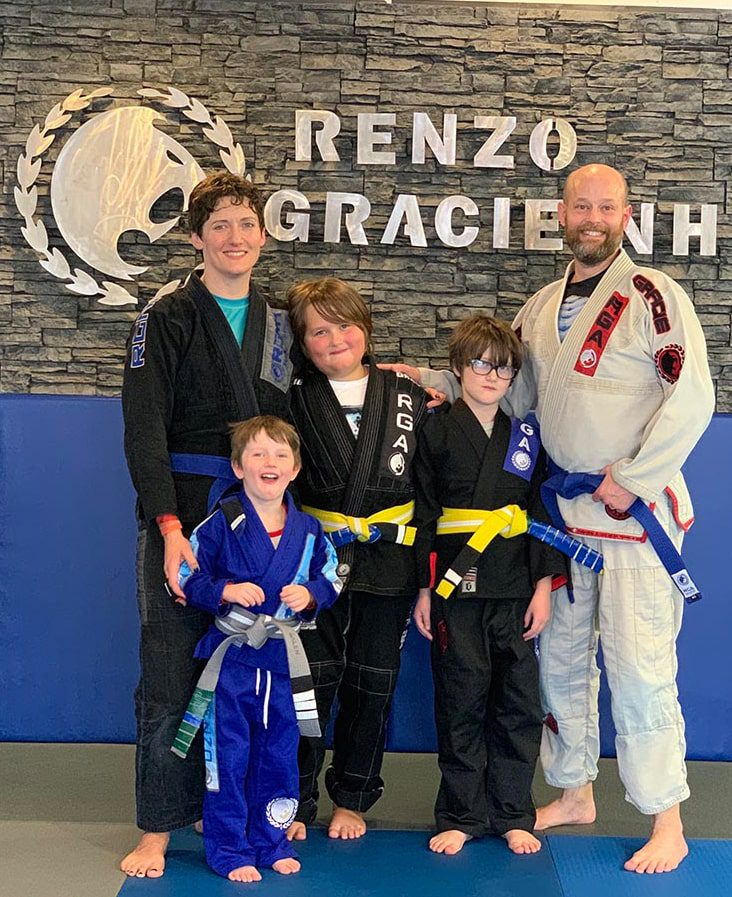
Martial Arts Academy in Manchester for Fitness and Self-Defense
A martial arts academy in Manchester should make training approachable, structured, and relevant to your goals. At Renzo Gracie NH, students in Manchester, Windham, and Exeter can explore Brazilian Jiu-Jitsu through programs for adults and children. You can start without prior experience and learn at a pace that suits you.
It’s natural to wonder whether you’ll keep up, what instruction feels like, or whether the training suits your age and fitness level. This guide explains what to look for in age-based programs, how instructors support new students, and how martial arts practice can develop strength, focus, and confidence.
You’ll also get a clearer picture of what to expect in a first class, from learning the basics to becoming familiar with the training environment. With practical expectations in place, you can decide which program makes sense for you or your family and take the next step with confidence.
Key Takeaways
- Compare programs by age, experience, and personal goals to find a comfortable starting point for you or your family.
- Look for a respectful class environment where instructors guide students through techniques and steady progress.
- Learn how martial arts practice can support fitness while developing practical skills, focus, and confidence.
- Set clear self-defense and fitness goals so you can choose training that fits what you want to work toward.
- Prepare for a first class with comfortable sports clothing and a water bottle, then focus on learning the basics.
Class environment and instructor support
A good class environment makes instruction clear, respectful, and focused on learning. Compare age grouping, beginner guidance, class formats, and how instructors explain each drill.
Age Groups and Experience Levels
Age grouping shapes the pace, activities, and partner work in a class. Look for a clear distinction between preschoolers, school-age children, teens, and adults, with instruction suited to each group’s attention and physical development. Experience matters too: a first-time student and an experienced martial artist may need different explanations of the same technique. Before choosing, identify the student’s age and experience, then compare those needs with the class description.
Beginner-Friendly Training
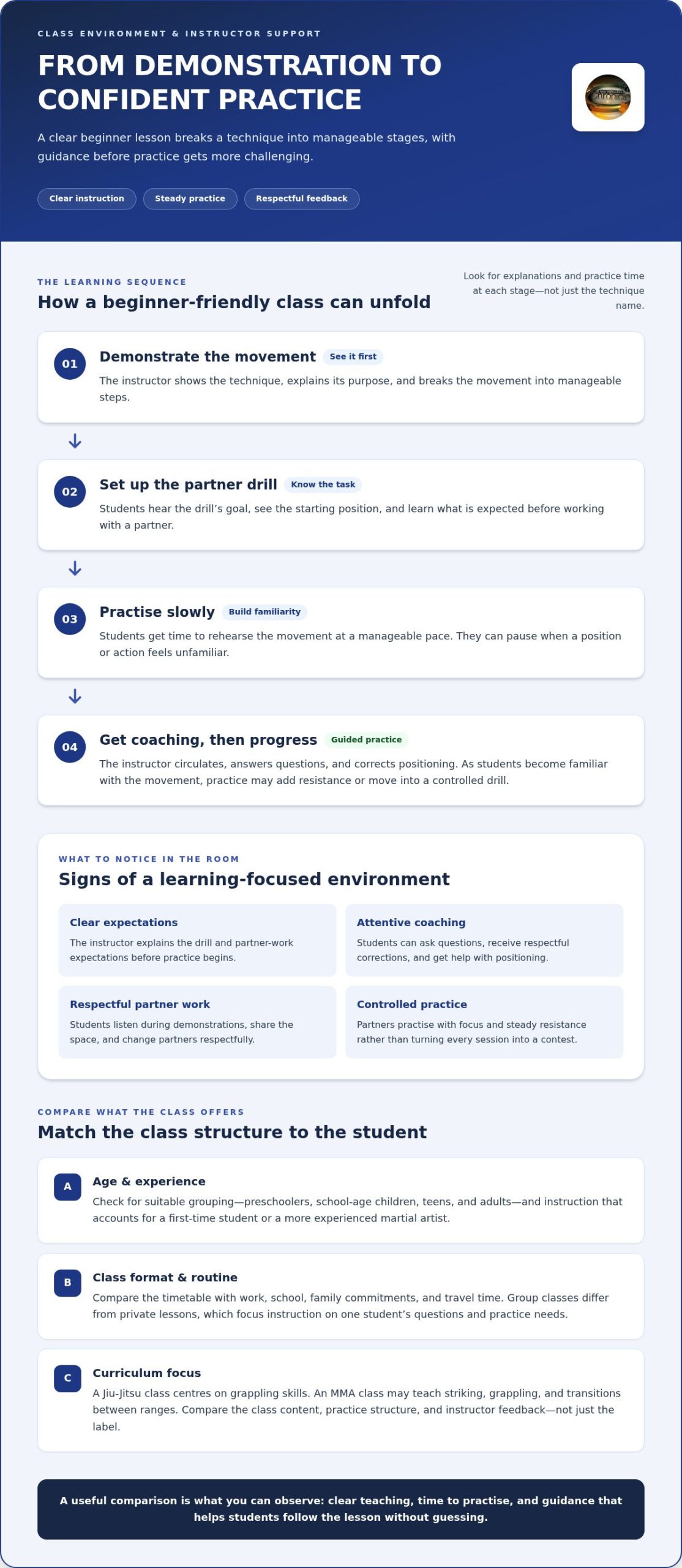
Beginners benefit from demonstrations that break a technique into manageable steps. An instructor might show a movement, explain its purpose, then let students practise slowly before adding resistance. Look for clear directions, respectful corrections, and the chance to pause when a movement feels unfamiliar. These details help new students understand what to do without needing prior knowledge of martial arts terminology.
Instructor support also appears in how a class handles partner drills. A useful structure explains the drill’s goal, shows the starting position, and gives students time to practise before changing the task. Notice whether instructors circulate, answer questions, and correct positioning rather than leaving students to guess. In a Manchester class, these observable teaching habits offer a more practical basis for comparison than a school’s promotional language.
Class schedules affect whether training fits around work, school, and family routines. Compare the timetable with your regular commitments, including travel time and class format. Private lessons differ from group classes because they focus instruction on one student’s questions and practice needs. Consider whether that individual focus suits your goal, while keeping scheduling separate from the quality of group instruction.
Mixed martial arts classes and single-discipline classes can have different curriculum priorities. When comparing an MMA class, look for an explanation of how it teaches striking, grappling, and transitions between ranges. A Jiu-Jitsu class, by contrast, centres its instruction on grappling skills. Neither label alone explains how beginners are taught, so compare class content, practice structure, and instructor feedback.
Before deciding, observe how students share the training space and interact during drills. Respectful partner changes, attentive listening during demonstrations, and controlled practice are useful signs of a learning-focused environment. Notice whether the instructor explains expectations before partner work and whether students can follow the lesson without guessing. These details help families and adult beginners assess whether the setting supports confident participation.
Martial arts training for health and fitness
Martial arts practice combines movement, skill learning, and partner drills. To judge its fitness value, look at what each class asks students to do, such as moving continuously, practising balance, or repeating grappling sequences. Match those activities to your aims. Someone seeking an active routine may value sustained movement, while someone focused on coordination may pay closer attention to controlled technique practice.
Brazilian Jiu-Jitsu uses grappling, positional movement, and technique practice. A class might involve learning an escape, rehearsing it with a partner, then applying the movement during a controlled drill. These activities challenge students to coordinate their bodies and make decisions while moving. For a useful comparison, review how a class balances instruction, partner practice, and live training. The experience depends on more than the discipline’s name alone.
No-gi training is grappling practised without the traditional gi uniform. Clothing changes the grips available, so students work with different control points and adjust how they practise techniques. Compare gi and no-gi classes by their focus and format, not by assuming one is easier. Beginners can look for clear explanations of positions and enough time to learn movements before faster drills.
Student reviews can add detail about class experience, especially when they describe specific moments. Look for examples such as an instructor explaining a technique, adapting a drill, or helping a student understand partner practice. Separate personal impressions from verifiable details. A review saying “the class felt welcoming” reflects one person’s view; a description of how beginners were introduced to a drill gives more practical context for deciding what environment might suit you.
“Ninja Warrior training” may refer to obstacle-focused movement, but the phrase alone doesn’t define a class. Examine the activities described: do they involve balance, climbing, jumping, or navigating obstacles? Consider whether those tasks align with your fitness interests and comfort. This helps distinguish obstacle challenges from grappling-based martial arts, even when both involve physical effort and learning new movement patterns.
A training community is built through repeated practice with instructors and partners. Notice whether students take turns, listen during demonstrations, and help keep drills focused. For example, a partner can provide steady resistance while you practise a position, then switch roles. That shared structure supports learning without turning every session into a contest. If you want to experience a grappling-focused class, explore the introductory training option as a way to see how instruction and practice work together.
Martial arts programs for preschoolers, children, teens, and adults
Programs for different age groups can vary in lesson pace, movement, and partner practice. Compare the student’s interests and experience with the martial arts style and class format before choosing.
Programs Across Age Groups
Younger children may benefit from short activities built around listening, balance, and simple movement. Children can explore structured drills, while teens may value more complex technique practice and clear progression. Adult classes commonly focus on skill development, fitness, or self-defense goals. These are general considerations, not fixed age rules. Look at how each program adapts instruction and practice to the students attending.
For children interested in grappling, Renzo Gracie NH’s Kids Jiu Jitsu Program offers a discipline-specific path. Adults who want to learn grappling can consider the Adult Jiu Jitsu Program. Compare what a typical class teaches, how partner practice is introduced, and how instructors explain new techniques. Those details help families judge programs by the learning experience, not just the age group.
Adult Martial Arts
Adult martial arts can include different disciplines and training aims. An adult mixed martial arts class may combine striking and grappling; an adult karate class focuses on karate techniques and practice. These names describe different curricula, not interchangeable formats. Compare the skills taught, class structure, and amount of partner practice against your goals. If you’re seeking grappling instruction, look for a program centred on grappling.
Starting as an adult doesn’t require prior martial arts experience. First identify your main aim, such as learning a discipline, building a regular activity, or developing self-defense skills. Then compare the program description with that aim. Notice whether instructors explain techniques in stages and provide opportunities to practise them. A clear learning path helps you understand what each session involves.
Families comparing classes for children and teens can look beyond the age label. Consider whether lessons use suitable instructions, manageable drills, and respectful partner practice. A child learning a grappling position, for example, may need a different explanation from a teen refining that same position. Notice how instructors adapt the lesson and whether students understand the purpose of each activity.
Adults choosing between karate, mixed martial arts, and Jiu-Jitsu should compare their core techniques. Karate practice centres on its own striking and movement methods. Mixed martial arts training brings together multiple combat disciplines. Jiu-Jitsu emphasizes grappling and positional skills. These distinctions can help you narrow your options without assuming one style fits everyone. Match the class content to the skills you want to learn.
Program fit also depends on how students progress from one lesson to the next. Look for a sequence: an instructor introduces a technique, demonstrates it, and gives students time to practise. Families can compare children’s and adult class descriptions separately, even when everyone is interested in martial arts. Different structures may suit each learner’s goals, experience, and preferred pace.
Self-defense and fitness goals
Self-defense and fitness can share a training space, but they call for different ways to assess progress. Someone prioritizing self-defense might focus on recognizing positions, practising escapes, and making decisions under pressure. Someone seeking a more active routine may value consistent movement and skill drills. Identify your main aim first, then compare class activities with it.
Practical self-defense instruction teaches skills in context, rather than as isolated movements. A student might learn how to create space from a close position, practise with a cooperative partner, then repeat the movement during a controlled drill. Notice how lessons progress from explanation to practice. Clear steps help you understand what a technique is designed to address.
Fitness goals also benefit from specific, observable markers. Rather than expecting a quick transformation, notice whether you can follow a drill with better coordination or complete a familiar sequence with greater control. A training journal can capture changes: record the techniques practised, what felt challenging, and one skill to revisit. These notes make personal progress easier to see over time.
Choose a class format that matches your preferred kind of effort. A technique-focused session gives time to understand movements, while partner drills add interaction and changing positions. Grappling practice, for example, may ask students to move between positions while maintaining balance and control. Ask what a typical class includes so you can judge whether its pace and activities support your goals.
Self-defense is not only a collection of techniques. Awareness, communication, and deciding how to respond are also useful parts of preparation. In a class, notice whether instructors explain the purpose of a drill and its limits. A scenario-based exercise, for example, can help students think through positioning and choices without treating practice as a real confrontation.
Fitness and self-defense goals can change as skills develop. A beginner may start by learning to move safely through a drill, then later focus on refining an escape or transition. Revisit your goal after experiencing the class format. If your priority is practical skill, look for relevant instruction; if it’s regular activity, consider whether the class structure keeps you engaged.
When comparing programs in Manchester, use a short decision process. Write down the skill you want to learn, identify class activities that support it, and compare those activities with your preferred training pace. Someone interested in grappling, for instance, can look for instruction that includes positional practice. A clear match between your aim and class content gives you a practical basis for choosing.
Set expectations around learning, not guaranteed outcomes. A class provides instruction and structured practice, while your progress depends on attendance, attention, and continued effort. After a session, note one technique you understood and one question you still have. That reflection turns broad ambitions into specific next steps for your fitness or self-defense journey.
Advice for first-time students
For safety, follow the instructor’s rules, practise within your comfort, and stop if you feel pain. Before training, consider injury risks such as strains or accidental contact, and understand what your insurance policy covers.
Prepare simple essentials. Renzo Gracie NH advises first-time students to wear comfortable clothes suitable for sports and bring a water bottle. Choose clothing that lets you move freely, without loose items that could catch during a drill. Keep your water nearby, and arrive ready to listen before joining the class.
Use your first session to learn the class routine, not to prove your ability. Notice where students wait, how the instructor demonstrates a movement, and when partners begin practising. If a technique feels unfamiliar, pause and ask for the steps again. For example, request a slower demonstration before trying a grappling movement with a partner.
Share relevant concerns before practice begins. Tell the instructor about an injury or movement limitation that could affect a drill, then follow directions for adapting or sitting out. During partner work, agree on the pace and use controlled movements. Stop if something feels wrong. Respectful communication helps both students stay focused on learning.
New students can make progress by setting one practical goal for each class. You might aim to remember a position, follow a warm-up sequence, or understand an instruction. After class, write down what you practised and any question to raise next time. This simple record helps turn an unfamiliar experience into a clear learning path.
Before choosing a regular schedule, consider how training fits your routine. Look at the class timetable, travel time, and other commitments, then choose a realistic pattern you can maintain. Consistency matters more than trying to do everything at once. If a class leaves you unsure about its pace or structure, note the activity that felt challenging and use that observation to guide your next session.
Insurance deserves the same practical attention as clothing and class preparation. Read your policy’s terms for sports or martial arts activity, including exclusions, conditions, and steps for reporting an injury. Keep the policy information accessible, and understand what it covers before taking part. Coverage varies by policy, so the wording of your own policy matters.
Want to experience a guided first session? Book a free introductory class and take your first step into training.
Renzo Gracie NH: Adult Jiu Jitsu Program
Renzo Gracie NH’s Adult Jiu Jitsu Program is for adults interested in learning grappling skills through structured martial arts training. It can suit goals such as skill development, fitness, or following a steady learning path. The Kids Jiu Jitsu Program offers children a related option, while Law Enforcement Jiu-Jitsu Training focuses on professional defensive tactics.
If you’re new to training, Renzo Gracie NH’s Free Introductory Class lets you experience instruction before deciding whether the program suits your goals. Come ready to learn, move at a comfortable pace, and get familiar with the class environment.
Contact Renzo Gracie NH to learn about taking the next step.
Take Your Next Step on the Mat
Choosing a martial arts academy in Manchester is a personal decision, shaped by the skills you want to build and the kind of practice you’ll enjoy returning to. Think about what you want to learn, then experience a class and notice how the instruction fits your goals. A first visit can turn a broad intention into a clearer path forward.
Renzo Gracie NH offers an Adult Jiu Jitsu Program, a Kids Jiu Jitsu Program, and Law Enforcement Jiu-Jitsu Training. These options serve different students and purposes, from adult skill-building to children’s training and professional defensive tactics. Consider which fits your needs, then get in touch to take the next step at your own pace.
Contact Renzo Gracie NH about classes and begin exploring a training path that feels right for you.
Frequently Asked Questions
What martial arts academies are in Manchester, New Hampshire?
Renzo Gracie NH serves Manchester, Windham, and Exeter with Brazilian Jiu-Jitsu programs for adults and children, plus specialized Law Enforcement Jiu-Jitsu Training. If you are seeking a premier martial arts academy in Manchester, New Hampshire, our facility provides expert instruction tailored to all skill levels. We focus on effective self-defense, physical fitness, and a supportive community atmosphere right here in the local area.
Where are martial arts academies located in Manchester and what are their opening hours?
Renzo Gracie NH serves Manchester, New Hampshire, Windham, and Exeter. Class times depend on the program and location, so compare the schedule with your work, school, or family routine. If you’re considering a martial arts academy in Manchester, check which scheduled class fits your commitments. Class schedules are the practical guide to when instruction takes place.
Do Manchester martial arts academies offer trial classes or beginner programs?
Renzo Gracie NH offers a Free Introductory Class, along with Jiu-Jitsu programs for adults and children. Use the session to experience the instruction and class format firsthand. Notice how techniques are demonstrated and how practice is introduced. That gives you useful context for deciding whether the program suits your interests before settling into a regular routine.
Which academies in Manchester are suitable for children and families?
Families in Manchester, New Hampshire can consider Renzo Gracie NH’s Kids Jiu Jitsu Program and family training in Jiu-Jitsu. Choose a dedicated children’s class or train together as a family, depending on your preferences. Discuss the child’s interests and comfort with martial arts before choosing. Those preferences can help your family decide which format feels like the best fit.
What qualifications and experience do instructors at Manchester academies have?
Professor Kevin Landry is a sixth-degree black belt under Renzo Gracie and has taught in the region for over two decades. To see how that experience translates into instruction, notice how the instructor demonstrates techniques, answers questions, and explains movements. These teaching details help beginners and families assess whether lessons are clear and suited to different levels of experience.
How do Manchester martial arts academies compare by class size, facilities, and reviews?
Compare how easily students can follow demonstrations and receive guidance during practice. Renzo Gracie NH describes its facilities as clean and state-of-the-art, and member testimonials from Matt Gall and Sue Kimball praise instructor Kevin Landry. Reviews reflect individual experiences, so focus on specific comments about instruction and student interactions. These details can help you assess the environment beyond a rating.
What should beginners bring and wear to their first martial arts class?
Wear comfortable sports clothing that allows free movement, and bring a water bottle. Choose clothing that won’t interfere with practice, then listen to the instructor’s directions as class begins. Set a simple aim for your first session, such as learning the routine or understanding one movement. This keeps your attention on becoming familiar with the class rather than mastering everything at once.
How much do martial arts classes and memberships cost in Manchester?
At Renzo Gracie NH, we offer transparent pricing options tailored to individuals and families looking for a top-tier martial arts academy in Manchester. There is no long-term contract or cancellation fee, making it easy to start your journey with confidence and flexibility.