Posts

Stress relief hobby for men Manchester: find social activities

The right stress relief hobby for men in Manchester may be less about switching off alone and more about finding an activity you can share with others. Game nights, beginner-friendly classes, and local clubs offer practical ways to try something new, meet people, and build a routine at your own pace.

It makes sense to want a hobby that feels enjoyable, not like another commitment to manage. You don’t need to be outgoing or experienced to begin. Choosing an activity that matches your interests and energy can make the first step easier.

Explore social hobby ideas and practical ways to choose one around your schedule, budget, and preferences. You’ll also find a low-pressure plan for your first week: sample activities, notice what feels right, and take the next step without overcommitting.

Key Takeaways

  • Explore social options such as game nights, clubs, and beginner-friendly classes to find an activity that feels enjoyable and welcoming.
  • Keep your first week manageable by sampling a few activities and choosing a pace that fits your schedule and budget.
  • Match a hobby to your interests and energy, then adjust the commitment based on what you enjoy returning to.
  • Start new activities thoughtfully: consider your comfort, build gradually, and choose an option that supports your well-being.

1. Social activities, including game nights, classes, and clubs

Game nights, beginner classes, and clubs give social activities a clear focus: learn a rule, make something, or work through a shared challenge. In Manchester, try a board-game evening if conversation feels easier with a game on the table, or a cooking class if you enjoy practical, creative tasks. A reading group or writing session may suit you if you prefer quieter discussion. Choose an indoor or outdoor setting that feels comfortable, then consider whether the people and pace make you want to return.

Active hobbies and meditation offer different ways to settle your mind. Exercise, a dance class, or kayaking focuses your attention on movement and the task in front of you; meditation turns attention inward, often through breathing. If sitting still leaves you restless, try a walk, club activity, or hands-on session first. If busy rooms feel draining, a short meditation or journaling session may fit better. You can also combine activities, such as a calm breathing exercise after a game night.

Water activities offer social and solo options. Boating can be a shared outing, fishing leaves room for conversation to pause, and kayaking adds steady movement and concentration. Choose according to what you need: a group activity if you want company, a repetitive task if your thoughts are racing, or an outdoor challenge if you’re looking for movement and a change of scenery. Reading, sketching, or journaling can be indoor alternatives when weather or energy makes an outing less appealing.

Relief may feel noticeable during or after one enjoyable session, especially when attention shifts from a stressor to a clear activity. Longer-term value often comes from finding something you’ll repeat, rather than expecting one session to solve everything. For a low-pressure first week, schedule three hobby sessions of 15 to 30 minutes, then record your mood and comfort in a journal. Compare the activities: which helped you focus, which felt social, and which showed progress? That simple review can guide your next choice.

3. Are there free or low-cost stress-relief activities in Manchester?

Yes. Start with activities that use what you already have instead of buying equipment or committing to a paid course. A walk in Manchester offers a simple outdoor reset: choose a familiar route and focus on your surroundings. At home, try caring for a houseplant, sketching an everyday object, or playing a puzzle game you already own. Each gives you a clear focus without much setup.

Keep creative hobbies simple. Use paper and a pencil for a quick drawing, or write a journal entry about what’s on your mind. A short writing session can help you organise your thoughts; treat it as private practice, not polished work. For a calming indoor routine, sit comfortably and try a brief guided breathing meditation. If meditation feels uncomfortable, switch to a hands-on activity.

Free activities can also help build a weekly rhythm. Set aside time to read a book you already own, tend herbs, or repeat a simple stretch-and-walk routine. Choose one activity for a specific day, then notice how your mood and energy feel afterward. If you feel more settled or engaged, repeat it. If it becomes another obligation, shorten the session or try something else.

For low-cost choices, focus on what the activity requires before joining. A hobby based on walking, journaling, or drawing with basic materials has few ongoing needs; classes and clubs may involve fees or equipment, so weigh those against the social structure and instruction you value. You don’t have to decide permanently. Try a no-cost activity first, then consider whether a more structured setting would help you stay consistent. If guided practice appeals, explore a structured activity as one possible next step.

Stress relief hobby for men Manchester: find social activities

How do you choose a hobby that fits your schedule, budget, and interests?

Choosing a stress relief hobby for men in Manchester starts with activities you’ve enjoyed before. If fixing things felt satisfying, try a beginner woodworking project; if you liked team games, explore a club. Past enjoyment is a useful clue, not a rule. Add an unfamiliar option too, such as a creative class or local walking group. Trying different formats can show whether you prefer learning a skill, moving your body, or sharing an activity.

Fit the hobby around real time in your week. A suitable indoor activity can work in sessions of 10 to 60 minutes, such as sketching after dinner or reading during a quiet break. If your calendar changes often, choose something easy to pause and restart. If you prefer a set routine, a class or club can provide a regular meeting point. The right stress relief hobby for men in Manchester is one that fits without becoming another source of pressure.

Consider the full commitment, not just the first session. A hobby may involve materials, travel, equipment, or a recurring fee, so set a budget before choosing. Drawing with basic supplies has different requirements from joining a class or taking up kayaking. If you prefer quieter activities, reading or journaling may feel comfortable; if you enjoy company, you might prefer team activities or clubs. Neither preference is better. Match the setting to your energy.

Use a one-week trial to compare two or three indoor hobbies before committing. Give each a short session, then note the time, effort, and materials involved. Record whether it held your attention and whether you’d choose it again. For example, compare a puzzle, a drawing exercise, and a guided craft activity. Keep the option that fits your schedule and feels engaging, rather than one that depends on an idealised version of your free time.

4. Are there safety or health considerations when starting a new hobby?

Yes. Match the activity to your fitness, comfort, and health needs, then build gradually. For a new walking routine, begin on a familiar, level route before choosing steeper terrain. If you’re new to hiking, start with shorter, flatter paths and increase the distance or difficulty over time. For a craft such as pottery, set up a stable workspace and keep tools within easy reach.

With active hobbies, learn the basic movements before increasing effort. A beginner dance class, for example, lets you practise steps at a manageable pace. Pause if you feel pain, dizziness, or unusual shortness of breath. For kayaking or boating, choose an introductory setting and learn how to use the required equipment before heading out. A calm first session helps you focus on technique rather than pushing through discomfort.

Approach meditation thoughtfully, too. Sitting quietly can feel uncomfortable, especially when your attention turns toward difficult thoughts. Try a brief guided breathing exercise, keep your eyes open if that feels better, or switch to a walk or hands-on task. Stop if distress increases. A journal can help you record how different activities affect your mood, energy, and sense of ease.

Before each session, take three practical steps: choose a setting suited to the activity, prepare any needed equipment, and decide how you’ll pause or leave if you feel unwell. For exercise, that might mean selecting a route with an easy return; for drawing, it could mean taking a break when your posture becomes uncomfortable. If an existing health concern affects what feels safe, discuss suitable activity with a qualified health professional. For a structured, coached starting point, take a guided first step.

Meditation can also raise anxiety for some: a 2020 PLOS ONE study found that approximately 25% of people experience increased anxiety during meditation practices. For hiking, keep early outings modest and build stamina gradually, rather than treating distance as a test.

Renzo Gracie NH

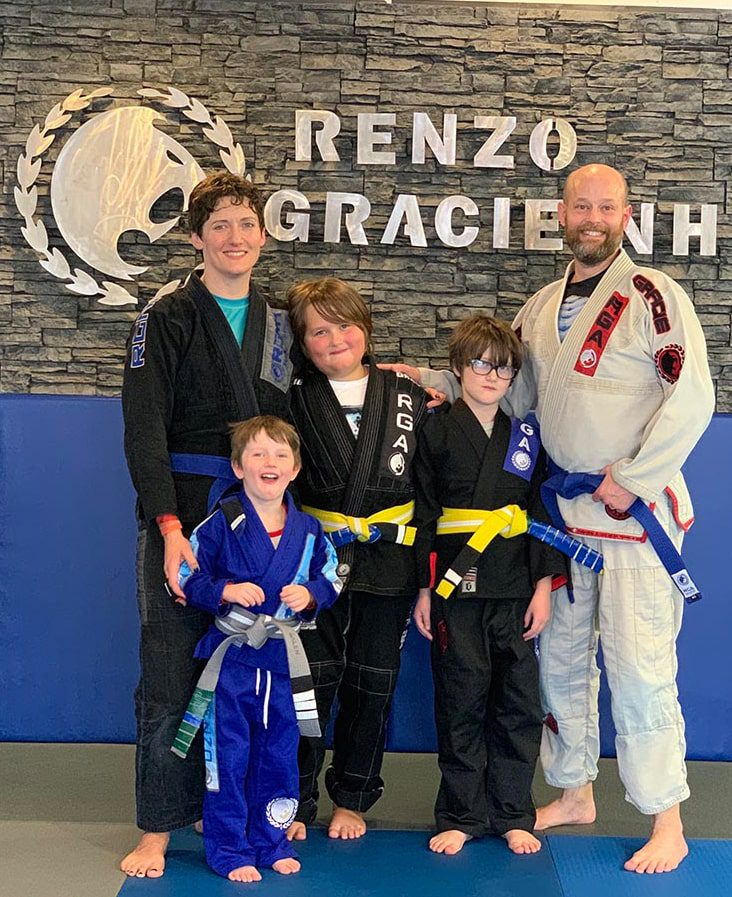
Renzo Gracie NH offers a structured, social way to build skill, focus, and steady progress through Brazilian Jiu-Jitsu. If you’re drawn to an active hobby with guided instruction and shared practice, its Adult Jiu Jitsu Program may suit you better than a solo activity. A Free Introductory Class provides a way to experience the program before deciding whether it fits your interests.

For families, the Kids Jiu Jitsu Program offers children their own way to learn and develop, while adults explore a hobby of their own. Consider this option if you want movement, learning, and community in one regular activity. It isn’t a substitute for professional mental health support, but it can be part of a balanced routine.

To explore whether this kind of activity suits you, contact Renzo Gracie NH.

Make your next step a manageable one

A stress-relief hobby for men in Manchester doesn’t need to become a major commitment. Choose an activity you’ll want to return to, and give yourself room to learn at a steady pace. If you’re drawn to movement, focus, and shared practice, Renzo Gracie NH offers adult and kids’ Jiu-Jitsu programs, along with Law Enforcement Jiu-Jitsu Training. These structured options give individuals and families a way to build skills through shared activity.

Let curiosity guide the decision. You can take the next step when you’re ready to explore whether Jiu-Jitsu suits your interests and routine. Contact Renzo Gracie NH to start a conversation. A small first step can open the door to a rewarding new routine.

Frequently Asked Questions

What hobbies are most effective for stress relief for men?

The most useful hobby is one that holds your attention and feels manageable to repeat. Someone who wants to move may prefer a recreational sport, while someone seeking a quieter focus might choose model-making or reading. In Manchester, consider whether you want social contact, physical activity, or time alone. Try something new, then notice how you feel afterward.

What stress-relief hobby classes are available in Manchester?

Brazilian Jiu-Jitsu is a structured, active class option at Renzo Gracie NH in Manchester, New Hampshire. It combines learning techniques with guided practice, which may suit someone who enjoys building skills through shared activity. Renzo Gracie NH also offers instruction for adults and children, as well as specialized training for law enforcement. Choose a class format that fits your goals and experience.

Where can men find hobby groups and classes in Manchester?

For a locally based, guided activity, consider Brazilian Jiu-Jitsu at Renzo Gracie NH in Manchester, New Hampshire. If you’re considering another kind of group, narrow your search by activity, preferred schedule, and whether you want instruction or informal social time. A clear starting point, such as a beginner class or regular club meeting, makes it easier to decide whether the group suits you.
Mother-Daughter Self-Defense in Manchester: Techniques and Practice

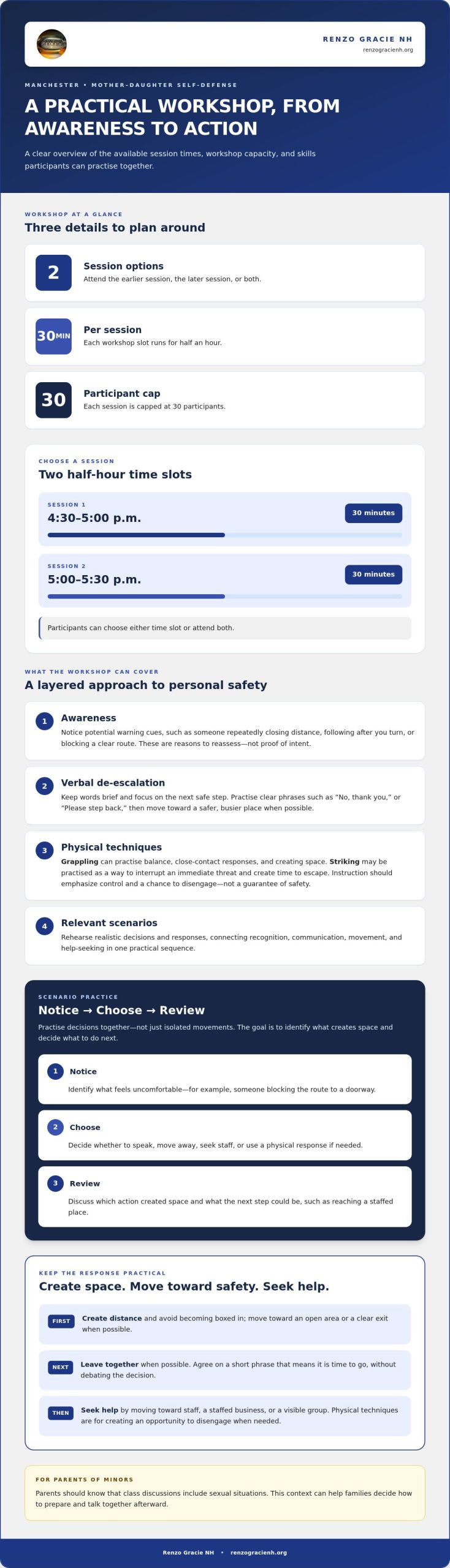
Practical preparation matters more than bravado. For mother-daughter self-defense in Manchester, participants can attend the 4:30 to 5 p.m. session, the 5 to 5:30 p.m. session, or both; each session is capped at 30 participants. Workshop instruction can include awareness, verbal de-escalation, physical techniques and scenarios relevant to participants.

It’s understandable to want more than a list of moves. Learning to notice potential risks, respond calmly, and practise practical actions together can help mothers and daughters build confidence at their own pace. Classes can support women of all ages, including beginners and those refreshing their skills.

This guide explains how threat recognition and de-escalation fit into personal safety, what physical techniques and scenario practice may involve, and what parents should know before a minor attends. It also covers how a supportive martial arts environment can help families develop focus and confidence through shared practice.

Key Takeaways

  • Build awareness by noticing potential risks early, then focus on creating distance, de-escalating when possible, and avoiding danger.
  • Practise physical responses as practical steps for situations where getting away or calming things down isn’t enough.
  • Use scenario exercises to rehearse decisions and responses in situations that feel relevant to you and your daughter.
  • Before a minor attends, know that class discussions include sexual situations; shared martial arts training can also offer an ongoing way to practise together.

Physical self-defense techniques

No single martial art is right for every mother and daughter. Look for instruction that combines physical responses with awareness, verbal de-escalation, and a clear opportunity to leave.

Grappling focuses on close contact, balance, and creating space. For example, a learner can practise maintaining a stable stance, using her arms to create distance, and moving toward an exit instead of staying engaged. In a supervised class, each person should be able to learn at a manageable pace and practise controlled movements with a partner.

Striking may be taught as a way to interrupt an immediate threat and create time to escape. For example, learners can practise a firm palm strike on a training pad, then step away and move toward safety. Instructor guidance matters: practise technique, distance, and control deliberately, without treating it as a contest or a guarantee of safety.

Escape Techniques

Escape practice should focus on breaking contact, creating space, and moving toward a safer place. For example, rehearse turning toward a clear exit after disengaging, rather than trying to control or pursue someone. When comparing instruction, look for repeated, supervised practice that connects a physical movement to a next step, such as leaving or calling for help.

Choosing a Martial Arts or Self-Defense Style

Choose based on what you want to practise together: grappling for close-contact situations, striking to create a chance to disengage, or a workshop that combines physical techniques with awareness and verbal de-escalation. The Manchester workshop covers strategies and tactics, psychological preparation, verbal de-escalation, physical techniques, and scenarios relevant to participants. Consider whether both learners can follow the instruction and practise comfortably at their own pace.

For mother-daughter self-defense in Manchester, the useful measure isn’t how many techniques a class demonstrates. It’s whether each person can remember a simple sequence: create space, move toward an exit, and seek help.

Recognizing and responding to potential threats

Threat recognition starts before physical contact. On a Manchester street or in a car park, notice if someone repeatedly closes the distance, follows after you turn, or blocks a clear route. These are cues to pause and reassess, not proof of intent. Identify exits, staffed places, nearby people, and whether your daughter is beside you. Agree on a simple phrase, such as “Let’s go now,” so you can leave together without a lengthy discussion.

If an interaction feels uncomfortable, keep your words brief and your attention on the next safe step. You might say, “No, thank you,” or “Please step back,” then move toward an open, busier place. Avoid getting drawn into an argument or explaining your decision. In practice, a mother and daughter can rehearse speaking clearly, turning away, and walking toward a chosen exit while staying together.

Distance and route choice matter. If someone approaches near a doorway, move toward an open area rather than letting yourself become boxed in. In a shop, approach staff; outdoors, head toward a visible group or staffed business. Keep your phone accessible, but don’t let looking at the screen distract you from your surroundings. Agree on a meeting point in advance in case you become separated.

The Manchester workshop covers recognizing, de-escalating, and avoiding dangerous situations, with physical self-defense when necessary. This puts physical responses in context: first notice a concern, then create distance or leave when possible. If someone blocks your path or makes contact, use the physical techniques taught in class to create an opportunity to disengage. Practise choices together, including when to speak, where to move, and how to seek help after reaching safety.

Mother-Daughter Self-Defense in Manchester: Techniques and Practice

Scenario-based practice

Scenario practice lets a mother and daughter rehearse decisions, not just isolated movements. The Manchester workshop includes scenarios relevant to participants, along with strategies, psychological preparation, verbal de-escalation, and physical techniques. A practice scenario might begin with an uncomfortable conversation in a public place, then give each learner a chance to choose a response. The aim is to connect recognition, communication, movement, and help-seeking in one usable sequence.

Useful scenarios feel realistic without requiring anyone to disclose personal experiences. For example, learners might practise what to do if a stranger keeps approaching after being asked to give space. One person can practise setting a brief verbal boundary while the other identifies an exit. Then they can switch roles, compare what felt clear, and repeat the sequence with a different route or response.

A simple rehearsal can follow three steps:

  • Notice: Identify the behaviour or setting that feels uncomfortable, such as someone blocking the route to a doorway.
  • Choose: Decide whether to speak, move away, seek staff, or use a physical response if needed.
  • Review: Discuss which action created space and what the next step should be, such as reaching a staffed place.

Rehearsals also help families coordinate. A mother and daughter can agree on a short phrase that means “leave now,” then practise responding without debating the decision. Scenarios can include staying together in a busy place or choosing where to regroup if separated. During instruction, each learner can identify which actions feel clear and repeat them calmly and with control.

Before a minor attends, parents should know that the classes will discuss sexual situations. This context can help families decide how to prepare and talk together afterward. Scenario work is most useful when it builds practical choices, respects each participant’s comfort, and focuses on leaving danger rather than winning a confrontation.

Which Manchester self-defense programs offer family or parent-child classes?

Manchester offers a self-defense workshop format designed for women of all ages, including mothers and daughters. Participants can attend one session or both: the first runs from 4:30 to 5 p.m., and the second from 5 to 5:30 p.m. Each session is capped at 30 participants, so families can choose the time that suits them.

These sessions suit beginners and people refreshing existing skills. Instruction covers strategies and tactics, psychological preparation, verbal de-escalation, physical techniques, and scenarios relevant to participants. For a mother and daughter, that mix offers more than practising moves: they can consider how to recognize concerns, communicate clearly, and respond together. Parents should know that sexual situations will be discussed before signing up a minor.

Another option is a workshop arranged for mother-daughter pairs. Personal Strength requires at least 4 interested pairs to arrange a workshop. That format may suit families who want to practise together as a group. The instructor has over 15 years of experience, and the workshop can include strategies, de-escalation, physical responses, and relevant scenarios.

Before choosing, compare the format with what you and your daughter want to learn:

  • Choose a scheduled session if attending one of the Manchester time slots fits your plans.
  • Consider both sessions if you want to take part in each scheduled class segment.
  • Explore a group workshop if you can gather the required mother-daughter pairs.
  • Discuss class content with your daughter beforehand, especially the discussion of sexual situations for minors.

For ongoing shared activity beyond a one-off workshop, families can also consider martial arts programs with instruction for adults and children. A free introductory class lets a parent and child experience the learning environment together. Match the option to your goal: focused self-defense instruction, or regular practice to build skills over time.

Renzo Gracie NH: Adult Jiu Jitsu Program

Renzo Gracie NH offers an Adult Jiu Jitsu Program for adults who want to continue developing martial arts skills beyond a self-defense workshop. Families can also explore the Kids Jiu Jitsu Program, giving parents and children a shared way to take part in structured practice. These programs offer ongoing learning rather than a substitute for a workshop focused specifically on threat awareness and response.

If you’re considering training together, a Free Introductory Class offers a first look at the learning environment. Choose the Adult Jiu Jitsu Program for your own practice, or explore the Kids Jiu Jitsu Program for your child. Visit Renzo Gracie NH to learn more.

Keep Building Confidence Through Practice

A workshop can start a conversation about personal safety; regular practice gives you and your daughter another way to keep learning together. For mother-daughter self-defense in Manchester, consider which next step fits your family: focused introductory learning, ongoing martial arts practice, or both at different times.

Renzo Gracie NH offers an Adult Jiu Jitsu Program and a Kids Jiu Jitsu Program, so adults and children can take part in structured training. It also offers Law Enforcement Jiu-Jitsu Training. These programs serve different needs, so choose the one that aligns with your goals and your daughter’s interest in continuing to practise. Shared effort can make learning a positive part of family life, while each person develops at her own pace.

If you’d like to explore training options, contact Renzo Gracie NH. Take the next step when it feels right, and keep building confidence together.

Frequently Asked Questions

What self-defense classes in Manchester are suitable for mothers and daughters?

A focused self-defense workshop suits mothers and daughters seeking practical safety instruction together. For longer-term learning, family martial arts training offers a recurring way to practise skills and build confidence. In Manchester, choose between a short, focused learning experience and ongoing training based on your shared goals, preferred pace, and interest in practising regularly.

How can I check a Manchester self-defense instructor’s qualifications and safety practices?

Ask about the instructor’s training and teaching experience, and how beginners are guided through partner practice. Look for clear demonstrations, controlled drills, and straightforward ways to pause or adjust an exercise. Notice whether the instructor explains boundaries before physical practice and responds respectfully when someone raises a concern. These details help you understand how instruction works before participating.

What should mothers and daughters expect in a beginner self-defense class?

Expect to learn at a beginner-friendly pace, with time to understand instructions before practising. Before class, discuss personal boundaries and agree that either person can speak up if an exercise feels uncomfortable. A mother and daughter may have different confidence levels, so focus on each person understanding the steps rather than keeping pace with each other. A simple question afterward can help you decide what to practise again.

What practical safety skills do Manchester self-defense classes teach?

Classes can help participants make decisions as well as practise physical responses. For example, you and your daughter can rehearse a shared cue for leaving a situation, decide where to move, and plan how to regroup if separated. These habits support awareness and communication in everyday settings, such as a busy shopping area. Talk through the choices together so you both know what the cue means.

Youth Jiu Jitsu Programs in Manchester: Building Confidence Through Lineage

What if the most effective way to stop a bully wasn’t a punch, but a newfound sense of quiet confidence? It’s a question many parents ask as they look for the right youth jiu jitsu programs Manchester has to offer. You want your child to be safe. You want them to stand tall. It’s natural to worry about aggressive environments, but true Brazilian Jiu-Jitsu is about leverage, patience, and respect rather than raw force.

Build discipline. Foster respect. We understand that you’re looking for more than just a hobby; you’re looking for a community that supports your family’s values. Discover how world-class instruction under a 6th-degree black belt helps Manchester children develop discipline, safety, and lifelong confidence. This article explores the prestigious Renzo Gracie lineage, our focus on character development, and how a free introductory class can be the first step toward your child’s transformation. From practical self-defense to improved self-esteem, see how we build leaders on and off the mats.

Key Takeaways

  • Understand the significance of the Renzo Gracie lineage and how learning from a 6th-degree black belt provides a foundation of excellence for your child.
  • Explore how youth jiu jitsu programs Manchester families choose utilize leverage and technique to manage conflicts safely without relying on aggressive striking.
  • Learn how the structured environment of the academy builds character, helping children develop the perseverance and focus needed to handle bullying and school challenges.
  • Discover the structure of a typical first class, from the welcoming atmosphere to the initial warm-ups, ensuring a smooth transition for new students.
  • See how specialized “Family Time” sessions create a supportive community where parents and children can train together and strengthen their bond.

Why Manchester Parents are Choosing Youth Jiu Jitsu

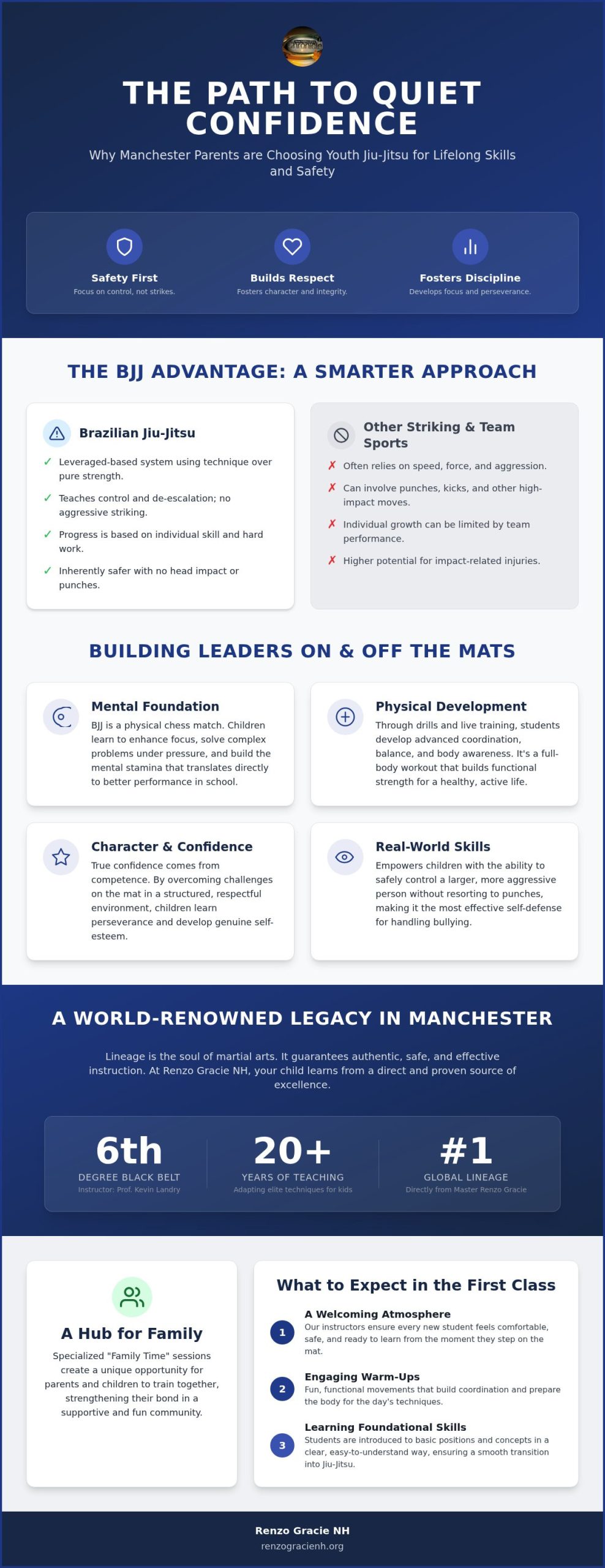
Parents in New Hampshire are looking for more than just physical activity. They want character. They want resilience. While traditional team sports like soccer or baseball offer camaraderie, many families find that Brazilian Jiu-Jitsu provides a unique path for individual development within a team setting. Unlike striking-based martial arts that rely on speed and force, BJJ is a leverage-based system. It teaches children how to control an opponent through technique and positioning. This makes it inherently safer for young bodies. There’s no head impact or aggressive striking. Instead, students learn to navigate physical challenges with calm, calculated movements. This shift toward safety and intelligence is a primary reason why youth jiu jitsu programs Manchester families trust are becoming the preferred choice for local after-school development.

The Physical and Mental Foundation

Build strength. Enhance focus. BJJ serves as a masterclass in body awareness. Through repetitive drills and controlled sparring, children develop advanced motor skills and coordination that carry over into every other aspect of their lives. We call this “disciplined confidence.” It isn’t about being the loudest in the room; it’s about knowing you can handle difficult situations. Manchester parents often report that this focus translates directly to the classroom. When a child learns to solve a complex physical puzzle on the mats, sitting through a math lesson or concentrating on a test becomes much easier. The mental stamina required to earn a new stripe on a belt builds a level of perseverance that few other activities can match.

Manchester’s Community for Young Athletes

The demand for high-quality youth jiu jitsu programs Manchester parents can rely on has never been higher. Our city is moving away from the outdated “tough guy” stereotypes often found in old-school martial arts gyms. We prioritize a safe, inclusive environment where every student feels valued. It’s about finding a local home for long-term growth. Our academy functions as a supportive partner for parents, reinforcing the same values of respect and perseverance taught at home. We move away from intimidating atmospheres and focus on the joy of personal progress. By fostering a culture of collective effort, we ensure that every child has the opportunity to evolve into a confident leader within their community.

  • Safety First: Focus on grappling and control rather than punches and kicks.
  • Individual Pace: Children progress based on their own hard work, not the performance of a team.
  • Real-World Skills: Practical self-defense that builds genuine self-esteem.
  • Inclusive Culture: A welcoming space for all skill levels and personalities.

The Renzo Gracie Legacy: Expert Instruction in NH

Lineage is the soul of martial arts. It represents a chain of knowledge passed from master to student over generations. At Renzo Gracie NH, this chain is led by Professor Kevin Landry, a 6th-degree black belt with over 20 years of teaching experience. Choosing between the youth jiu jitsu programs Manchester offers often comes down to the quality of the mentor. A gym’s size or the number of its locations matters far less than the expertise of the person standing on the mats with your child. Professor Landry brings the global prestige of the Renzo Gracie name directly to our local community, ensuring every student receives instruction rooted in a world-renowned legacy of excellence.

Lineage and Why It Matters

Authenticity creates safety. The Renzo Gracie philosophy focuses on efficiency and technical mastery rather than brute strength. This approach is perfect for children because it empowers them to handle larger peers through leverage and timing. Professor Landry’s two decades of experience allow him to adapt these high-level techniques for younger practitioners without losing their core effectiveness. It’s about building a foundation that lasts. Supporting this approach, research from Sacred Heart University indicates that the disciplined environment of martial arts often leads to better emotional regulation in youth than traditional team sports. We translate this academic benefit into daily practice, helping your child discover their own strength through a proven system.

A Supportive Mentorship Environment

Mentorship is a partnership. Our instructors act as authoritative guides who remain approachable and warm. We use a specific rhythm in our classes to maximize learning. Short, high-energy bursts. Calm, detailed instruction. This staccato-then-flow pace keeps energy high while ensuring technical details are understood. It’s a method that builds focus. We prioritize character development alongside physical skill. Respect is earned and given. Perseverance is celebrated. By training in an environment that values the individual’s journey, children learn that hard work leads to personal evolution. If you want to see how this mentorship shapes young leaders, consider starting with a Free Introductory Class to experience our community firsthand.

  • Expert Leadership: Led by a 6th-degree black belt with decades of experience.
  • Direct Lineage: Authentic techniques from the world-renowned Renzo Gracie family.
  • Tailored Teaching: Complex movements broken down into kid-friendly steps.
  • Character First: Focus on respect, discipline, and emotional growth.

Key Benefits of Manchester Youth Jiu Jitsu Programs

Confidence is built. It’s earned through consistent effort and tangible progress. The youth jiu jitsu programs Manchester families trust provide a specific framework for this growth. It isn’t about teaching children how to fight. It’s about teaching them how to avoid a fight entirely. By focusing on grappling and control, children gain the ability to neutralize a physical threat without resorting to aggressive striking. This distinction is vital for safety. It gives them the internal security to walk through school hallways with their heads held high, knowing they have the tools to stay safe.

Overcoming Bullying Without Violence

Stay calm. Stay safe. Bullying is a complex challenge that requires more than just physical skills. At Renzo Gracie NH, we prioritize a “de-escalation first” strategy. Students learn to manage their emotions under pressure. They practice maintaining safe distances and using clear, verbal boundaries. If physical contact becomes unavoidable, they use leverage to control the situation until an adult can intervene. This practical self-defense builds a level of self-esteem that often makes a child a less likely target. Bullies often look for vulnerability; our students project a quiet, disciplined confidence that discourages conflict before it starts.

Discipline for the Modern World

Focus is a superpower. We apply the same principles of precision and focus found in our Law Enforcement Jiu-Jitsu Training to our youth sessions. It’s a structured approach to personal responsibility. Children learn that every achievement is earned through hard work. Our belt system serves as a tangible map for their journey, where earning a new stripe requires perseverance and attention to detail. This mat discipline naturally flows into home and school life. A child who can focus on a complex technical sweep for twenty minutes is a child who can focus on their homework or follow through on their chores at home.

Social development happens naturally on the mats. Through partner-based drills, children learn to communicate and trust one another. They discover the value of collective effort. Training isn’t just about individual success; it’s about helping your teammates improve. This creates a supportive community where children learn to win with humility and lose with grace. It’s physical fitness that feels like play, building strength and vitality while fostering lifelong friendships.

  • Practical Control: Learn to neutralize threats without needing to punch or kick.
  • De-escalation Skills: Focus on verbal boundaries and emotional regulation.
  • Goal Setting: Tangible progress through a structured belt and stripe system.
  • Community Spirit: Partner drills that build trust and social confidence.

Youth Jiu Jitsu Programs in Manchester: Building Confidence Through Lineage

What to Expect in Your Child’s First BJJ Class

Walking into a martial arts academy for the first time can feel intimidating for both parents and children. We’ve built our environment to be the exact opposite. At Renzo Gracie NH, the focus is on a warm, professional welcome. When searching for youth jiu jitsu programs Manchester families often look for a place where their child feels seen and supported from the moment they step onto the mats. Our facility is designed to be a clean, modern, and safe home for your family’s athletic development. We move away from the aggressive atmosphere of traditional combat gyms and prioritize a culture of growth and mutual respect.

Every session follows a purposeful rhythm. We start with a dynamic warm-up designed to improve motor skills, balance, and coordination. Next, we move into the technical portion of the class. Here, students learn the leverage-based movements we’ve discussed, broken down into manageable, easy-to-follow steps. Safety is our absolute priority. Supervised rolling, or live practice, only occurs once students understand the fundamental movements and safety protocols. This ensures that every child can test their skills in a controlled, respectful setting where they feel secure to fail, learn, and eventually succeed.

Age-Appropriate Training Groups

We don’t believe in a one-size-fits-all approach. Younger children focus on movements that develop body awareness and basic control through engaging drills. As they grow into their teen years, the curriculum evolves to include more complex strategies and deeper technical analysis. This tailoring ensures the challenge level matches your child’s developmental stage. Every student progresses at their own pace. There’s no pressure to keep up with anyone else; the only goal is to be better than you were yesterday.

The Introductory Journey

Preparation is simple. For your first day, your child just needs comfortable athletic wear and a water bottle. We even provide a loaner uniform (Gi) for the duration of the trial class, so you don’t need to worry about purchasing gear before you know if the program is the right fit. You’ll have the chance to meet Professor Kevin Landry and our dedicated coaching staff, who are there to guide your family through every step. The best way to begin is by attending a free introductory class. This session allows your child to experience the mats without any pressure, helping them discover the joy of personal progress firsthand. Ready to see the difference for yourself? Book your first session today and start your child’s journey toward disciplined confidence.

  • Welcoming Atmosphere: A professional environment that reduces first-day anxiety.
  • Structured Learning: From dynamic warm-ups to supervised technical practice.
  • Loaner Gear: We provide the uniform for your trial class.
  • Expert Guidance: Direct interaction with Professor Landry and his team.

Renzo Gracie NH: A Hub for Family Martial Arts

Growth is a family affair. While many youth jiu jitsu programs Manchester provides focus exclusively on the child’s development, we believe the strongest foundation is built when the whole family is involved. At Renzo Gracie NH, we’ve cultivated a community hub where parents and children don’t just share a commute to the academy; they share the mats. Our specialized “Family Time” sessions represent a core differentiator in our approach. It’s a dedicated space where the distractions of daily life disappear, replaced by the shared focus of mastering a traditional craft together. We provide the environment; you provide the effort.

Joining our community in Windham and Manchester means more than just signing up for a class. You’re entering a prestigious lineage that prioritizes the well-being of the individual and the family unit above all else. This isn’t an intimidating combat gym. It’s a professional, clean, and modern facility where individuals of all ages and skill levels are welcomed with quiet authority and warm inclusivity. We move away from the aggressive atmosphere often associated with martial arts, focusing instead on the joy of personal progress and the strength found in collective effort.

Family Training Dynamics

Bond through action. Shared learning is one of the most powerful tools for connection available to modern parents. When you step onto the mats with your child, you’re modeling the very perseverance and discipline you want them to embody. They see you face a technical challenge, stay calm under pressure, and work toward a solution. This creates a unique language of mutual respect. For a deeper look at how this works, read about Parent and Child Jiu Jitsu in Windham. By training side-by-side, you strengthen family bonds while building a lifestyle centered on health and vitality.

Getting Started Today

Evolution starts now. We offer flexible membership options designed to make jiu-jitsu accessible for the whole family. Whether you’re interested in our Kids Jiu Jitsu Program or our Adult Jiu Jitsu Program, we ensure a steady progression from your first day to long-term mastery. The path is methodical and purposeful. You’ll be guided by expert mentors who remain accessible and friendly, ensuring you feel supported at every turn. We value hard work, but we prioritize your success.

Discover your potential. We invite you to experience our supportive partnership firsthand by booking a free introductory class. We’ll provide a loaner uniform and a safe, welcoming environment for your first session. Don’t just watch your child grow from the sidelines; join them on the mats and discover the transformative power of the Renzo Gracie legacy for yourself.

  • Family Time: Specialized sessions where parents and children train together.
  • Shared Goals: Build a common language of respect and achievement.
  • Community Focus: A supportive environment for families in Manchester and Windham.
  • Expert Mentorship: Direct access to a 6th-degree black belt and experienced coaching staff.

Empower Your Child’s Future with Disciplined Confidence

Build resilience. Foster respect. Choosing between the various youth jiu jitsu programs Manchester offers is a significant decision for your family’s future. You’ve discovered how a prestigious lineage and the expert guidance of 6th-degree black belt Kevin Landry create a foundation of safety and technical excellence. Our academy isn’t just a place to learn self-defense; it’s a supportive community where children learn to navigate life’s challenges with calm, calculated confidence. By prioritizing leverage over force and de-escalation over aggression, we provide your child with the tools to excel both on the mats and in the classroom.

The journey to personal mastery begins with a single step. We invite your family to join our inclusive environment and experience the transformative power of the Renzo Gracie legacy firsthand. Discover the joy of progress alongside your child in a space dedicated to your collective success. Book Your Child’s Free Introductory Class at Renzo Gracie NH Today! We’re excited to partner with you in building a stronger, more confident future for your child.

Frequently Asked Questions

Is Jiu Jitsu safe for young children in Manchester?

Yes, it’s safer than many other contact sports because it focuses on leverage and control rather than striking. At our Windham and Manchester locations, we prioritize a safe environment where children learn techniques at their own pace under expert supervision. There are no punches or kicks, which significantly reduces the risk of injury. Our instructors ensure that every student understands safety protocols before engaging in any supervised practice on the mats.

Will my child learn to be aggressive through BJJ?

No, your child will learn “disciplined confidence” rather than aggression. We teach students that their skills are for defense and control, not for starting conflicts. By providing a healthy outlet for energy and teaching emotional regulation, our program helps children stay calm under pressure. They learn respect for their training partners and understand that true strength comes from self-control and technical mastery rather than raw force or intimidation.

What age can my child start youth jiu jitsu programs?

Children can typically start our youth jiu jitsu programs Manchester families trust as early as five or six years old. At this developmental stage, the focus is on building motor skills, balance, and basic body awareness through engaging drills. We tailor the curriculum to match each age group’s physical and mental maturity. This ensures that every child, from young beginners to teenagers, progresses in a way that is both challenging and rewarding.

Do I need any special equipment for the first class?

You don’t need to purchase any special gear for your first visit. We provide a loaner uniform (Gi) for the duration of the free introductory class to ensure you have everything you need to experience the mats. Your child should simply wear comfortable athletic clothes and bring a water bottle. If they decide to continue their journey with us, we’ll guide you on how to acquire their own high-quality training equipment.

How many times a week should my child attend BJJ?

We usually recommend attending classes two to three times per week for consistent progress. This frequency allows children to retain techniques and build the “muscle memory” needed for long-term mastery without feeling overwhelmed. Consistency is more important than intensity. By making training a regular part of their lifestyle, students develop the perseverance and focus that translate directly from the mats into their academic and home lives.

Can parents train at the same time as their children?

Yes, we offer specialized “Family Time” sessions specifically designed for parents and children to train together. This is a core part of our mission to build a supportive community for the whole family. Training side-by-side allows you to model perseverance and discipline for your child while sharing the joy of personal progress. It’s a unique bonding experience that strengthens family connections through a shared commitment to health and vitality.

What makes Renzo Gracie NH different from other martial arts schools?

Our direct lineage to the world-renowned Renzo Gracie and the leadership of 6th-degree black belt Professor Kevin Landry set us apart in the Windham and Manchester area. We offer a professional, clean environment that avoids the aggressive atmosphere often found in combat gyms. Our expertise in Law Enforcement Jiu-Jitsu training informs our approach to discipline. We act as a supportive partner for families, prioritizing character development and community over mere competition.

How does BJJ help with school-related bullying?

Our youth jiu jitsu programs Manchester focus on a “de-escalation first” strategy that empowers children to handle bullying without violence. Students learn verbal boundaries and emotional regulation to stay calm in stressful situations. By mastering leverage-based control techniques, they gain the internal security to project confidence. This quiet strength often makes them less likely targets for bullies, as they no longer project the vulnerability that many aggressors look for in school.