My Child Isn’t Competitive: What Sports Can They Play in NH?
What if the best sport for your child isn’t the one that keeps score, but the one that makes them want to come back? If you’re wondering, “my child is not competitive what sports can they play NH?” you’re not alone. Organized sports can feel intense to a child who would rather learn at their own pace or enjoy being active without focusing on winning.
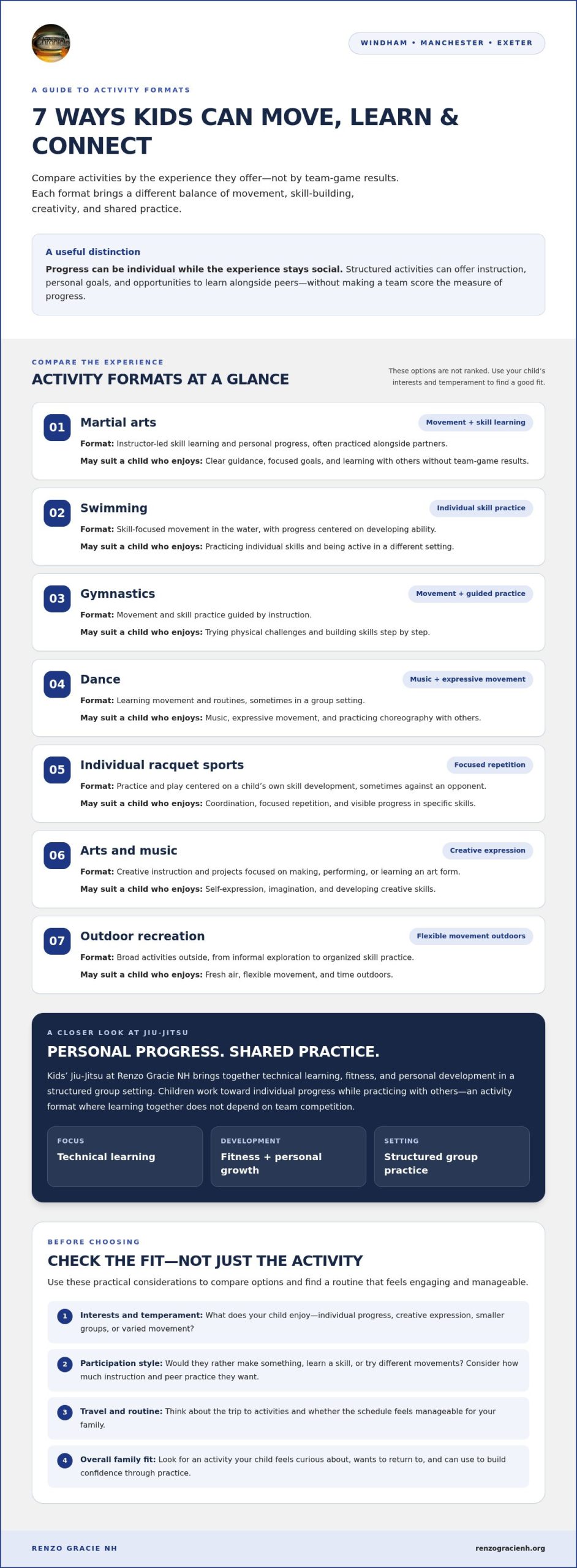
There are plenty of ways for children to move, learn, and build skills without making competition the main goal. Swimming, dance, biking, hiking, and martial arts each offer different ways to explore movement. The right fit depends on what your child enjoys and how the activity is taught.
This guide compares options and shares practical ways to choose an activity based on your child’s interests, comfort, and readiness to try something new. You’ll also learn how kids’ Brazilian Jiu-Jitsu can involve structured practice, respect, and steady skill development. Families in Windham, Manchester, and Exeter can explore a free introductory class at Renzo Gracie NH.
Key Takeaways
- Children can enjoy being active without enjoying competition. Curiosity, cooperation, and personal progress can be rewarding goals.
- Swimming, dance, hiking, recreational cycling, and martial arts offer different ways for children to move and build skills.
- If you’re asking “my child is not competitive what sports can they play NH,” compare activities by your child’s interests, comfort, and preferred pace.
- Brazilian Jiu-Jitsu offers structured practice and gradual skill-building. Practicing the sport doesn’t mean a child must enter tournaments.
- Use a first experience to see how your child responds. Notice the clarity of instruction, beginner support, and participation expectations, then talk about it together.
What if my child isn’t competitive? Start with enjoyment, not winning
A child can love being active without wanting to beat someone else. They might enjoy learning a new movement, solving a physical challenge, spending time with a group, or simply getting outside. Competition is only one kind of motivation. Curiosity, cooperation, and the satisfaction of noticing personal progress can keep a child engaged, too.
For families asking, “my child is not competitive what sports can they play NH,” start with what your child enjoys rather than a sport’s reputation. Youth sports include a range of school and organized activities, and the atmosphere can differ from one program to another. A low-pressure activity puts participation and learning ahead of rankings, even if it still has rules, practice, and friendly challenges.
How to recognize what your child enjoys
Notice how your child chooses to spend active time. Do they like creative movement, working with others, individual challenges, or exploring outdoors? Ask open questions such as, “What part felt fun?” or “Was anything uncomfortable?” Listen without steering them toward your preferred answer. Hesitation can tell you something about the activity or setting; it doesn’t mean your child lacks motivation or ability.
Preferences can change, too. A child who feels unsure in a new setting may become more comfortable with practice, supportive instruction, or simply more time to adjust. Give them room to revise their opinion as they gain experience.
What low-pressure sports can look like
Look for beginner-friendly instruction, flexible participation, and ways to recognize effort beyond a score. A recreational activity can still have structure: children may follow rules, repeat skills, and try friendly challenges. The difference is that a child’s value in the group isn’t reduced to a result or ranking.
- Notice whether instructions help beginners join in and learn step by step.
- Consider whether there is room for your child to build confidence gradually.
- Look for ways to recognize progress beyond winning, such as learning a skill or trying again.
When possible, give your child a chance to experience an activity before making a longer-term commitment. Afterward, talk about what felt enjoyable, challenging, or uncomfortable. Their response can help you decide whether to continue, try a different setting, or explore another kind of movement. Start with interest, then build from there.
Which noncompetitive sports and activities can children try in New Hampshire?
There’s no single right fit. Swimming, dance, hiking, recreational cycling, and martial arts each offer a different way to move and learn. Some children enjoy practicing a skill independently; others feel more at ease learning alongside a group. Since programs vary, consider the activity’s format as well as its name. The Physical Activity Guidelines for Americans offer a useful reminder that finding enjoyable ways to be active matters.
Activities for children who prefer individual progress
Swimming can let a child focus on comfort in the water and build skills step by step. Dance combines movement with music and creative expression, with progress often measured in new movements rather than scores. For a child who likes fresh air, recreational cycling or hiking can make activity feel like exploration. Consider your child’s interests, comfort, accessibility needs, and the practical details of getting to and participating in the activity.
Activities for children who like learning with others
Some recreational team activities emphasize taking turns, cooperating, and joining in instead of making the score the main event. Martial arts offer another group setting. Brazilian Jiu-Jitsu involves learning physical skills through structured practice, and children can focus on listening, trying techniques, and developing gradually without treating tournament participation as a requirement. Learn more about kids’ Jiu-Jitsu in New Hampshire.
Keep the New Hampshire setting in mind. Swimming or dance can provide indoor activity, while hiking and cycling are often shaped by outdoor conditions and the season. Travel distance and your family’s routine matter, too. An activity your child enjoys and can attend consistently may be easier to sustain than one that makes the schedule stressful. For families in Windham, Manchester, and Exeter, think about how the trip fits into the rest of the week.
- Solo or self-paced: Swimming, dance, cycling, or hiking can give children space to notice their own progress.
- Small-group learning: Martial arts may suit a child who likes clear instruction and practicing alongside others.
- Group participation: Recreational team activities can offer cooperation and shared play, with the experience depending on the program.
If you’re wondering, “my child is not competitive what sports can they play NH,” let your child’s interests guide the first try, then see how the setting feels in practice. Families curious about Brazilian Jiu-Jitsu can explore a free introductory class at Renzo Gracie NH.
Could Brazilian Jiu-Jitsu suit a child who isn’t competitive?
It could, especially if your child enjoys movement, learning how things work, and practicing alongside others. Brazilian Jiu-Jitsu is a structured martial art where students learn physical techniques and work with training partners. A child can take part in practice without entering tournaments. Training the sport and choosing to compete are separate decisions.
That distinction can reassure parents asking, “my child is not competitive what sports can they play NH?” Competition doesn’t have to be the reason a child tries Jiu-Jitsu. They might be interested in remembering a sequence, working through a physical challenge, or learning to practice respectfully with a partner. Children respond differently, so notice how your child feels during and after the experience.
What children can learn through Jiu-Jitsu practice
Instruction suited to a child’s age and skill level can introduce movements and techniques gradually, giving students a chance to watch, try, and practice. Learning alongside partners also makes respect and attentive communication part of the experience. Over time, a child may notice progress in recalling a technique or persisting through a difficult drill. Those are meaningful signs of effort, whether or not winning is a goal.
Structured practice can create opportunities to work on focus, perseverance, and personal development, but no two children respond in exactly the same way. Some may enjoy the physical problem-solving; others may need time to feel comfortable with a new activity or partner. Let their interest develop at its own pace.
How to tell whether the setting feels right
During an introductory experience, notice whether instructions are clear, welcoming, and suitable for beginners. Does your child have room to listen and try without feeling rushed? Afterward, ask what they liked, what felt unfamiliar, and whether they’d be interested in returning. Their comfort and willingness to try again are useful signals, even if they’re still unsure.
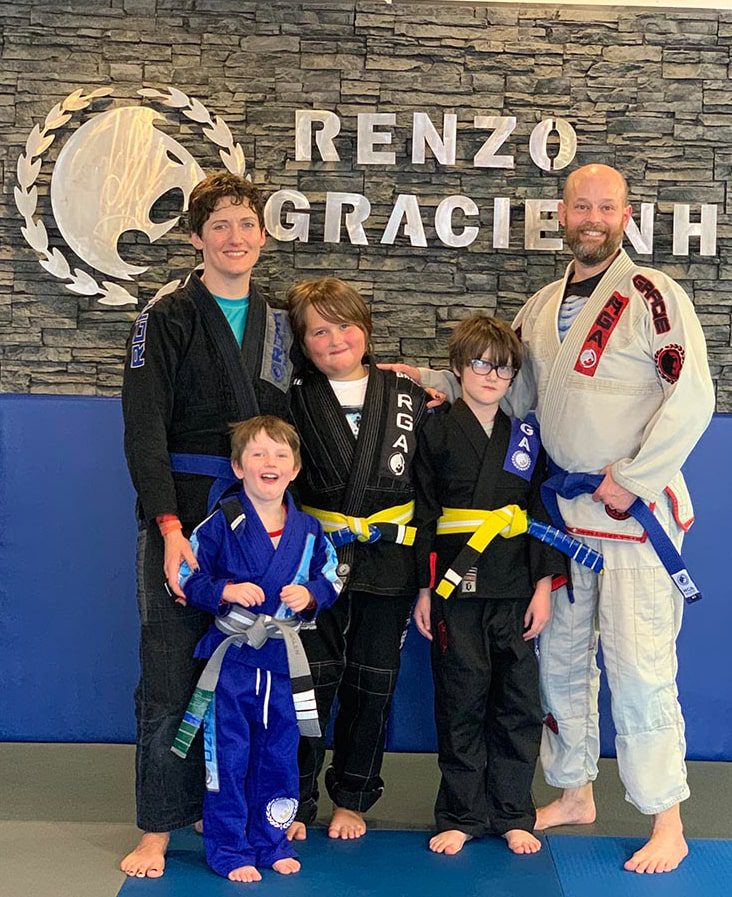
At Renzo Gracie NH, children learn in a safe environment with instruction suited to different ages and skill levels. New students can experience a complimentary introductory class before making a longer-term decision. If learning together appeals to your family, explore parent and child Jiu-Jitsu in Windham as another way to consider family participation.
How New Hampshire parents can choose an activity that fits their child
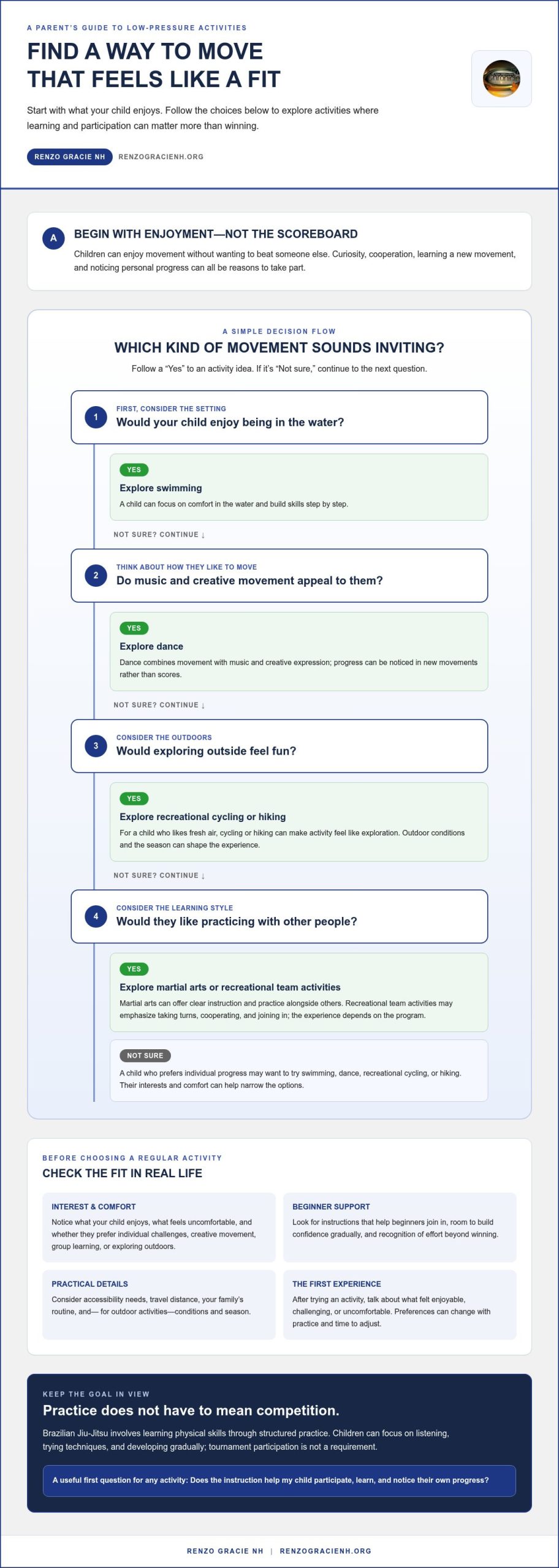
A good fit starts with listening, then trying an activity without treating the first visit as a test. If you’re asking, “my child is not competitive what sports can they play NH?” focus on what your child enjoys, how the environment feels, and whether the activity works for your family’s routine. A child who dislikes scorekeeping may still enjoy a particular sport, while another may be reacting to a setting that feels unfamiliar or pressured.
Questions to ask before trying a sport
Start with a few open questions: Does your child prefer moving individually or with a group? Do they enjoy outdoor activity, creative movement, or learning skills step by step? Ask what they hope to get from the activity, such as having fun, learning something new, or being active with others, rather than focusing on winning. Then weigh practical factors like travel time, seasonal routines, schedule, equipment, and family commitments.
For families near Windham, Manchester, or Exeter, the drive and fit with the rest of the week can shape whether an activity feels manageable. Keep expectations simple: identify a possible match, try it, and talk about the experience together.
A simple way to review the first experience
Afterward, ask what felt enjoyable, what felt challenging, and whether anything seemed worth trying again. Give your child time to think; one nervous first moment may reflect the new setting rather than a firm dislike. If discomfort or pressure keeps coming up, consider whether a different activity, pace, or environment might suit them better.
Pay attention to the experience as a whole. Clear, welcoming instruction and support for beginners can help a child understand what to do, while appropriate participation expectations leave room to learn gradually. At Renzo Gracie NH, kids’ Brazilian Jiu-Jitsu instruction is suited to different ages and skill levels, with an emphasis on personal development in a safe learning environment. Children may respond differently, so notice their comfort and interest instead of assuming one activity will fit every child.
For a low-pressure way to experience kids’ Jiu-Jitsu, book a free introductory class at Renzo Gracie NH. A first visit can help your family decide together whether the activity feels like a promising next step.
A welcoming first step: explore kids’ Jiu-Jitsu at Renzo Gracie NH
For a child who likes moving, learning new skills, and working with others, Brazilian Jiu-Jitsu may be worth exploring. At Renzo Gracie NH, kids learn in a safe environment with instruction suited to different ages and skill levels. The focus includes personal development, so competition doesn’t have to be the measure of whether the activity is worthwhile.
Trying a class can make the idea more familiar. Renzo Gracie NH offers new students a complimentary introductory class, giving your child a chance to experience the activity before your family makes a longer-term commitment. A first visit is simply a chance to learn what the class feels like.
What families can consider before an introductory class
Before attending, talk together about what interests your child and what they may be unsure about. They might be curious about learning techniques or worried about joining a new group. Let them know they can focus on trying, listening, and noticing how the experience feels. They don’t need to decide whether they want to compete.
Afterward, ask what felt comfortable, what sparked curiosity, and whether they’d like to learn more. One visit doesn’t have to settle the question. A child can explore an activity, take time to reflect, and decide what feels right for them.
Keep the focus on your child’s own progress
With consistent practice, children have opportunities to notice their effort and developing skills, such as remembering a movement or giving a challenging task another try. Progress looks different for each student. Comparing a child’s pace, athletic ability, or results with someone else can distract from the learning that’s happening. Instead, recognize small steps and the willingness to keep practicing.
Brazilian Jiu-Jitsu can offer a structured setting for working on focus, respect, and perseverance, though every child’s experience is their own. Explore how Jiu-Jitsu supports children’s development to learn more about the ways practice can contribute to personal growth.
If you’re still asking, “my child is not competitive what sports can they play NH?” consider a first experience that centers on learning rather than winning. Renzo Gracie NH’s complimentary introductory class offers a welcoming way to see whether kids’ Jiu-Jitsu interests your child. Try a free Jiu-Jitsu class in New Hampshire, and let your child take the first step at their own pace.
Choose a first step that fits your child
The right activity is one your child feels curious about, not necessarily the one with the most trophies. Swimming, dance, hiking, cycling, and martial arts offer different ways to move, learn, and make progress. Ask what feels enjoyable, consider your family’s routine, and let a first experience guide the next decision.
If you’re still wondering, “my child is not competitive what sports can they play NH?” Brazilian Jiu-Jitsu may be one option to explore. Practice can center on learning skills and steady personal progress, while competition remains a separate choice. At Renzo Gracie NH, children learn in a safe environment with instruction suited to different ages and skill levels. Professor Kevin Landry, a sixth-degree black belt under Renzo Gracie, has taught in the region for more than two decades.
A complimentary introductory class gives new students a chance to experience Jiu-Jitsu before making a longer-term commitment. Notice what your child enjoys, how comfortable they feel, and whether they’re interested in learning more. Try a free introductory Jiu-Jitsu class at Renzo Gracie NH, and let your child take their next step at their own pace.
Frequently Asked Questions
Is Brazilian Jiu-Jitsu a good sport for a child who does not like competition?
Brazilian Jiu-Jitsu may suit a child who enjoys movement, structured learning, and practicing skills with others. Competition doesn’t have to be the reason a child begins martial arts; families can focus on participation and personal progress. Every child responds differently, so notice how your child feels during an introductory experience and whether they’re curious about continuing. A welcoming first step can help you assess the fit without deciding everything in advance.
What sports are good for kids who are not competitive?
Swimming, dance, hiking, recreational cycling, and martial arts may appeal to children for different reasons. Some emphasize individual skill-building, while others offer group connection without making winning the main goal. If you’re asking, “my child is not competitive what sports can they play NH?” start with their interests, then consider the activity’s learning environment, your family’s routine, and options near Windham, Manchester, or Exeter.
Can my child do Jiu-Jitsu without entering tournaments?
Yes, a child can explore Brazilian Jiu-Jitsu for instruction, movement, and skill development without making tournament participation the goal. Ask what they enjoy about practice and notice their comfort and interest as they learn. Training in a structured martial art and choosing to compete are separate decisions.
How do I know if my child is ready to try a sport?
A child doesn’t need confidence or prior experience to try an activity. Curiosity, or a willingness to explore something new with your support, can be enough to take a first step. Talk about what to expect, acknowledge that it’s normal to feel nervous, and give them time to reflect afterward. One introductory class or session can help your family assess the fit, but one visit doesn’t have to settle the decision.
What can my child do if they dislike team sports?
Consider activities with more individual skill practice, such as swimming, dance, hiking, or martial arts. Individual focus doesn’t mean a child has to learn alone; instruction and practice can still happen in a group setting. Ask what they dislike about team sports. It may be the scorekeeping, group size, pace, or a particular experience, and understanding the concern can help you find a more comfortable activity.
Are martial arts too aggressive for a child who is not competitive?
Not necessarily. Martial arts vary, and Brazilian Jiu-Jitsu instruction can focus on learning, control, respect, and appropriate partner practice rather than winning. A child’s experience depends on the class environment and teaching approach. During an introductory class, notice whether beginners receive clear guidance and whether your child seems comfortable and interested in returning. At Renzo Gracie NH, kids learn in a safe environment with instruction suited to different ages and skill levels.
What should New Hampshire parents consider when choosing an activity?
Think about your child’s interests, the activity’s learning environment, travel time, and your family’s schedule. In New Hampshire, seasonal routines can also shape the choice: consider whether an indoor activity or outdoor option fits your plans as the weather and daylight change. Families near Windham, Manchester, and Exeter may find that a manageable commute makes participation easier. Try an introductory session, then ask your child how it felt before deciding what comes next.