Social Skills for Shy Kids in Windham: Parent’s Guide
What if helping a shy child connect starts with less pressure, not more? If your child hangs back from group activities, it’s natural to want to help while also wondering whether encouragement might feel overwhelming. Building social skills for shy kids Windham parents can support often begins with small, familiar chances to listen, take turns, and join in at a comfortable pace.
This guide offers practical ways to make everyday communication more manageable and help your child explore peer activities without expecting them to become outgoing overnight. You’ll learn how to notice their comfort level, encourage low-pressure practice, and consider whether a structured activity could be a good fit. Brazilian Jiu-Jitsu brings children together around shared practice, with opportunities to listen, take turns, and interact as they learn. At Renzo Gracie NH in Windham, children can explore Jiu-Jitsu in a supportive setting. Small steps count.
Key Takeaways
- Quietness is a temperament, not a flaw to fix. Social skills can be practiced without asking a child to become more outgoing.
- For building social skills for shy kids Windham parents can start with one manageable interaction and adjust to the child’s comfort.
- Compare informal play, small-group activities, and structured classes to find the right balance of predictability and peer interaction for your child.
- Use a simple plan: notice what feels comfortable, choose one skill to practice, then reflect and adjust without setting a deadline for change.
- Shared tasks in children’s Brazilian Jiu-Jitsu offer opportunities to listen, take turns, and interact with peers. Each child’s experience is individual.
What Does Building Social Skills Mean for a Shy Child in Windham?
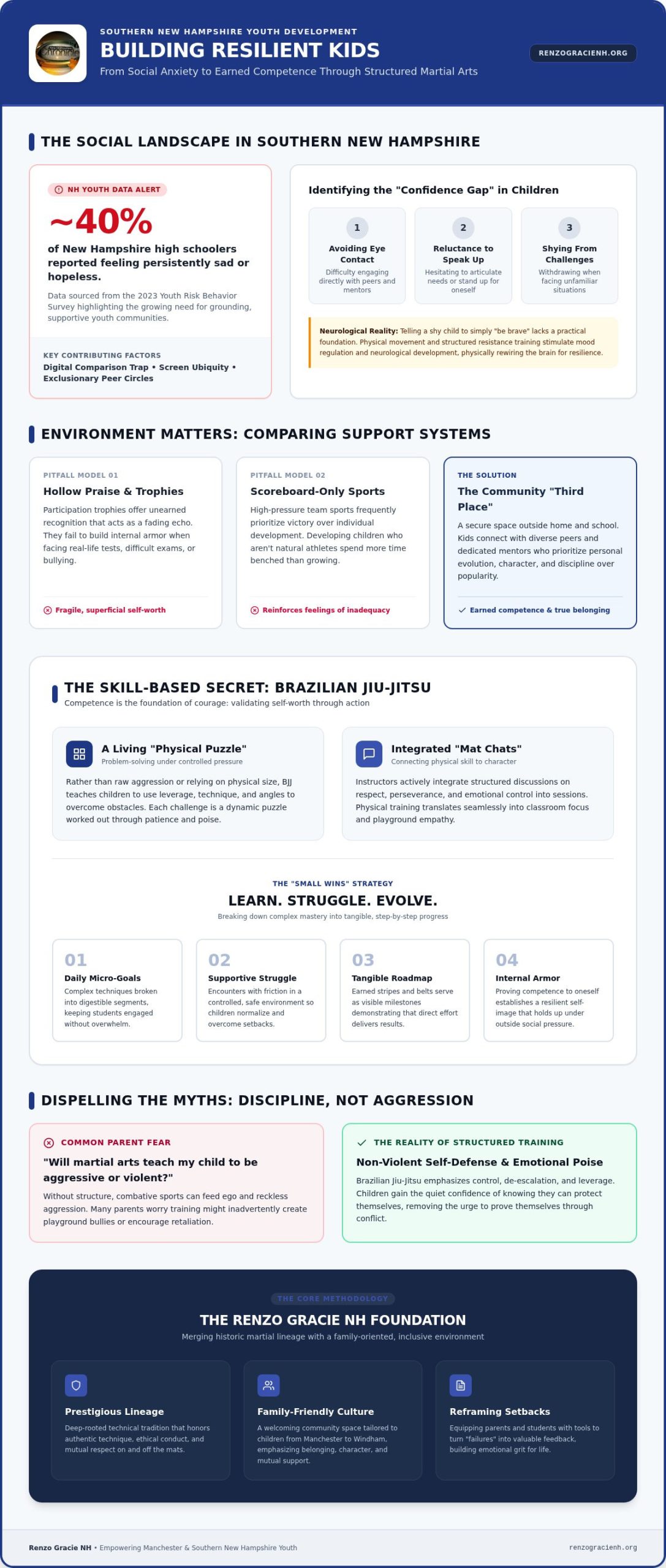
Social skills are learnable behaviors that help children communicate, connect, and take part with other people. They include listening, taking turns, joining play, expressing needs, and noticing how others respond. These abilities develop through everyday experience, not by changing a child’s personality. The Social skills overview describes the broad range of behaviors involved in interacting with others. For parents, a practical starting point is to identify specific actions a child can try.
A quiet temperament isn’t a problem to solve. A child may prefer observing before joining in, enjoy one-on-one conversation more than a busy group, or need time to warm up to unfamiliar people. The aim of building social skills for shy kids Windham parents support is not to make a child louder or constantly sociable. It’s to help them communicate and participate in ways that feel manageable and true to who they are.
Comfort can change with the setting, the people present, how familiar an activity feels, and the size of the group. A child who speaks freely with cousins might be quiet at a new club, then become more engaged after watching for a while. Notice these differences without treating any one moment as a measure of ability. They can help you identify where your child feels comfortable enough to practice.
How can parents tell when a child feels socially hesitant?
Look for observable moments: your child waits near a game before joining, answers quietly in a new group, or checks your face before speaking to someone unfamiliar. These can be ordinary signs of caution. Notice whether your child settles after observing or remains distressed, and whether the same difficulty appears in familiar and unfamiliar settings. Rather than labeling the behavior, identify situations where connection already comes more easily, such as chatting with one trusted friend or playing alongside a sibling.
Which social skills can children practise in everyday moments?
Everyday interactions offer small, low-pressure practice. Before a playdate, you might rehearse a greeting or the words, “Can I join?” At dinner, model listening and responding by asking a question about someone’s day. Keep the focus on one skill at a time, then give your child room to try it without demanding a perfect performance.
Children can also practice saying, “I need help,” or “I don’t want to do that,” so they can ask for support and set boundaries. A short pause in conversation is normal; you can show that nobody has to rush to fill every silence. For parents in Windham, Manchester, and Exeter, building social skills for shy kids can start with these ordinary exchanges at home, then grow through familiar activities at the child’s pace.
How Low-Pressure Practice Helps Shy Kids Build Social Confidence
Social confidence can grow through small experiences that feel manageable, not through pressure to perform. A child might first watch a game, then stand nearby, and later ask to take a turn. That gradual path gives them room to understand what’s happening and choose how to participate. Building social skills for shy kids Windham families can support means valuing each step, even when it looks modest from the outside.
Repeated, low-pressure practice gives children chances to rehearse social behaviors and become more familiar with using them. Familiarity doesn’t mean every interaction will feel easy, and it doesn’t require a child to become more outgoing. Progress might simply mean trying a greeting or staying with an activity a little longer.
Your role is to prepare and encourage, not to speak for your child or decide that they must join. Model a phrase, explain what to expect, then leave space for them to respond in their own way. The New York State Department of Health’s Understanding Social-Emotional Development in Children discusses how interactions with caregivers contribute to children’s social-emotional development. Everyday exchanges can offer a calm place to practice.
How can parents make a first interaction feel manageable?
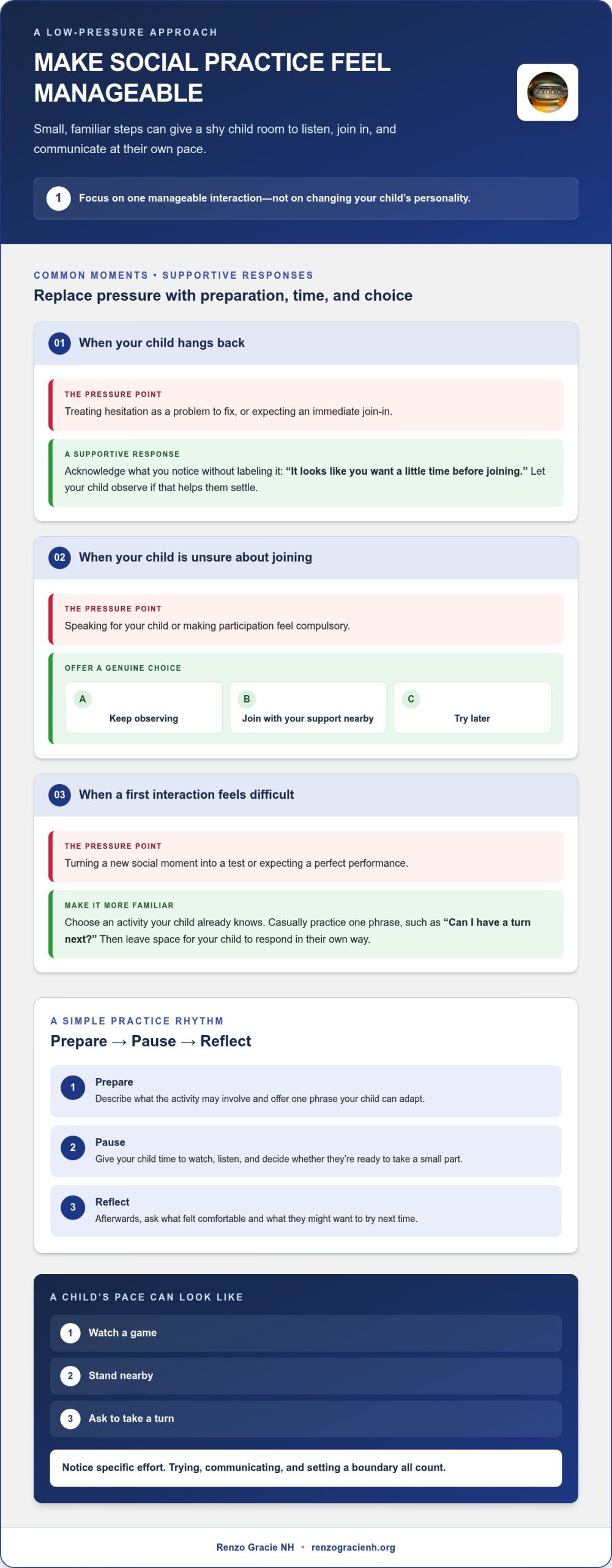
Choose an activity your child already knows, then agree on one small, clear goal. At a familiar playground, that might mean watching a game and asking, “Can I have a turn next?” Before visiting, practice the words casually, without turning them into a test. Once there, let your child observe first if that helps them settle. They can decide when to try the phrase or choose another small step.
A simple progression can keep practice supportive:
- Prepare: Describe what the activity may involve and offer one phrase your child can adapt.
- Pause: Give them time to watch, listen, and decide whether they’re ready to take a small part.
- Reflect: Afterwards, ask what felt comfortable and what they might want to try next time.
How should adults respond when a child hangs back?
Start by acknowledging what you notice without attaching a label: “It looks like you want a little time before joining.” Then offer a genuine choice: keep observing, join with your support nearby, or try later. This respects the child’s feelings while keeping participation possible. Avoid speaking on their behalf unless they need help, and don’t make praise depend on being bold or chatty.
Notice specific effort instead: “You waited, then asked for a turn,” or “You told me you needed help.” These observations show that trying, communicating, and setting a boundary all count. A structured children’s Brazilian Jiu-Jitsu class is one shared activity to explore at the child’s pace. At Renzo Gracie NH, children learn alongside others in a supportive setting. Let your child’s experience guide the next step.
Which Activities Give Shy Children Helpful Ways to Practise Social Skills?
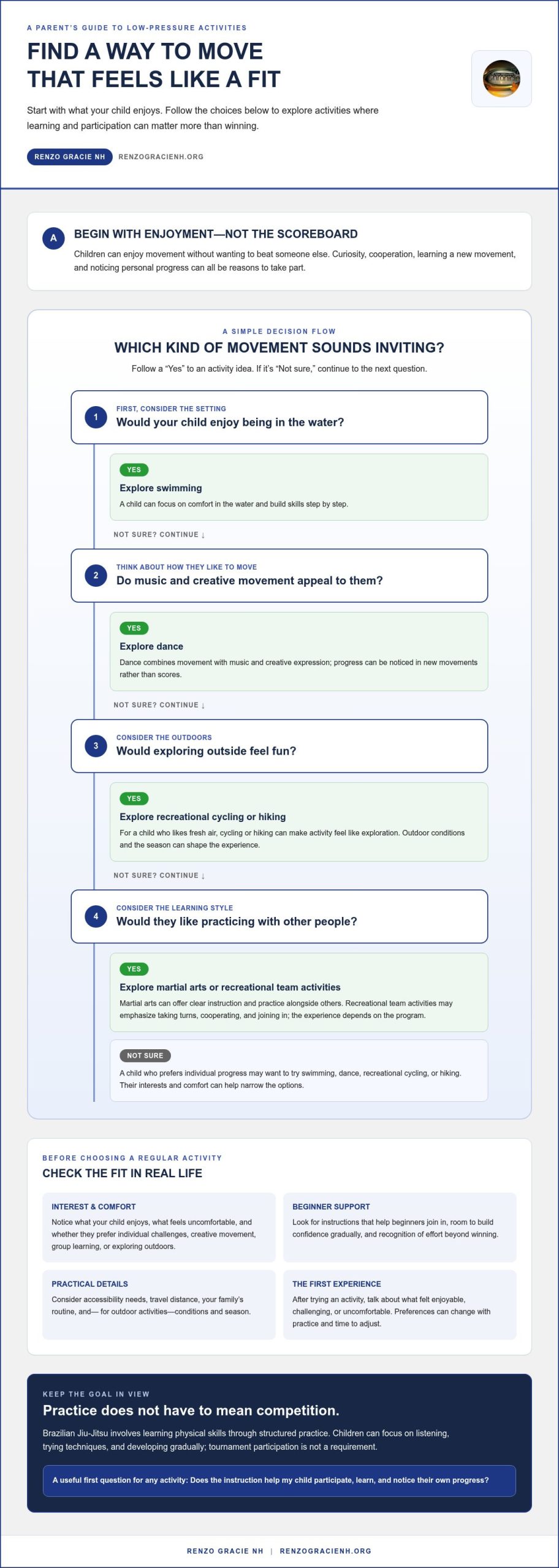
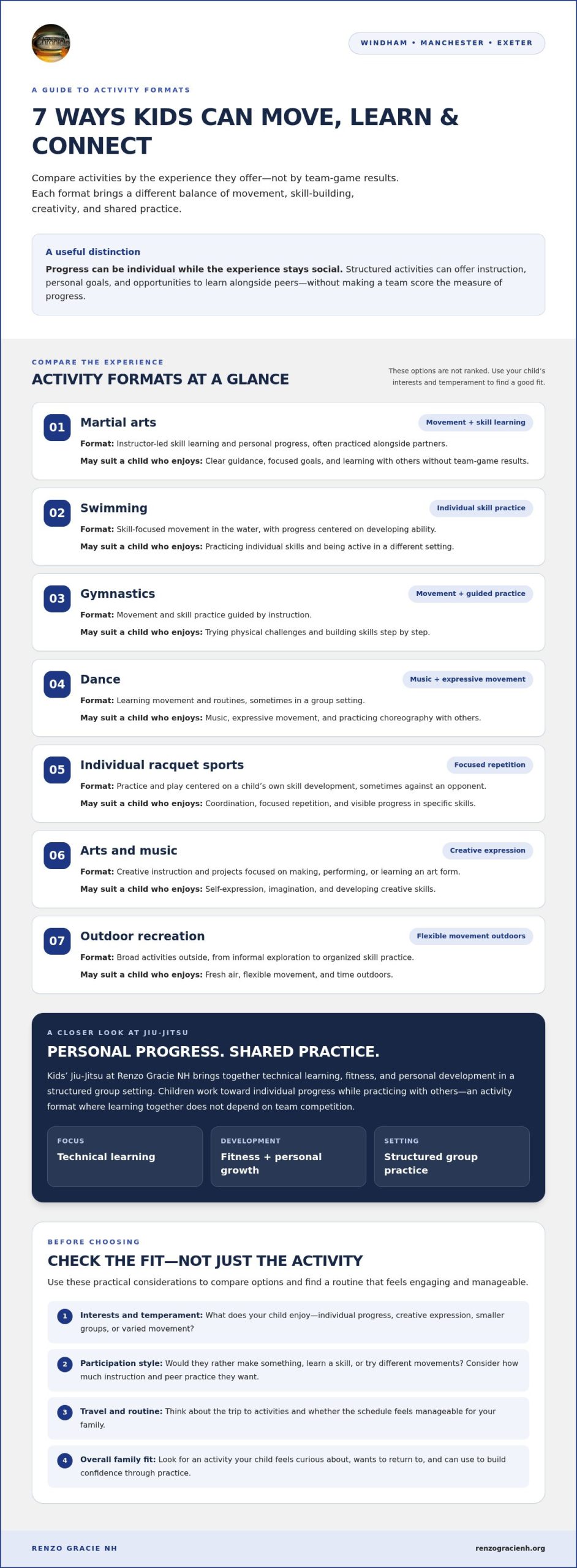
Different activities offer different kinds of social practice. Informal play can feel flexible and familiar; a small-group activity may give children a shared focus; a structured class can make the sequence of activities easier to anticipate. None is automatically the best choice. For building social skills for shy kids, families in Windham, Manchester, and Exeter can consider their child’s interests, comfort, and response to each setting, then start with an approachable option.
What can informal play and small groups offer?
Familiar play gives children chances to interact without making conversation the main event. Building a game together, sharing materials, or taking turns on the swings can prompt a child to initiate, respond, and negotiate naturally. A smaller or familiar group may feel more manageable for some children, while others enjoy the energy of a larger activity. Watch your child’s cues rather than assuming one group size suits everyone.
| Setting | Social practice | Possible considerations |
|---|---|---|
| Informal play with a familiar peer | Greeting, sharing, taking turns, and suggesting what to play | Flexible and familiar, though the interaction may change direction quickly |
| Small-group activity | Listening, waiting, contributing an idea, and cooperating around a shared task | A shared focus can ease conversation, but comfort depends on the group and activity |
| Structured class | Following instructions, taking turns, and interacting during organized practice | A clear routine may help some children; a new setting or activity can take time to get used to |
How can a structured class support social practice?
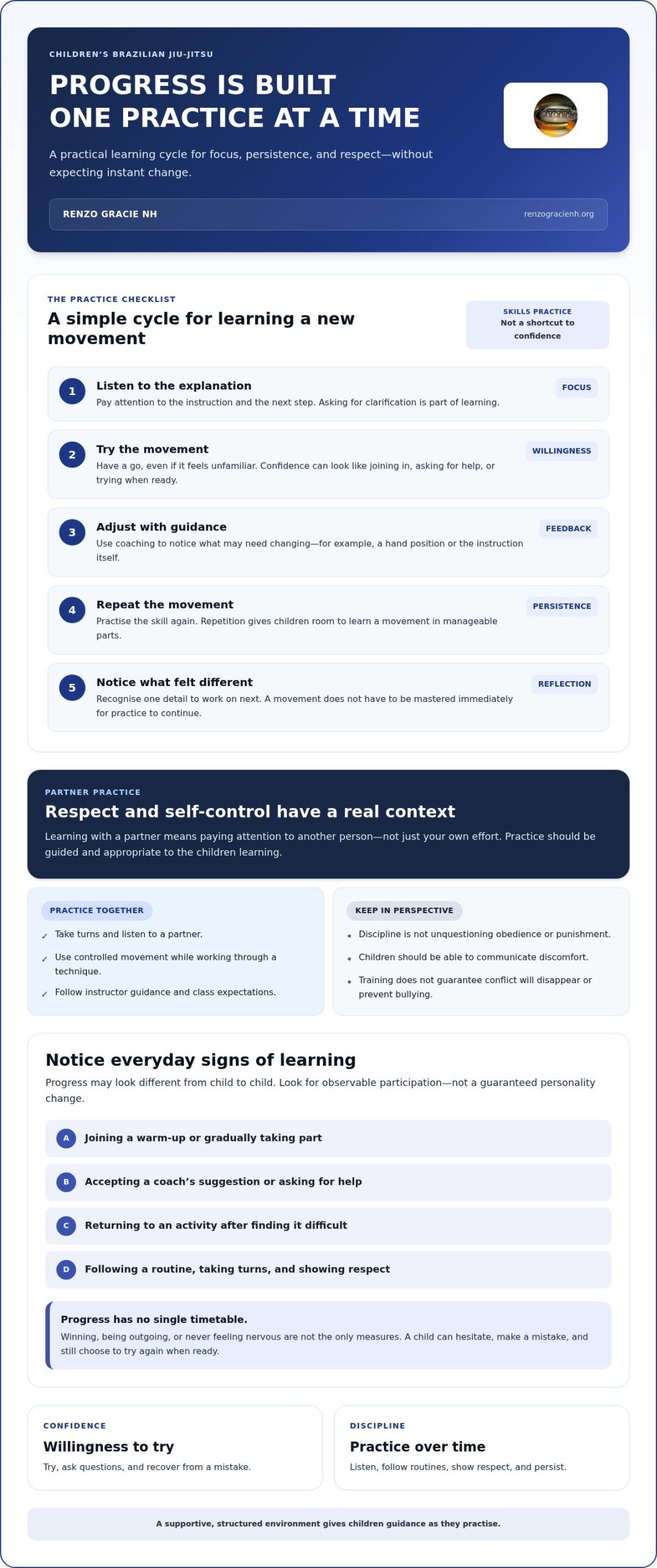
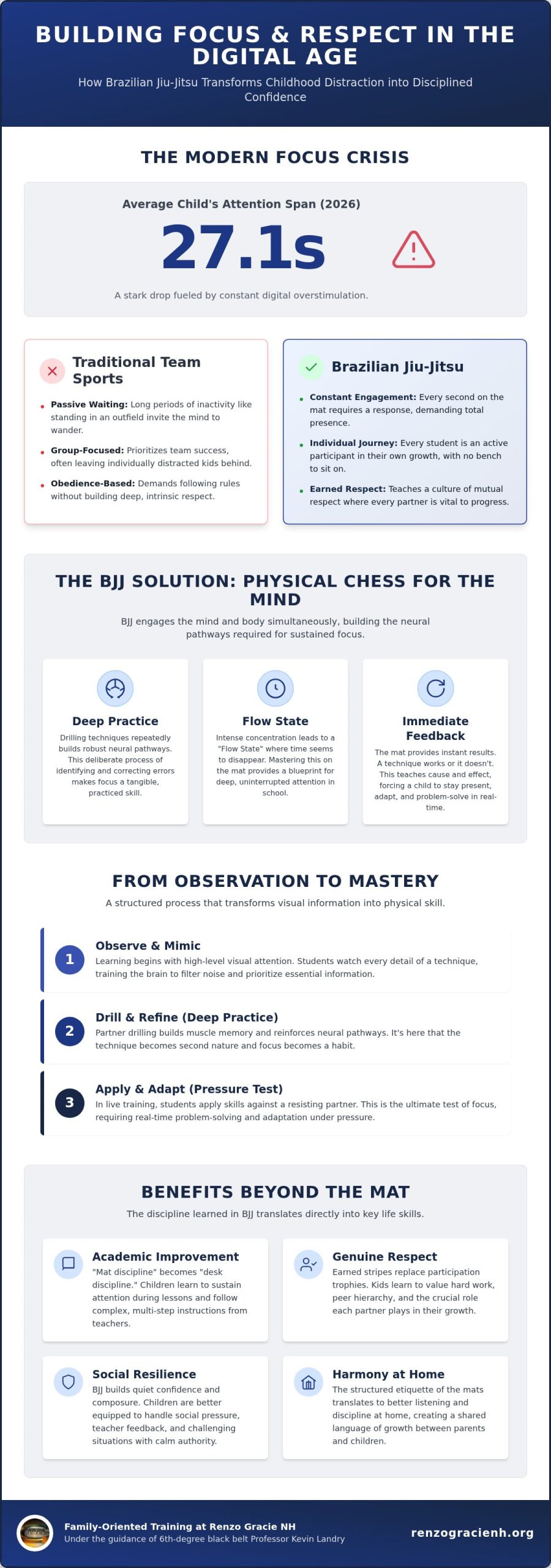
A class with planned instruction and shared activities may give children a clear reason to listen and take part. The activity itself provides a focus, so interaction doesn’t have to rely on spontaneous conversation. A child can observe first, follow along, and engage at a comfortable pace as they become familiar with the setting.
Brazilian Jiu-Jitsu is one option, not a guaranteed route to social confidence or a substitute for every child’s preferred activity. It includes partner practice, which creates opportunities to take turns, pay attention to another person, and work through a shared task. Renzo Gracie NH offers kids’ Jiu-Jitsu instruction in New Hampshire in a supportive environment. New students can try a complimentary introductory class, giving families a chance to experience the setting together.
After any activity, notice more than whether your child spoke a lot. Did they seem curious, settle in after watching, or want to return? Their comfort and interest can help guide the next choice. The best fit is a setting where they can participate without feeling pushed, whether that’s a familiar playdate, a small group, or structured practice.
Step-by-Step Social Skills Plan for Your Child’s Pace
A simple plan keeps practice focused on what your child is ready to try, rather than on a deadline or a checklist of social milestones. Families in Windham, Manchester, and Exeter can use ordinary moments at home, on the playground, or during a familiar family gathering. Start with observation, agree on one small action, and let your child’s response shape what comes next. Keep the aim clear: offer practice, not pressure.
- 1. Notice comfort. Pay attention to where your child seems at ease, who they naturally engage with, and what happens just before they hang back. This helps you choose a setting that feels familiar enough for practice.
- 2. Choose one skill. Ask your child what feels manageable. It might be greeting a peer, taking a turn, asking one question, or telling someone they need help. One goal is plenty.
- 3. Practice together. Try the words at home through a short role-play, or model the interaction yourself. Keep it casual and give your child room to adapt the phrase to their own voice.
- 4. Reflect without grading. After the moment, ask what felt comfortable, tricky, or enjoyable. Listen without turning the answer into a review of whether they “did it right.”
- 5. Adjust the next chance. Repeat the same small step in a familiar setting, make it easier, or pause and try another time. Let your child’s feedback and observed comfort guide the pace.
How do you choose a realistic first social goal?
Make the goal small enough that your child can picture doing it. Ask, “What would feel okay to try?” If they aren’t sure, offer a few options, such as saying hello, asking to take a turn, or asking one question about a game. Agree that observing first is also allowed. The goal can change if the setting feels different than expected.
How can parents review progress without adding pressure?
Choose a calm moment afterward and ask open questions: “What part felt easiest?” or “Was there anything you’d like to do differently next time?” Recognize an attempt, a request for help, or a clear boundary, even if a conversation didn’t follow. If your child says the interaction felt too hard, treat that as useful feedback and make the next opportunity more manageable.
Progress is a child’s willingness to try a manageable step, not how popular, talkative, or instantly comfortable they seem. That’s a helpful measure for building social skills for shy kids in Windham without comparing one child’s pace to another’s.
A shared activity may be a useful next step if your child is interested in learning through movement and practice with others. Renzo Gracie NH’s complimentary introductory class lets families experience children’s Brazilian Jiu-Jitsu instruction together.
How Renzo Gracie NH Can Give Shy Kids a Supportive Place to Practise
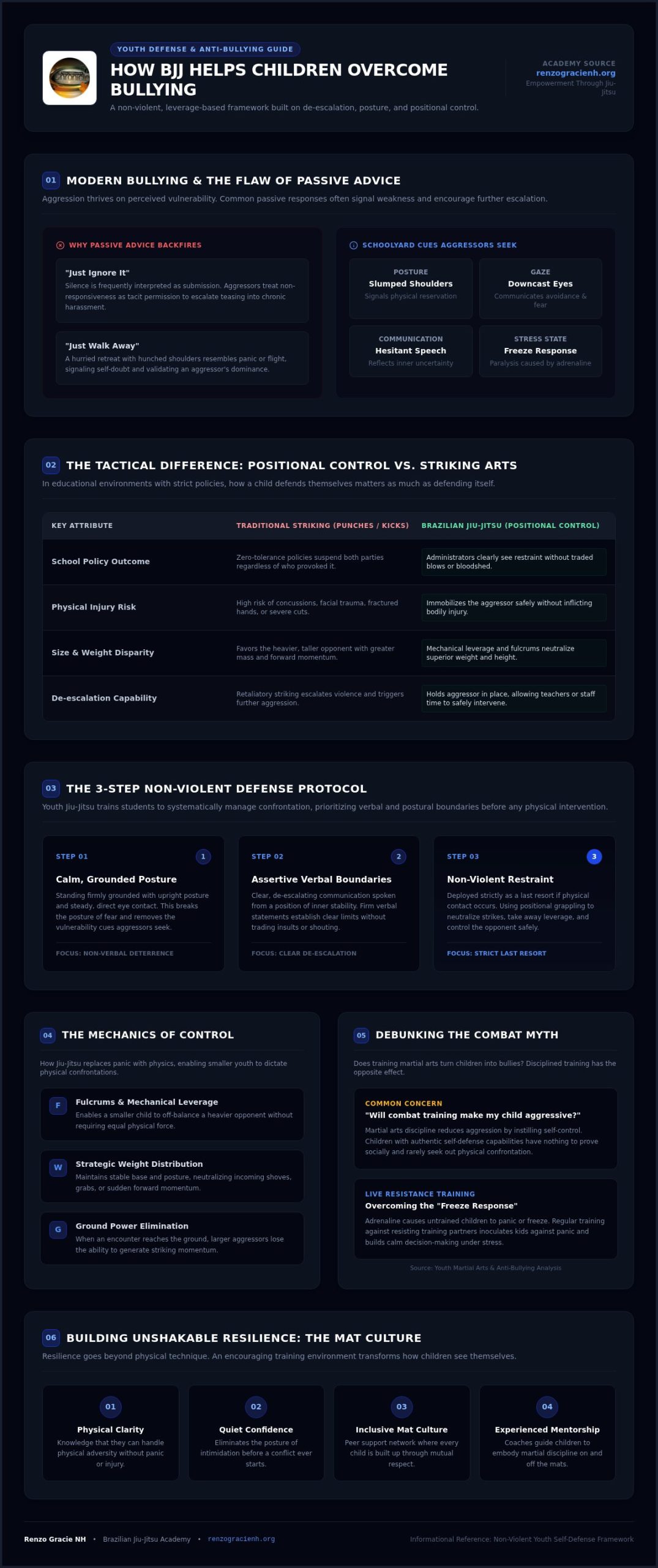
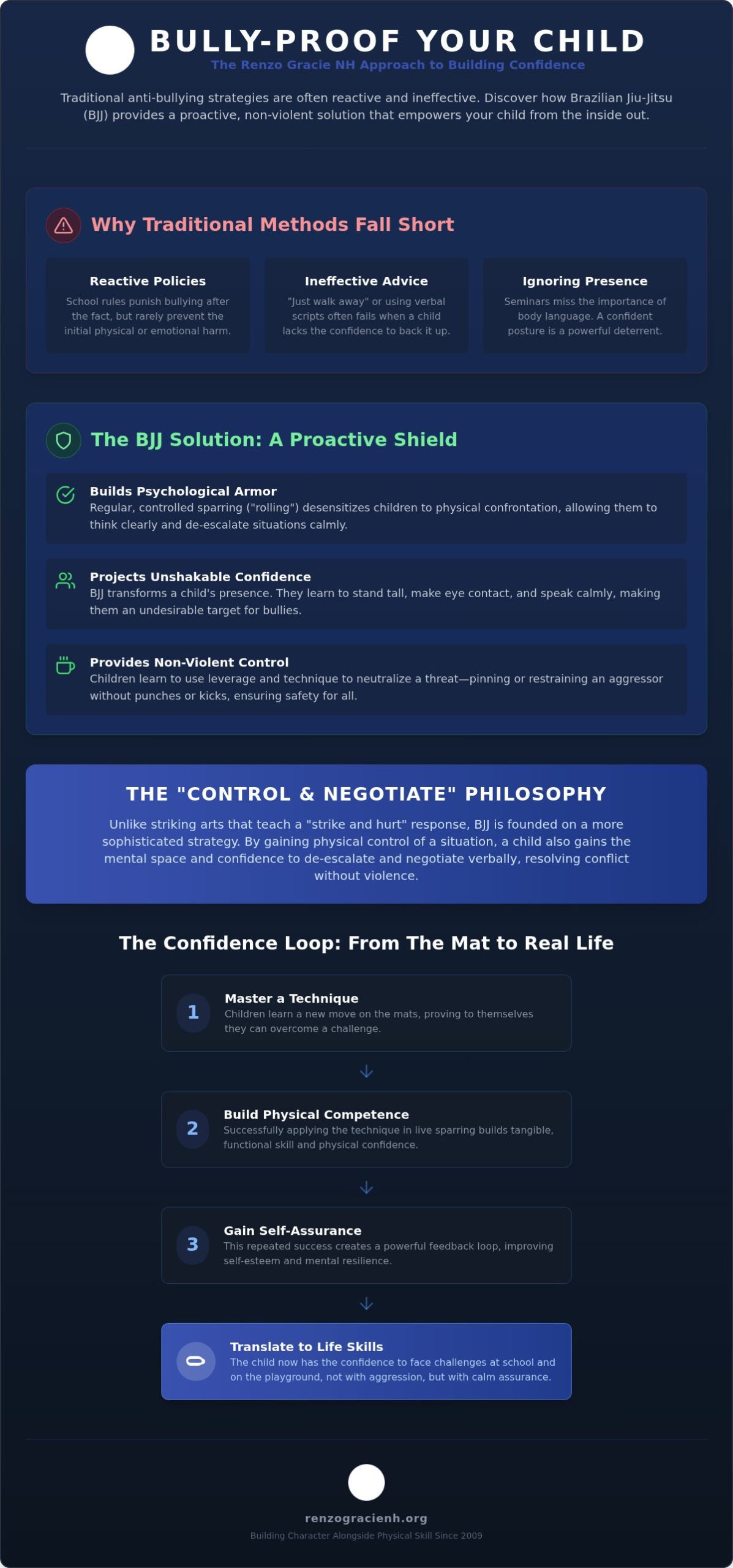
A structured activity can be a useful next step when a child enjoys learning through movement or shared tasks. At Renzo Gracie NH, children’s Brazilian Jiu-Jitsu instruction takes place in a community-oriented setting. Partner practice gives students a shared activity and opportunities to listen, take turns, and work alongside someone else. Each child’s experience is individual; participation doesn’t guarantee friendships or a particular social outcome.
For families thinking about building social skills for shy kids in Windham, fit matters more than whether a child appears outgoing on the first day. Consider whether your child shows interest in the activity, feels respected in the environment, and can approach participation at a comfortable pace. Technical development, fitness, and personal growth are part of the instruction’s aims. Respect and supportive participation help shape the experience.
What can families expect from a children’s Jiu-Jitsu setting?
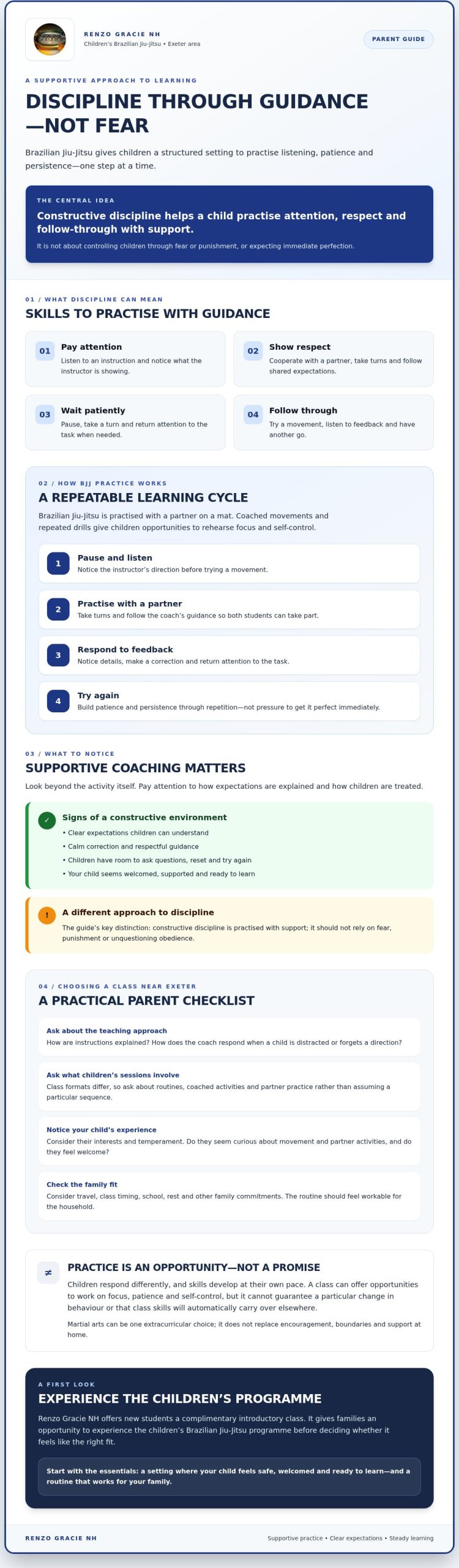
Brazilian Jiu-Jitsu is a martial art, so children learn physical techniques as well as practice alongside others. Shared instruction and partner work give a child a task to focus on, rather than requiring them to start a conversation without a reason. This may suit a child who prefers doing an activity together before talking more freely. A parent and child Jiu-Jitsu guide for Windham also explores how training can create shared family time.
How can a family take a comfortable first step?
Before trying an activity, talk with your child about what interests them and what feels uncertain. They may wonder what the class will be like, whether they’ll know anyone, or what happens if they feel nervous. Listen without dismissing the concern. You can explain that trying something new doesn’t require immediate confidence, and that asking for help or taking time to get comfortable is okay.
During an introduction, stay attentive to your child’s cues. If they’re hesitant, help them put a concern into words so they can get support from the instructor. Observing before joining may also feel like a manageable first step, depending on the child and the setting. Afterwards, ask what they noticed: Did the activity interest them? Did they feel comfortable enough to try part of it? Their answers can help you decide whether to continue, pause, or revisit the idea later.
A complimentary introductory class gives new students a chance to experience children’s Jiu-Jitsu instruction without making the first visit a test of confidence. Keep the focus on what your child notices and how they feel about the activity.
Keep the Next Step Small and Child-Led
Social confidence doesn’t need to look like being the first to speak or joining every group. A child’s next step might be choosing one activity, knowing they can take time to settle in, or sharing afterward what they liked. Let their interests help guide the choice. For building social skills for shy kids, Windham families can keep progress personal: focus on what feels possible for this child, not how their participation compares with someone else’s.
That approach leaves room for curiosity to grow. If your child shows interest in Brazilian Jiu-Jitsu, explore the activity together and let them decide what they’re comfortable trying. Professor Kevin Landry has taught in the region for over two decades and teaches children at Renzo Gracie NH.
A first visit can be a chance to explore, not a test your child has to pass. Let your child’s experience shape what comes next.
Frequently Asked Questions
Is shyness the same as social anxiety in children?
No. Shyness can describe a child’s cautious or reserved response in some social situations, while social anxiety involves more intense, ongoing fear or distress that can interfere with daily life. A child’s quietness alone doesn’t establish a diagnosis. If social situations consistently cause significant distress or keep your child from activities they want to do, discuss what you’re noticing with a pediatrician or qualified mental health professional.
Can shy kids make friends without becoming more outgoing?
Yes. Friendship doesn’t require a big personality or a wide circle of peers. A child may feel happiest connecting with one classmate through a shared interest, such as drawing, building, or playing a favorite game. You can support that connection by making space for unhurried time together and letting your child choose how much they want to talk. Quiet companionship can be meaningful, too.
How can I help my child join a group without forcing them?
Plan the arrival together rather than pushing for immediate participation. Before a gathering, agree on a comfortable first step, such as staying near you while they get used to the room. You might also choose a signal your child can use if they need a pause. Avoid announcing that they’re shy to the group; let them decide what they want to share about themselves.
What social skills should shy children practise first?
Start with a skill that would help in a situation your child wants to handle. That could be asking an adult for help finding a game, saying “No thanks” when they don’t want to join, or responding when another child speaks to them. For building social skills for shy kids, Windham parents can choose one useful phrase to practice at home, then let the child adapt it in their own words.
Can Brazilian Jiu-Jitsu help a shy child practise interacting with peers?
It can offer opportunities to practice interaction through a shared physical activity, including listening to instruction and working with a partner. Whether it feels like a good fit depends on the child’s interest and comfort with the setting and activity. Brazilian Jiu-Jitsu isn’t a guaranteed way to make friends or change a child’s temperament. Families in Windham, Manchester, and Exeter can consider how their child responds to the experience.
How long does it take for a shy child to feel more comfortable socially?
There’s no set timeline. Comfort may vary with the people, activity, and setting, and a child may feel at ease one day but hesitant the next. Instead of tracking a deadline, notice whether they’re beginning to approach an activity, communicate what they need, or recover more comfortably after an uncertain moment. If concern persists or grows, consider discussing it with a qualified professional.
Should I tell an instructor that my child is shy before a first class?
Yes, if you think the context will help the instructor welcome your child thoughtfully. Share specific observations rather than a label: for example, your child may need time to watch before joining or feel more comfortable when instructions are clear. You can also tell your child what you plan to share and invite them to add their own thoughts. That helps make the first class a more informed experience.
Ready to explore a shared activity at your child’s pace? Book a complimentary introductory class at Renzo Gracie NH and let your child’s experience guide the next step.