Ways to talk about team sports and explore other activities
A child’s dislike of team sports is a reason to listen, not push harder. If you’re wondering what to do when your child dislikes team sports in Exeter, start by asking what feels difficult and take their answer seriously. Explore other ways to stay active together: the Centers for Disease Control and Prevention recommends 60 minutes or more of physical activity each day for children.
It’s natural to hope your child will enjoy the teamwork and fun you see in a sport, but pressure can make it harder for them to explain what’s wrong. This guide will help you talk through their concerns, notice when team dynamics may be affecting their experience, and consider other sports or activities that could suit them better. You’ll find practical ways to ease expectations and support your child’s next step, whether that means trying a different team, choosing an individual activity, or taking a break from organised sport.
Key Takeaways
- Listen without rushing to fix things, and ask your child what feels difficult about the team.
- Look for ongoing patterns in their mood, willingness to attend, and interactions with teammates before deciding what to change.
- Explore a different sport, individual activity, or enjoyable way to move if team play isn’t a good fit.
- Ease pressure by focusing on effort and enjoyment, then involve your child in choosing the next step.
1. Pressure from parents, peers, coaches, and opponents
Competitive pressure can turn a child’s ordinary mistake into a source of dread. Some children fear being scolded or laughed at after a missed shot, especially when parents, peers, coaches, and opponents are watching. Most children may not be ready for the increased pressure of competitive sports until they are 11 or 12 years old. That doesn’t mean every child should wait, but it does make their comfort and readiness worth considering.
Elite youth sports can mean more training, travel, and expectations. A schedule with out-of-state tournaments every weekend for four months, each lasting four days, shows how commitments can overwhelm family life and a child’s enjoyment. Avoid adding pressure with sideline instructions, constant corrections, or reminders about time and money spent. Instead, recognize a specific effort, such as encouraging a teammate or trying again after a mistake.
Stage fright can appear before practice or a game, not just during competition. Notice whether your child’s mood changes, sleep suffers, or they become reluctant to attend. An aggressive coach may also make a sport feel unsafe or unpleasant. Ask what happens before, during, and after the activity, and look for a pattern rather than treating one difficult game as proof.
What risks come from pressuring a child to continue a sport they dislike? Pressure can increase dread, reduce enjoyment, and make them less willing to attend. Ongoing stress may also affect mood and sleep. If social behavior is part of the problem, tell your child you plan to speak with the coach, then describe what you’ve observed and ask to work together.
If competition is the main strain, consider a recreational or noncompetitive league where winning matters less. Some YMCA youth programs offer leagues that don’t keep score. Ask whether a lower-pressure setting appeals to your child, and listen before deciding together. If they dread attending or attempts to improve the situation haven’t helped, leaving the team is a reasonable option.
2. Staying physically active without team sports
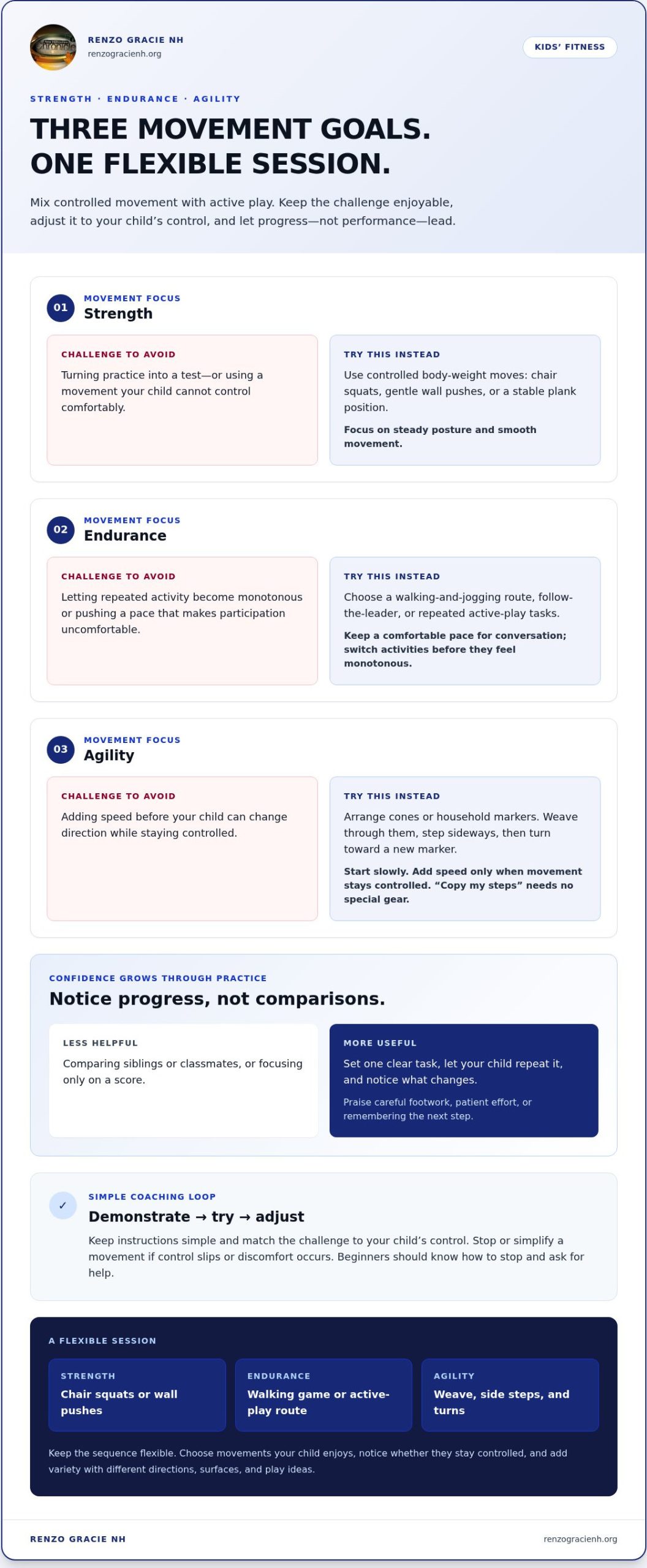
Leaving a team doesn’t mean your child has to stop moving. Children should get 60 minutes or more of physical activity daily, even if they don’t enjoy team sports, according to the Centers for Disease Control and Prevention. That movement can come from several enjoyable activities rather than one organized sport.
For individual options, consider swimming, running, cycling, tennis, golf, or gymnastics. Ask which activity sounds appealing, then try an introductory session or a relaxed practice together. A child who dislikes crowded matches may enjoy focusing on an individual skill, such as swimming laps or practising a tennis serve. Keep the first choice flexible: finding a good fit can take several tries.
Free play is another practical way to build movement into everyday life. Riding bikes, playing tag, jumping rope, or dancing at home can make activity feel less like another scheduled commitment. Take a walk or hike together, or let your child choose a family game. A change of pace between sports seasons can give them room to discover what they enjoy.
What are the benefits of individual sports and non-sport activities for children? They let children move at a comfortable pace, practise skills, and choose activities that suit their interests. Hiking, cycling, and dance can also make movement part of family life without team competition. Programs like Bushi Ban Child Care demonstrate how youth martial arts and fitness can offer structured, confidence-building movement without the stress of competitive team sports.
Support your child’s choice by agreeing on an activity to try, then ask what they liked or disliked afterward. If they choose swimming, help make time for practice; if they prefer dancing, encourage them to keep exploring it. The goal is a sustainable routine, not replacing one unwanted commitment with another. For a child curious about skill-based movement, structured physical training is another option to explore.
3. Finding out whether a different sport might appeal
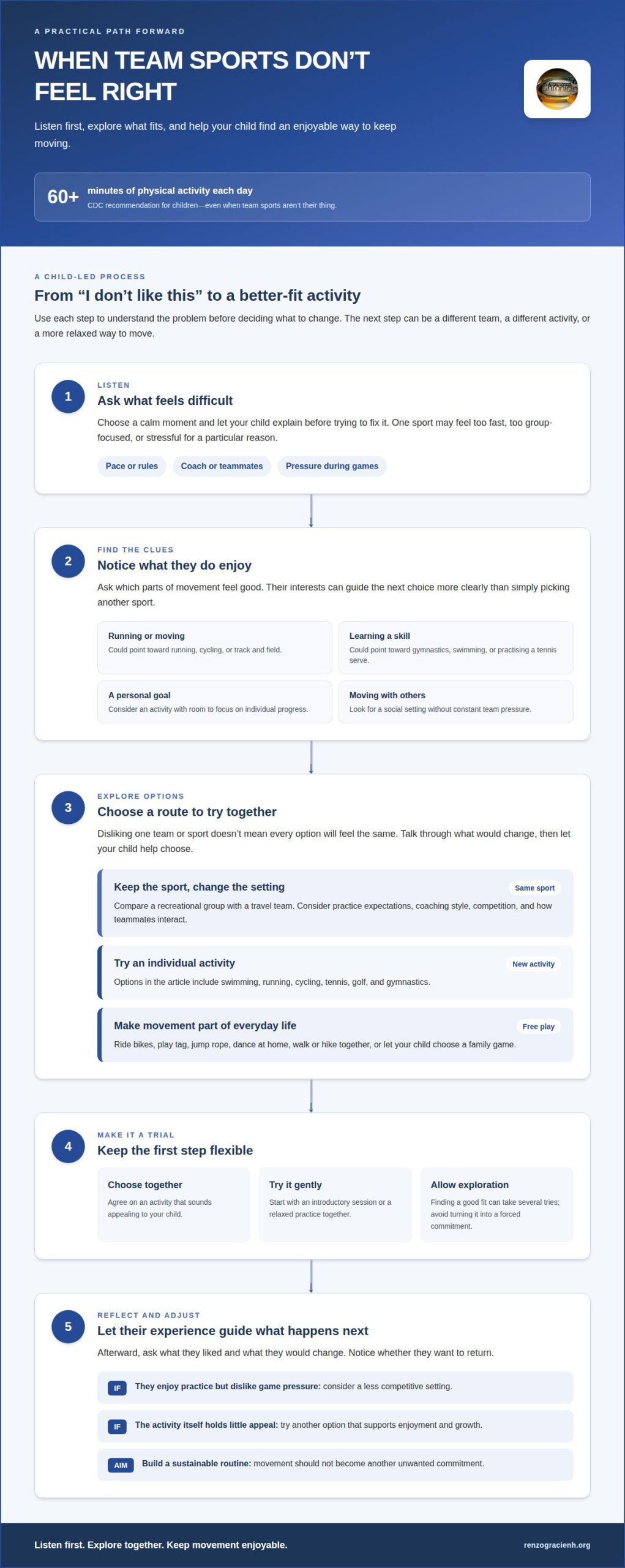
Disliking one sport doesn’t mean a child dislikes every sport. Basketball may feel too fast, while soccer’s constant group play may not suit them. Ask which parts felt uncomfortable: the pace, rules, coach, teammates, or pressure during games. Their answer can guide what to try next, rather than making quitting feel like the end of being active.
Sometimes the sport is right, but the setting isn’t. A child who dislikes a school team might prefer a recreational group or a travel team. Talk through what would change, including practice expectations, coaching style, competition, and how teammates interact. If they want to continue the sport, let them help choose the team or league. If they’d rather switch, respect that preference.
A different sport can offer a fresh experience of movement and competition. A child who found soccer overwhelming might enjoy golf’s individual focus, gymnastics’ skill practice, or shorter track and field events. Before deciding, consider what they liked: running, learning a technique, working toward a personal goal, or playing alongside others without constant team pressure. Match those interests to an activity.
If you’re wondering what to do when your child dislikes team sports in Exeter, start by choosing an option together, such as gymnastics or a recreational basketball team. Agree to talk afterward about how it felt. Ask what they enjoyed and what they would change. Their response can help distinguish first-day nerves from a poor fit. Exploration works best when your child can speak honestly.
A practical response to what to do when your child dislikes team sports in Exeter is to make room for a thoughtful trial, not a forced commitment. Children may need several tries to find an activity that feels right. Notice whether they want to return. If they enjoy practice but dislike game pressure, consider a less competitive setting. If the sport itself holds little appeal, try another activity that supports enjoyment and growth.
4. Talking with a child about why they dislike team sports
Choose a calm moment, not the car ride home after a tough game. Start with an open question: “What’s the hardest part of playing with the team?” Then listen without correcting details or immediately proposing a solution. Ask whether your child wants help or simply wants to talk. This gives them room to explain what matters most.
If “I don’t like it” is all they can say, try specific prompts. Ask whether they dislike the sport, the coach’s instructions, team pressure, or time away from school friends. A child might enjoy soccer drills but dread being left out during games. Reflect their answer plainly: “It sounds like choosing teams makes practice uncomfortable.”
Check directly and gently for bullying by teammates or abuse by a coach or another adult. Ask what happened, who was involved, and whether it has happened before. Look for repeated exclusion or targeting rather than deciding that one bad day proves a pattern. Help your child name behaviors like being mocked, ignored, or deliberately left out. If bullying or an adult’s conduct is involved, take the concern seriously and focus first on your child’s safety.
If social stress seems persistent, let your child know before speaking with the coach. Share specific observations and ask to work together on a practical response. Avoid confronting other parents while upset or identifying children publicly. Addressing team dynamics can take time, so agree with your child on what changes they hope to see and when you’ll talk again.
Finally, discuss options without making the decision for them. You might ask whether they want to try a different team, change sports, or leave. Explain possible alternatives, then let your child make the final choice after you’ve listened. For guidance exploring a supportive activity, take a next step toward a positive activity.
Renzo Gracie NH: Adult Jiu Jitsu Program
Renzo Gracie NH offers an Adult Jiu Jitsu Program for adults who want to build skills through martial arts rather than team sports. For a child interested in trying a different kind of physical activity, the Kids Jiu Jitsu Program offers another option. Jiu Jitsu may suit families looking for structured instruction and personal progress, rather than a team season or game-day competition.
Parents and children can each explore a program suited to them, and the Free Introductory Class offers a way to experience the training. Choose an activity based on your child’s interest and comfort, not pressure to replace one sport immediately. To explore Jiu Jitsu in Exeter, contact Renzo Gracie NH.
Let your child’s interests shape the next step
Your child’s next activity doesn’t need to settle every question at once. Start with their reasons, then choose a manageable way to explore what feels motivating, whether that means returning to a team or trying something different. The aim is to help them build confidence in making choices about movement and commitment.
If you’re considering what to do when your child dislikes team sports in Exeter, Renzo Gracie NH offers a Kids Jiu Jitsu Program alongside its Adult Jiu Jitsu Program. The academy also provides Law Enforcement Jiu-Jitsu Training. These options serve different participants, so focus on the activity that fits your family’s interests.
Take the next step at your pace. Contact Renzo Gracie NH to explore its programs, and encourage your child to keep discovering ways to grow.
Frequently Asked Questions
What are good alternatives to team sports for children in Exeter?
Good alternatives include activities where children can move without depending on a team roster, such as family cycling, hiking, dance, or playing catch together. In Exeter, start with what your child already enjoys: a nature walk may suit a child curious about exploring, while dancing at home may appeal to someone who likes music. Let them help choose so the activity feels like theirs.
What individual sports and activities are available for children in Exeter?
Children can explore individual sports such as swimming, tennis, golf, running, and gymnastics, as well as activities like cycling or dance. These options vary in pace and setting: tennis involves an opponent, while running can focus on personal progress. Families in Exeter can use a child’s interests to narrow the choices, then find a relaxed way to try an activity without making it a long-term commitment.
Are there Exeter clubs or classes for children who dislike competition?
Renzo Gracie NH offers a Kids Jiu Jitsu Program in Exeter for families considering structured martial arts instruction instead of a traditional team sport. Jiu Jitsu is a different activity and may appeal to a child curious about learning techniques and developing skills. It isn’t the same as a noncompetitive club, and children’s preferences vary, so discuss what kind of class environment would feel comfortable.
How can parents find out why a child dislikes team sports?
Ask about a specific moment instead of relying only on “Why don’t you like it?” For example, “What was happening just before you wanted to leave practice?” can help a child describe a teammate interaction, confusing instruction, or frustration with a skill. Give them time to answer, then ask whether they’d like you to listen, help solve it, or talk together later.
How can parents support a child who wants to quit a team sport?
Talk through the decision without assuming continued participation is the default. Ask what they want to stop, what they might miss, and whether a change would help, such as leaving the team or stepping away from the sport. If they choose to quit, agree on a calm, respectful way to tell the coach. Then let your child help decide what comes next.
Are there inclusive or beginner-friendly sports programs for children in Exeter?
Renzo Gracie NH’s Kids Jiu Jitsu Program offers instruction for children across experience levels, and the Free Introductory Class gives new students a way to experience the activity. This can help a child who feels unsure about starting something unfamiliar. Talk with your child about what would make a first class feel manageable, such as knowing what to expect and having your support.