Ways to restart exercise and maintain muscle after 40 in Exeter
Getting back in shape after 40 isn’t about pushing harder from day one; it’s about rebuilding strength with consistency. If you’re getting in shape after 40 in Exeter, strength and energy can improve within a few weeks, while visible changes typically take 6-8 weeks of consistent training three times per week. Start gradually and give your body time to adapt.
It’s understandable to wonder whether age, time away from exercise or changes in your body will affect your progress. A thoughtful return to movement can help you build fitness while supporting the muscle you want to maintain.
This article explains how age-related changes may affect strength, how to avoid common mistakes when restarting, and how resistance training can fit into a sustainable routine. You’ll also see why consistency matters more than trying to make up for lost time in a single workout.
Key Takeaways
- Account for changes in strength and recovery by restarting at a pace your body can manage.
- Avoid doing too much too soon; build your routine gradually and focus on sound movement.
- Combine regular activity with resistance training to support muscle maintenance and strength.
- Choose a welcoming, structured activity that helps you stay engaged and keep progressing.
1. Age-related changes in muscle, hormones, bones, and joints
Muscle changes are one reason returning exercise may feel different. Sedentary adults over 40 can lose roughly 8% of muscle mass per decade. Regular strength work gives muscles a reason to stay active. Start with controlled movements, then build difficulty gradually.
Hormones can also change with age, influencing how people experience energy and recovery. These changes differ from person to person, so avoid assuming age alone explains tiredness or reduced performance. Resting metabolism remains fairly steady from about age 20 to 60. It does not really begin to drop until after age 60, so age alone doesn’t explain every change in body weight.
Give your bones and joints careful consideration when choosing activities. Previous injuries, joint discomfort, and existing health conditions can affect which movements feel manageable. Use a smaller range of motion when needed, and stop any movement that causes sharp or worsening pain. Build progress through steady practice rather than forcing a sore joint.
Before exercising, adults over 40 should consider existing health conditions, injury history, and a long period of inactivity. These factors can affect which activity and pace are appropriate. A medical consultation before starting is particularly relevant when health conditions or inactivity are present.
When comparing gyms and fitness centers in Exeter, look for adult-friendly instruction, beginner options, and activities that allow gradual progress. A clear introduction to movements can help you find a comfortable starting point without treating every class as a test.
Walking groups, fitness classes, and sports clubs offer different ways to make exercise social and structured in Exeter. Think about whether you prefer a steady walk, coached practice, or a group sport, then choose a format you can attend consistently.
For nutrition and recovery, include protein-containing foods in regular meals and leave time between demanding sessions. Sleep, hydration, and balanced meals support consistent training. Avoid trying to make up for missed exercise with severe food restriction or exhausting workouts.
2. Common mistakes when returning to exercise
A common mistake is treating your previous routine as your starting point today. A long break can change your stamina, coordination, and tolerance for effort. A pace that once felt comfortable may now feel demanding. Begin with movements you can control, then adjust based on how you recover.
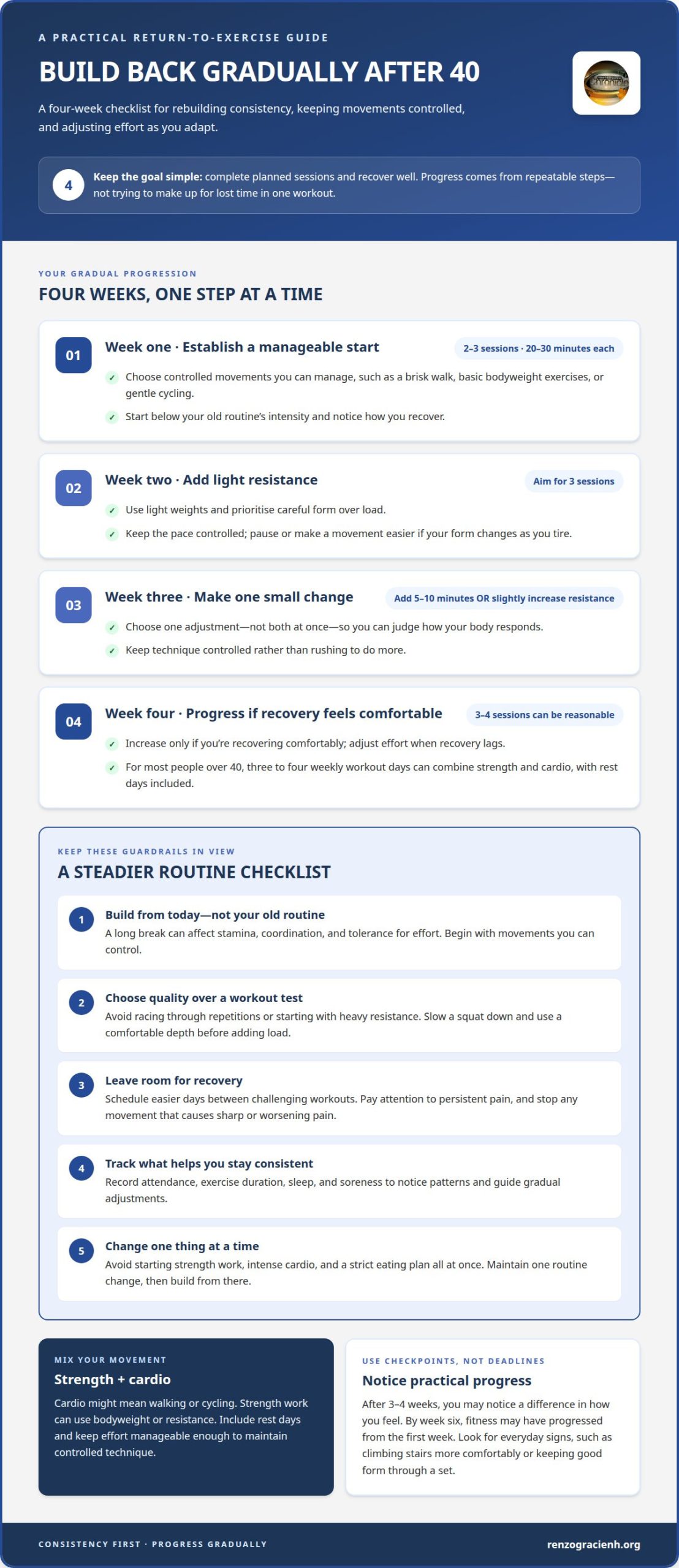
Doing too much too soon is another common setback. A hard session followed by several days of soreness can disrupt consistency. Instead, use a gradual first-month progression: start with two or three sessions in week one, lasting 20-30 minutes each. In week two, aim for three sessions with light resistance and careful form. Add only a small challenge as your body adapts.
Don’t turn every workout into a test. Racing through repetitions, choosing heavy resistance straight away, or neglecting technique can make your movements less controlled. For example, slow down a squat and use a comfortable depth before adding load. If your form changes as you tire, pause or make the movement easier instead of forcing extra repetitions.
Skipping recovery can also make it harder to return to exercise. Repeating demanding sessions without rest may leave you too tired to train well. Schedule easier days between challenging workouts, and pay attention to persistent pain rather than dismissing it as ordinary effort. A simple log of activity, sleep, and soreness can help you notice patterns.
Finally, avoid changing everything at once. Starting strength work, intense cardio, and a strict eating plan together makes it harder to identify what feels manageable. Choose one routine change, maintain it, then build from there. For people who learn best through coached movement, guided, structured practice can provide a clear setting to focus on technique and steady effort.
3. Exercise guidance for beginners and returning exercisers
Adults over 40 can set realistic goals around consistency, stamina, movement quality, and strength. During the first month, success means completing planned sessions and recovering well, not matching an earlier version of yourself. Look for practical progress, such as climbing stairs more comfortably or keeping good form through a set.
Start with a manageable first week. Plan two or three sessions, each lasting 20-30 minutes, and choose movements that let you maintain control. A brisk walk, basic bodyweight exercises, or gentle cycling can help you rebuild a routine. The American College of Sports Medicine recommends that sedentary adults increase physical activity gradually.
Use the next weeks to make small, deliberate changes. In week two, aim for three sessions with light weights, prioritising form over load. In week three, add 5-10 minutes to sessions or increase resistance slightly. By week four, three to four sessions can be a reasonable progression if you’re recovering comfortably. Change one element at a time, so you can judge how your body responds.
For most people over 40, three to four weekly workout days combining strength and cardio works well, with rest days included. Cardio might mean walking or cycling; strength work can use bodyweight or resistance. Keep the effort manageable enough to finish with controlled technique rather than rushing through repetitions.
Track attendance, exercise duration, and how each session feels. After 3-4 weeks, you may notice a difference in how you feel; by week six, your fitness may have progressed from the first week. Treat these as checkpoints, not deadlines. Build the routine around repeatable steps, such as adding a short walk or practising a few controlled movements, and adjust effort when recovery lags.
4. Strength training and muscle maintenance
Muscle responds to a reasoned challenge at any age. Adults over 40 can build muscle through progressive resistance training and enough protein. Progression means gradually adjusting resistance or repetitions while maintaining controlled technique. A chair squat, for example, can become a deeper squat before adding resistance.
A practical target is two to three full-body strength sessions per week. Include movements that work your legs, hips, back, chest, shoulders, and arms. Bodyweight exercises, resistance bands, and weights can all provide resistance. Choose a version you can perform with steady control, then increase the challenge as your strength and technique improve.
Put strength work first when building strength is the workout’s main goal. Training while fresh can help you focus on form instead of rushing through repetitions after cardio. Walking is useful for general activity, but it doesn’t replace resistance training for rebuilding muscle. Plan for recovery, too, by alternating demanding sessions with easier days.
Nutrition supports the work. Include protein-containing foods in meals and eat enough overall to support regular training. Visible changes often take 6-8 weeks of consistent training three times per week, while strength and energy may improve within a few weeks. Adults in their 60s and 70s can also gain measurable strength through resistance training, so starting later doesn’t make strength work pointless.
In Exeter, gym membership and personal-training prices vary according to access, coaching format, session frequency, and included facilities. Compare what each option covers rather than judging by the headline cost alone.
Keep the takeaway simple: train the whole body consistently, progress resistance gradually, and support sessions with suitable meals and recovery. To explore a structured way to practise controlled movement and build strength, take the next step with guided training.
Renzo Gracie NH
Renzo Gracie NH offers adults in Exeter a structured martial arts setting for making regular movement part of their routine. The Adult Jiu Jitsu Program combines skill practice with physical activity, giving returning exercisers an engaging way to work on coordination, focus, and fitness through consistent participation.
Curious about trying a coached activity? The Free Introductory Class lets you experience the training before deciding whether it suits your goals. Jiu Jitsu isn’t a substitute for a dedicated strength-training plan, but it can be an engaging part of an active lifestyle alongside appropriate resistance exercise and recovery.
Contact Renzo Gracie NH to learn more about getting started in Exeter.
Make your next step one you can sustain
Progress after 40 doesn’t need a dramatic reset. Choose a form of movement that fits your routine, then give yourself room to develop consistency. If training with family or in a focused professional setting matters to you, Renzo Gracie NH also offers a Kids Jiu Jitsu Program and Law Enforcement Jiu-Jitsu Training.
For adults looking to get in shape after 40 in Exeter, the most useful next step is one you’ll feel ready to repeat. Consider what helps you stay engaged: learning new skills, moving alongside others, or building a regular practice. Let that preference guide your choice, while keeping strength training and recovery in view.
To explore whether training could suit your goals, contact Renzo Gracie NH today. Start with a conversation, then take your next step at a pace that feels right for you.
Frequently Asked Questions
How long does it take to get back in shape after 40?
Strength and energy may improve within a few weeks, while visible changes typically take 6-8 weeks of consistent training three times weekly. Progress can show up in practical ways first, such as carrying groceries more comfortably or finishing a walk with less effort. To get in shape after 40 in Exeter, focus on repeatable habits and use changes in daily activity as useful progress markers.
Is it too late to start exercising at 45 or 50?
No. Starting at 45 or 50 can still support meaningful improvements in fitness and strength. Resistance training can help people in their 60s and 70s gain measurable strength, so age 45 or 50 isn’t a reason to rule out progress. Begin with activities suited to your current ability, then build gradually. A short walk or controlled bodyweight movements can be a practical first step.
Can you build muscle after 40?
Yes, adults over 40 can build muscle with progressive strength training and enough protein. For example, practise a controlled chair squat, then gradually increase its difficulty as the movement becomes familiar. A full-body routine can include pushing, pulling, and lower-body movements. Give your muscles time to recover between demanding sessions, and keep track of resistance or repetitions so you can recognise steady progress.
How many days a week should I work out after 40?
Three to four workout days weekly, combining strength and cardio with rest days, can work well for many adults over 40. You might schedule full-body strength work on two days and walking or cycling on another day. Treat this as a routine to build toward, not a requirement for your first week. If sessions leave you consistently exhausted, reduce the workload and allow more recovery.
Should I do cardio or weights first when coming back?
Put strength training first when building strength is the main goal of your workout. You’ll be fresher for controlled repetitions and attentive technique. If cardio is the priority, start with walking, cycling, or another aerobic activity. For a mixed session, decide the main purpose beforehand, put that activity first, and keep the second part manageable.
How can beginners safely start exercising after 40?
Start with a manageable activity and increase the challenge gradually. If you’ve been inactive or have an existing health condition, consult a doctor before beginning a new exercise programme. Choose movements you can control, such as an easy walk or supported sit-to-stands, and stop if pain worsens. Note what you did and how you felt afterward; that can help guide your next session.