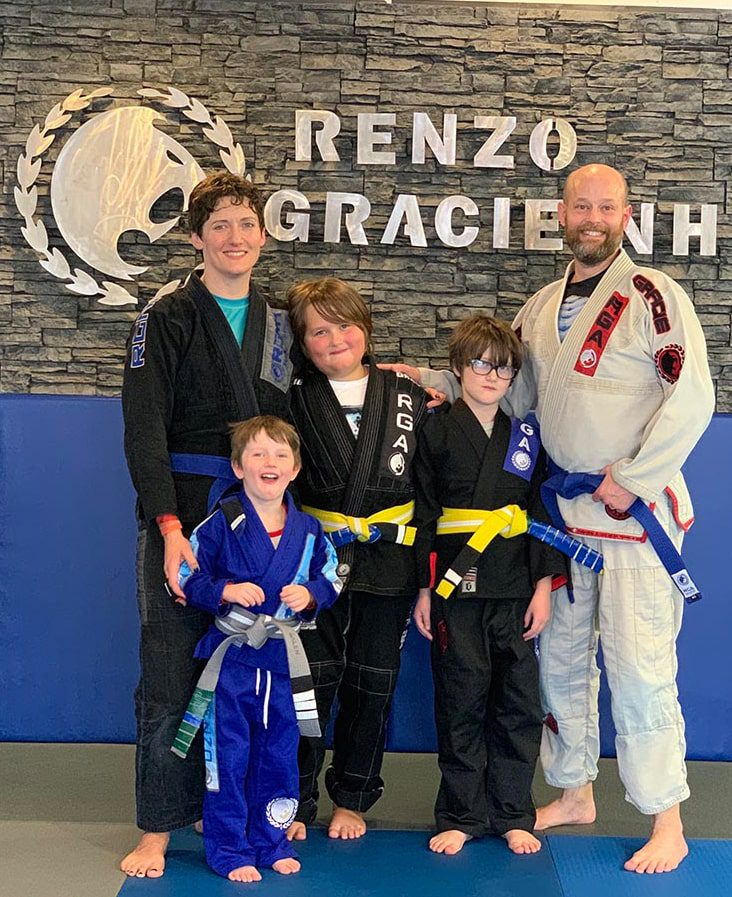
Focus and discipline classes for kids in Manchester: Helping children resolve arguments
Punishment may stop an argument in the moment, but it doesn’t teach a child how to handle the next one. A focus and discipline class for kids in Manchester can give children opportunities to practise listening, managing frustration and working towards fair solutions. The goal isn’t to excuse hurtful behaviour, but to help children learn what they can do differently.
When arguments keep happening, it’s understandable to want a quick, clear consequence. A solution-focused approach puts more emphasis on helping children do better next time than on making them pay for past mistakes. It also gives children a role in finding solutions to problems that affect them.
This article explains what makes a solution respectful, reasonable and helpful, and how guided practice can support better conversations between children. It also explores how working through disagreements can build focus and responsibility, and where structured Jiu-Jitsu classes may fit into that learning.
Key Takeaways
- Look for instructors who can guide children calmly, set clear boundaries and model respectful ways to handle disagreements.
- Assess whether the class environment, teaching approach and expectations feel appropriate for your child.
- Solution-focused responses involve children in finding respectful, reasonable ways to handle problems and do better next time.
- Structured Jiu-Jitsu classes can give children a setting to practise focus, self-control and respect alongside physical skills.
What qualifications and background checks should instructors have?
When choosing a focus and discipline class, look beyond belt rank and a confident teaching style. The instructor should explain skills clearly, manage the group calmly and respond constructively when children disagree. A martial arts qualification can demonstrate subject knowledge, but it doesn’t show on its own how someone guides a frustrated child. Consider both what the instructor knows and how they put that knowledge into practice.
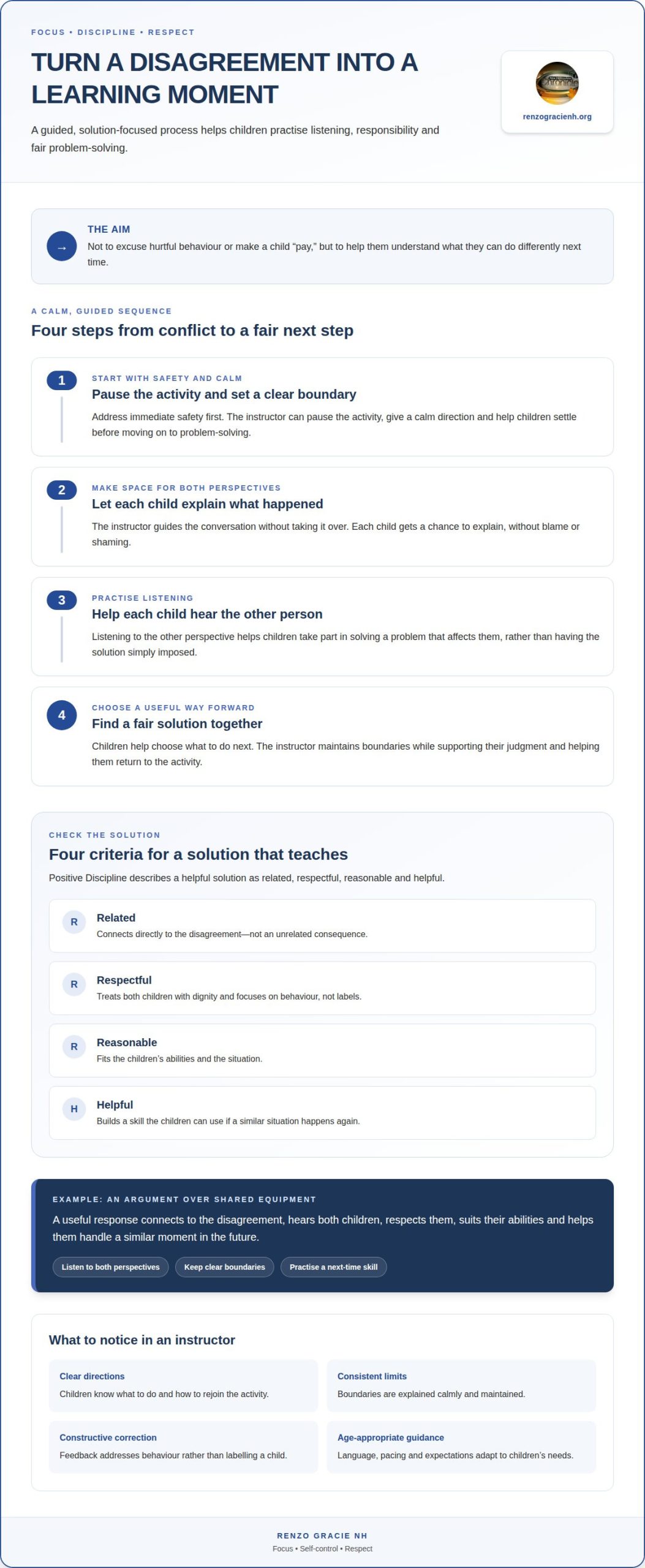
Look for experience teaching children, not just adults. Even a skilled adult instructor may need to adapt language, pacing and expectations for younger students. If two children argue over whose turn comes next, for example, the instructor can pause the activity, hear both perspectives and guide them towards a workable solution. Notice whether the response is calm and age-appropriate rather than shaming or dismissive.
Guidance should help children learn what to do next. Positive Discipline describes solutions using four criteria: related, respectful, reasonable and helpful. If children argue over shared equipment, a response should connect to the disagreement, treat both children with dignity, suit their abilities and help them handle a similar situation in the future. The instructor should be able to explain how the response teaches a skill, not just ends the disagreement.
Ask what training informs the instructor’s work with children and how it shapes class routines. A useful answer connects training to observable actions: giving clear directions, setting consistent limits, noticing rising frustration and helping children return to the activity. The instructor might explain how they address immediate safety before moving on to problem-solving. A specific example tells you more than a vague claim about being “good with kids.”
Background screening matters because instructors work with children in a position of trust. Requirements can depend on the role and setting, so one certificate or check does not prove suitability everywhere. Look for a clear, documented screening process and consistent policies for staff and assistants. The program should be able to explain its approach to supervision, appropriate adult-child boundaries and concerns raised during class.
An instructor should be able to describe the screening process plainly, without presenting it as a substitute for good conduct. A background check can’t show how someone responds when a child refuses an exercise or reports a conflict. Ask how the instructor handles those moments. A strong response might involve listening without blame, setting a safe boundary and helping the children find a respectful next step.
- Relevant instruction: Look for experience teaching children, supported by specific examples of adapting explanations and activities.
- Conflict skills: Notice whether the instructor helps children listen, take responsibility and find a useful solution.
- Clear boundaries: Expect consistent explanations of supervision, adult-child conduct and how concerns are handled.
- Screening process: Look for a documented approach rather than relying on a title or rank alone.
Children should have a meaningful role in solving problems that affect them. An instructor can guide the process without taking over: each child explains what happened, listens to the other person and helps choose a fair way forward. Teenagers may benefit from space to try a reasonable solution that differs from a parent’s preferred approach. The instructor’s role is to maintain boundaries while supporting independent judgment.
Finally, observe how the instructor responds across the class, not just during a polished demonstration. Do directions remain clear when several children need attention? Does correction focus on behaviour rather than labelling a child? A short example can be revealing: after an interruption, an instructor might restate the turn-taking rule and invite the children to restart. These details show how qualifications, screening and teaching conduct come together in practice.
How can parents assess whether a class is safe and suitable for their child?
Assess a focus and discipline class for kids in Manchester by observing how activities are organised and supervised. Can children hear instructions, move without crowding and pause when asked? In a partner exercise, the instructor should explain the activity before children begin. Clear routines help children know what to expect and how to participate.
Before your child joins an activity, look at the practice space and equipment. Check that bags, loose items and other obstacles are kept away from areas where children move. Notice whether equipment is part of a clearly explained exercise and whether there’s room to follow directions. A tidy space alone doesn’t establish suitability, but it can show how carefully activities are arranged.
Notice how physical contact is introduced and supervised. Children may practise with partners in martial arts, so the instructor should explain the activity and its boundaries first. Look for demonstrations at a manageable pace, active supervision and a prompt pause if a child seems unsure. Children should be able to express discomfort or ask for help without being mocked or pressured to continue.
Suitability also depends on whether activities work for children with different levels of confidence and coordination. One beginner may want to watch a demonstration before joining, while another may be ready to practise with a partner. Notice whether the instructor gives each child clear guidance instead of expecting everyone to keep up in the same way. A child who needs a pause should have a clear way to rejoin the activity.
Observe how the instructor handles emotions during class. When children disagree, does the instructor listen, set a calm boundary and help them return to the activity? After an argument about turns, for example, the instructor might pause the game and explain how each child can take part. The response should address behaviour without labelling a child as difficult or disruptive.
Your child’s reaction can provide useful information. After observing a class, talk about a specific moment: Was the noise manageable? Were the instructions clear? Did your child feel comfortable asking for help? A child may enjoy moving but feel uneasy about partner practice, or feel interested while finding a busy room overwhelming. These details can help you decide whether the setting suits your child.
When choosing a focus and discipline class for kids in Manchester, consider how the class fits your child’s needs, not just what activities it offers. A child who likes predictable routines may respond differently from one who needs time to settle into a group. Think about the pace of instruction, chances to participate and whether your child leaves feeling ready to return. A suitable class makes room for learning without expecting every child to progress in the same way.
- Watch transitions: Notice how children move between activities and whether instructions stay clear.
- Observe supervision: See whether the instructor can monitor partner practice and respond when children need support.
- Notice participation: Look for ways children can pause, observe or rejoin without embarrassment.
- Discuss the experience: Ask your child about a particular activity, instruction or interaction afterward.
A Free Introductory Class gives your child a chance to experience a structured martial arts setting. Notice how they respond to movement, instruction and group activities, then talk about what felt comfortable or challenging. That conversation can help your family decide whether this kind of practice matches your child’s interests and readiness.
Parents considering a focus and discipline class can ask how the instructor responds when a child struggles or makes a mistake. Positive Discipline recommends solutions that help children do better in the future instead of consequences intended to make them pay for past mistakes. This can help parents assess whether guidance supports learning and rejoining the group, rather than relying only on punishment.
Conversations at home can help you understand what your child wants from a class and what feels difficult. Positive Discipline presents family meetings as a way to avoid lecturing and help children move beyond complaining. It also recommends giving teenagers room to work out some problems themselves, even when their approach differs from a parent’s preferred method. Listening to your child and considering their account alongside what you observed can help you make a decision that reflects both their experience and adult concerns.
Renzo Gracie NH: Kids Jiu Jitsu Program
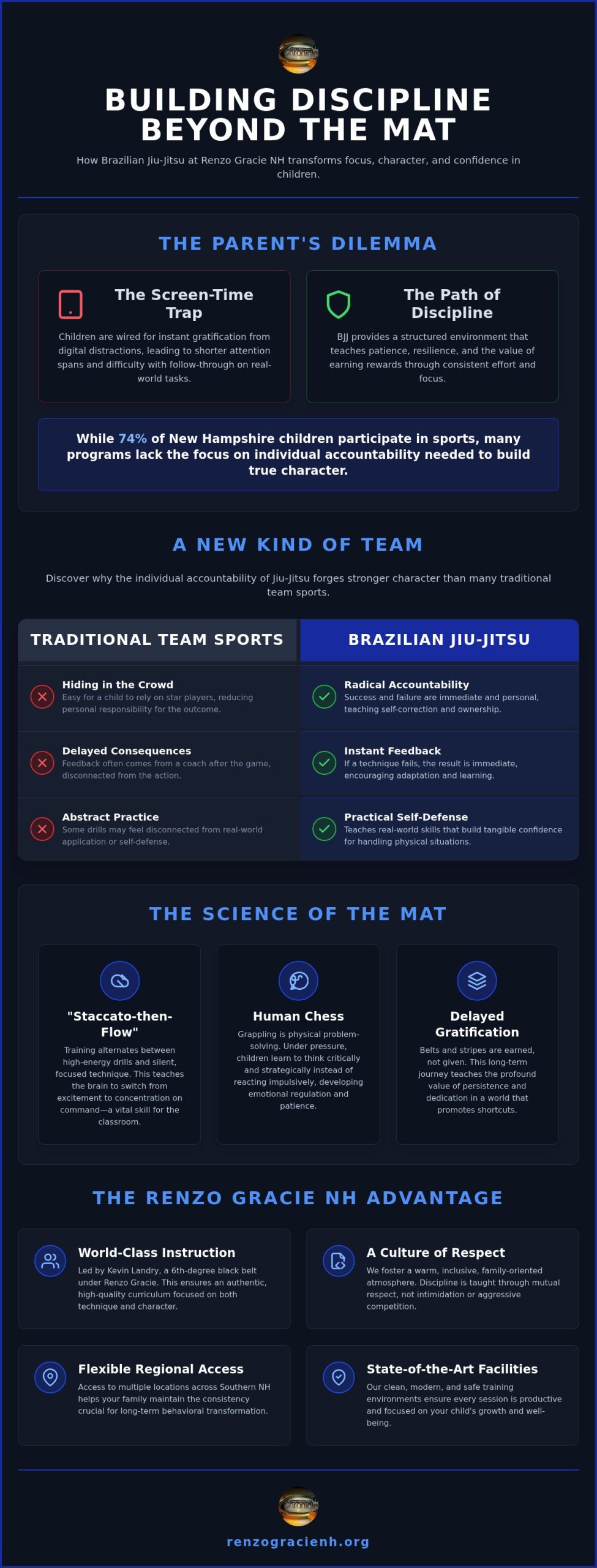
Renzo Gracie NH’s Kids Jiu Jitsu Program gives children a structured setting to practise movement, focus and respectful interaction. For families seeking a guided activity where children can build discipline through practice, Jiu-Jitsu can complement the problem-solving ideas discussed above. Children learn by listening to instructions, practising skills and taking part with others, while developing through consistent effort.
Consider this next step if your child is curious about martial arts and ready to learn in a group environment. The program is a fit for families seeking Jiu-Jitsu instruction, rather than a standalone counselling or conflict-resolution service. Contact Renzo Gracie NH to discuss the Kids Jiu Jitsu Program.
Help your child build confidence through practice
Choosing a focus and discipline class for kids in Manchester is an opportunity to support your child beyond a single activity. The right class can offer a welcoming place to practise patience, follow guidance and grow comfortable learning with others. Small efforts matter: listening before responding, trying again after a mistake and treating a partner with respect are skills children can carry beyond class.
Renzo Gracie NH offers Jiu-Jitsu programs for kids and adults, alongside Law Enforcement Jiu-Jitsu Training. If your child is ready to explore structured martial arts practice, consider whether the Kids Jiu Jitsu Program suits their interests and readiness. Contact Renzo Gracie NH to learn more and discuss a next step for your family.
Progress starts with showing up, staying curious and taking things one step at a time.
Frequently Asked Questions
Do Manchester martial arts schools offer classes that build focus and discipline for kids?
Yes. Children in Manchester can take Jiu-Jitsu classes that support focus and discipline through structured martial arts practice. Renzo Gracie NH offers a Kids Jiu Jitsu Program in Manchester, Windham and Exeter. A free introductory class lets your child experience the learning environment and decide whether martial arts feels like a good fit.