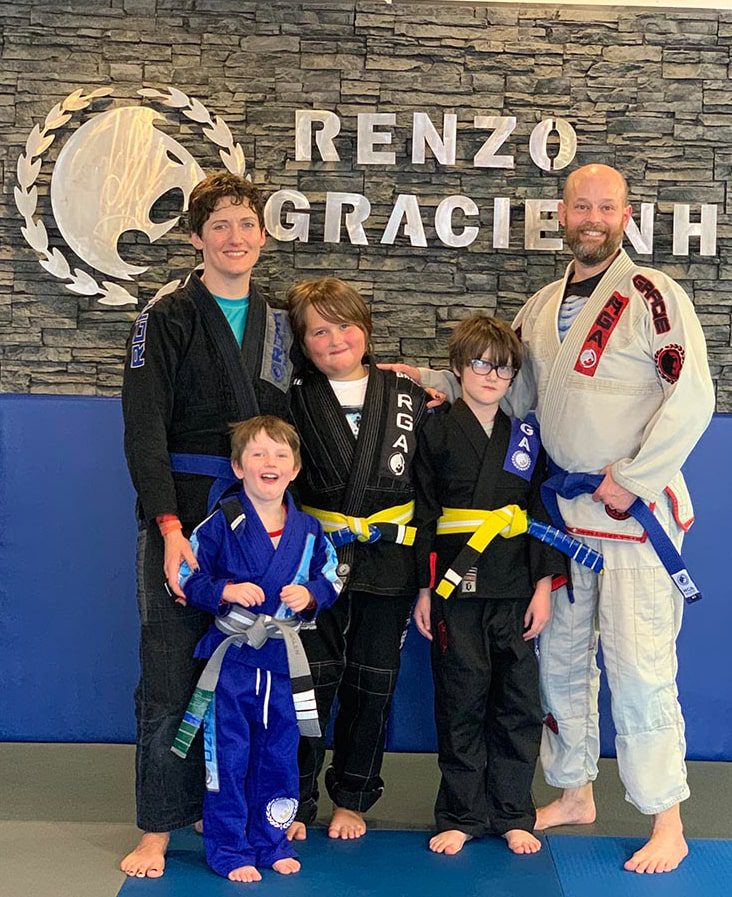
Structured Martial Arts Curriculum in NH: How to Choose in 2026
What if the clearest sign of a good martial arts school isn’t the style it advertises, but how well it explains what students will learn next? Program descriptions can sound alike, so families searching for a structured martial arts curriculum NH schools offer should look beyond beginner-friendly claims and ask how instruction builds over time.
A welcoming first class is a good start, but you’ll also want to know whether instruction suits the student’s age and experience, how beginners are supported, and what they can work toward next. A thoughtful curriculum makes learning easier to follow, from foundational skills to greater focus, confidence, and perseverance.
This guide explains what progression can look like and gives you practical questions for comparing New Hampshire programs. You’ll learn what to observe in an introductory class, how to assess age-appropriate instruction, and which details to confirm before signing up. Whether you’re considering training in Windham, Manchester, or Exeter, the goal is to find an encouraging program with a path forward for you or your family.
Key Takeaways
- A structured martial arts curriculum NH families can evaluate should make learning goals and next steps clear without promising a fixed belt timeline.
- In Brazilian Jiu-Jitsu, repetition, partner practice, and instructor feedback can help students reinforce foundational skills over time.
- Compare local programs by asking how instructors welcome beginners, adapt instruction to different experience levels, and support age-appropriate learning.
- Use an introductory visit to observe teaching clarity, safety expectations, training culture, and whether the schedule works for your family.
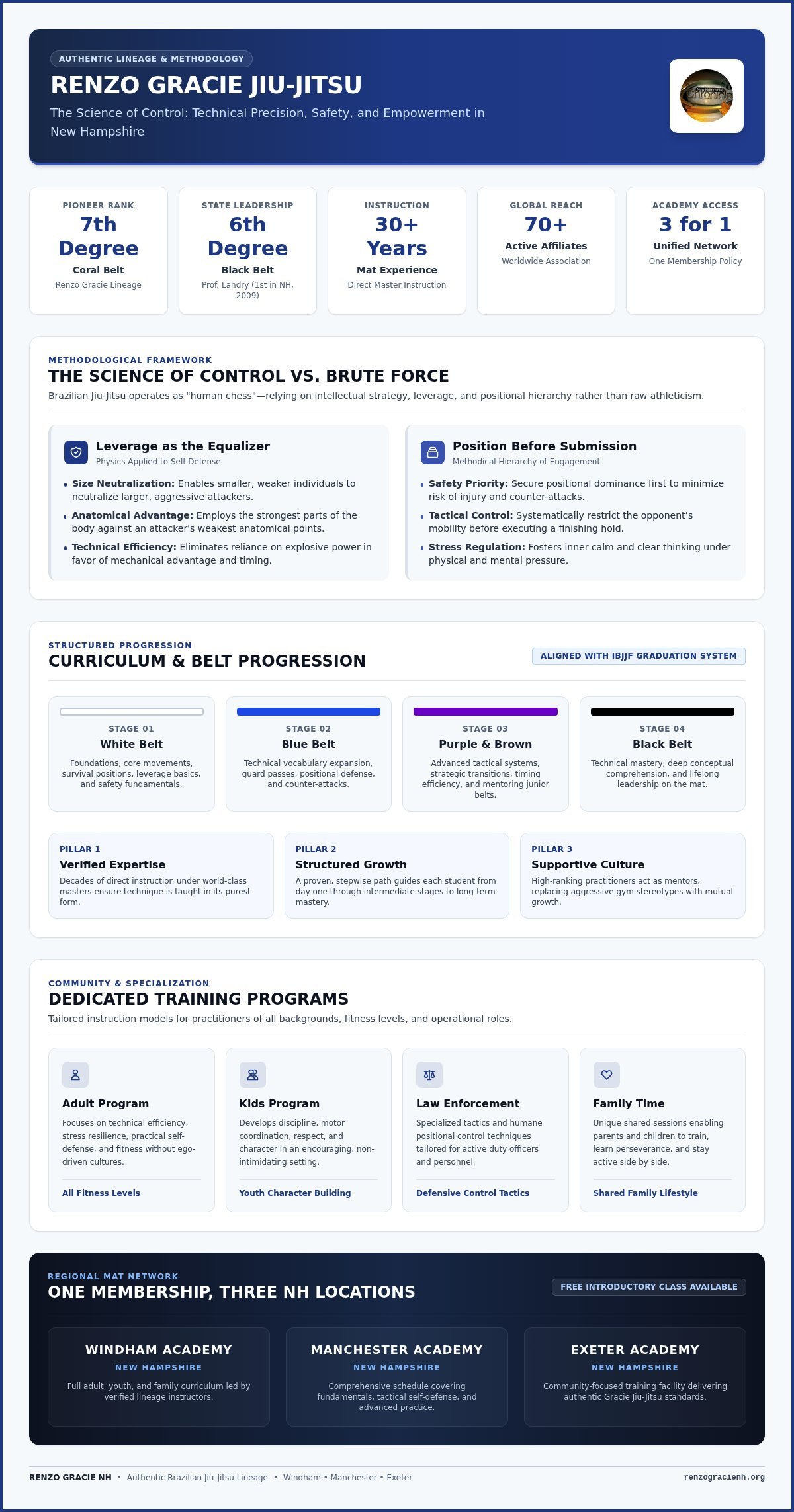
- Renzo Gracie NH offers adult and kids Jiu-Jitsu programs. Professor Kevin Landry, a sixth-degree black belt, has more than two decades of local teaching experience.
What Does a Structured Martial Arts Curriculum in NH Actually Include?
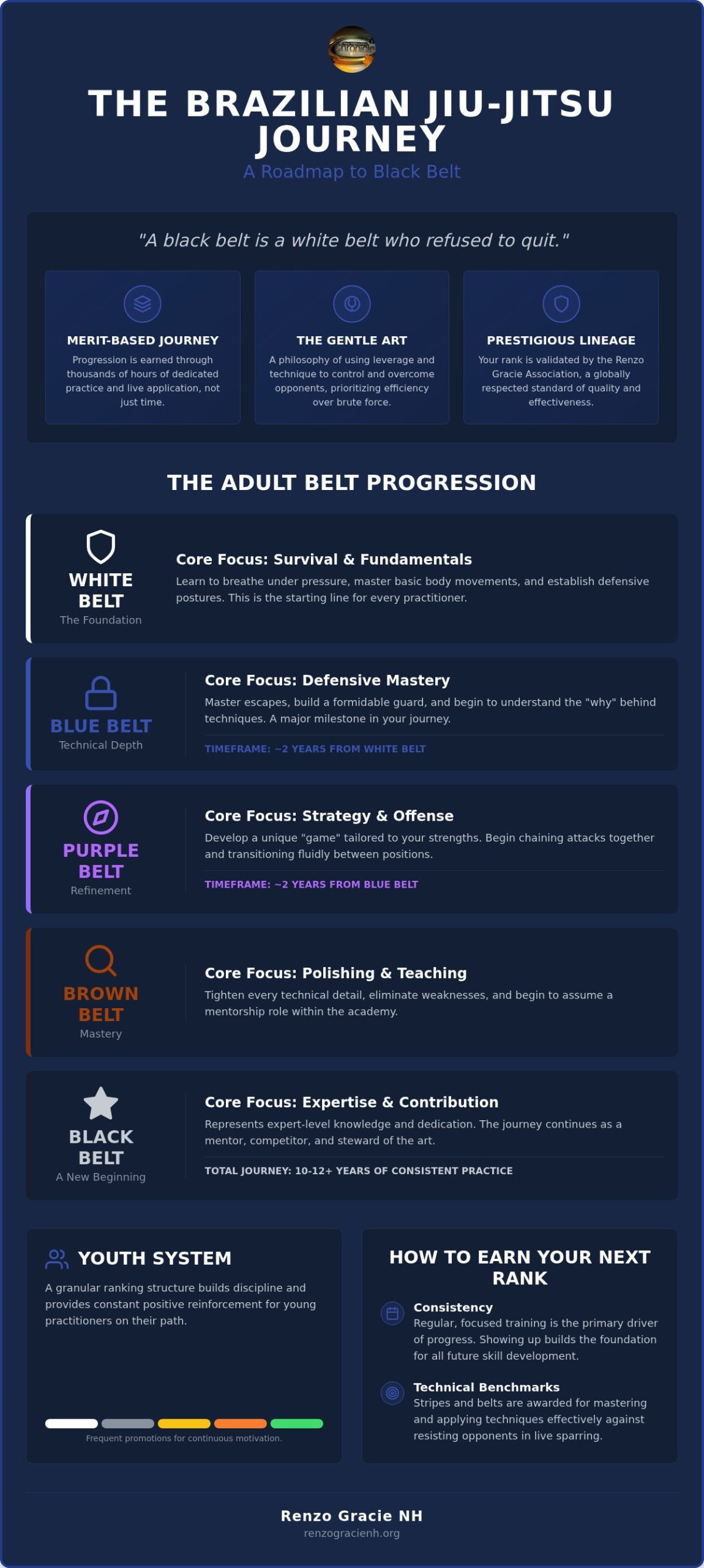
A structured curriculum organizes instruction around clear learning goals, with practice that builds over time. Students should be able to understand what they’re practising, how it connects to earlier lessons, and what they can continue developing. That does not mean every student follows the same pace or should be promised a particular belt timeline.
In Brazilian Jiu-Jitsu, learning can involve technique, body movement, problem-solving, and respectful practice with a partner. A class might introduce a position or movement, explain its purpose, and give students a chance to practise it with guidance. The goal isn’t identical outcomes for everyone. Useful structure helps instructors support learning and safe practice while recognizing that each student develops at their own pace.
What makes martial arts instruction feel progressive?
Progress often comes from revisiting foundational movements as students gain familiarity and control. An instructor might demonstrate a technique, guide students through repetition, then offer a manageable practice situation where they can explore when or how to use it. That sequence lets students ask questions, receive feedback, and connect the movement to a broader skill.
Ranks may be one part of a school’s progression system, but they don’t tell the whole story. A belt is not a universal timetable or a guarantee of mastery. Ask each school how it explains its own progression and what instructors consider when assessing development. Clear answers should help you understand what students work on, not promise how quickly anyone will advance.
How can a curriculum support different ages and goals?
Age-appropriate instruction involves more than choosing which techniques to teach. Instructors can adjust explanations, practice expectations, and partner activities to suit students’ ages, experience, and readiness. Children may benefit from clear guidance that encourages listening, respect, and perseverance. Adults may have different goals and starting points. Specialized professional training is a distinct context, so ask how it differs from a general adult class.
Renzo Gracie NH offers Brazilian Jiu-Jitsu training for adults and children, as well as family training and specialized Law Enforcement Jiu-Jitsu training. These programs serve different participants, so ask about current formats, age groupings, and how instruction is adapted. Specific answers make it easier to judge whether a program fits your needs, rather than relying on a description alone.
How Brazilian Jiu-Jitsu Skills Can Build Step by Step in NH
Brazilian Jiu-Jitsu learning can move from body awareness to controlled practice, then to making choices in changing situations. This is a general way to think about skill development, not a description of any one academy’s syllabus. In a structured martial arts curriculum NH students may encounter, the purpose is to connect practice with learning goals while recognizing that individuals progress at different rates.
From foundational movement to controlled practice
Early practice may focus on balance, movement, position, and basic grappling concepts. These foundations help students notice where their bodies and their partners are, rather than trying to memorize techniques without understanding the situation.
Coached partner drills can give each movement a clear purpose. An instructor demonstrates, students practise with guidance, and feedback helps them make adjustments. Beginners should know how to communicate with a partner, what level of effort is expected, and when to pause or ask for help. Clear expectations make practice more manageable and respectful for everyone.
Consistent practice gives students opportunities to revisit foundational skills and build on them over time.
How practice can develop decision-making
Once students become familiar with basic movements, instructors may introduce guided scenarios that ask them to notice a position, consider their options, and respond with control. The emphasis is on thoughtful problem-solving, not simply reacting quickly. For example, a student might practise adjusting their balance or changing position while a partner offers appropriate, cooperative resistance.
These exercises can give learners practice staying composed when a situation feels unfamiliar, but they can’t guarantee how someone will respond in every real-world conflict. Technique practice should take place in supervised, controlled training, with instructors making expectations and boundaries clear. For children, calm, step-by-step instruction can support focus and self-management. Understood.org discusses how martial arts can emphasize self-control and concentration.
Look for feedback that explains what to adjust and why, rather than treating repetition as a test of who can move fastest. Students may need different amounts of practice before a skill feels familiar, and schools may use different ways to assess progress. Ask how instructors support beginners and adapt practice as experience grows. To explore local Brazilian Jiu-Jitsu training, learn more about Renzo Gracie NH.
How to Evaluate a Martial Arts Curriculum in Windham, Manchester, or Exeter
School descriptions often use similar language, so compare what instructors teach and how they guide learners. Use the questions below to assess a structured martial arts curriculum NH programs describe. Confirm current classes, age groupings, schedules, and other details directly with each school, whether you’re looking in Windham, Manchester, or Exeter.
| What to compare | Questions to ask or observe |
|---|---|
| Beginner onboarding | What should a new student expect during the first few classes? Are instructions and partner expectations explained before practice? |
| Age fit | Which programs are currently available for the student’s age and goals? Do instructors adjust explanations and activities for different learners? |
| Instruction | Can you follow the instructor’s explanations? Do they demonstrate, check understanding, and offer useful feedback? |
| Progression | How does the school explain progress? What support is available when a student finds a skill challenging? |
| Training culture | Do students treat partners with respect? Does the class balance discipline with encouragement and attention to safety? |
Questions to ask during a school visit
Ask how instructors guide beginners when they share a learning environment with more experienced students. A useful answer should explain how new students receive appropriate instruction, rather than leaving them to work things out alone. Ask how instructors help students through challenges and communicate progress. Confirm which programs are currently available for the learner’s age and goals, because program names alone don’t explain how a class is taught.
Signs the learning environment may fit your goals
If the school allows it, watch a class or use an introductory visit to notice whether coaching is clear, respectful, and attentive. Look for considerate partner interactions, instructors who respond to questions, and opportunities for beginners to learn without pressure to keep up at any cost. A positive training culture can be disciplined and focused while still making students feel welcome.
Separate what you can verify from promotional language. Ask what a first class involves, how students practise and receive feedback, which age groups are currently served, and what schedules are available. Then compare the answers. If a school highlights a particular outcome, ask how instruction supports it rather than assuming every student will have the same experience.
Consider the practical journey, too. A program that looks appealing on paper needs to fit your household’s routine. Compare travel to Windham, Manchester, and Exeter with class times confirmed by each school. The right fit brings together an appropriate teaching approach, a respectful student culture, and workable logistics.
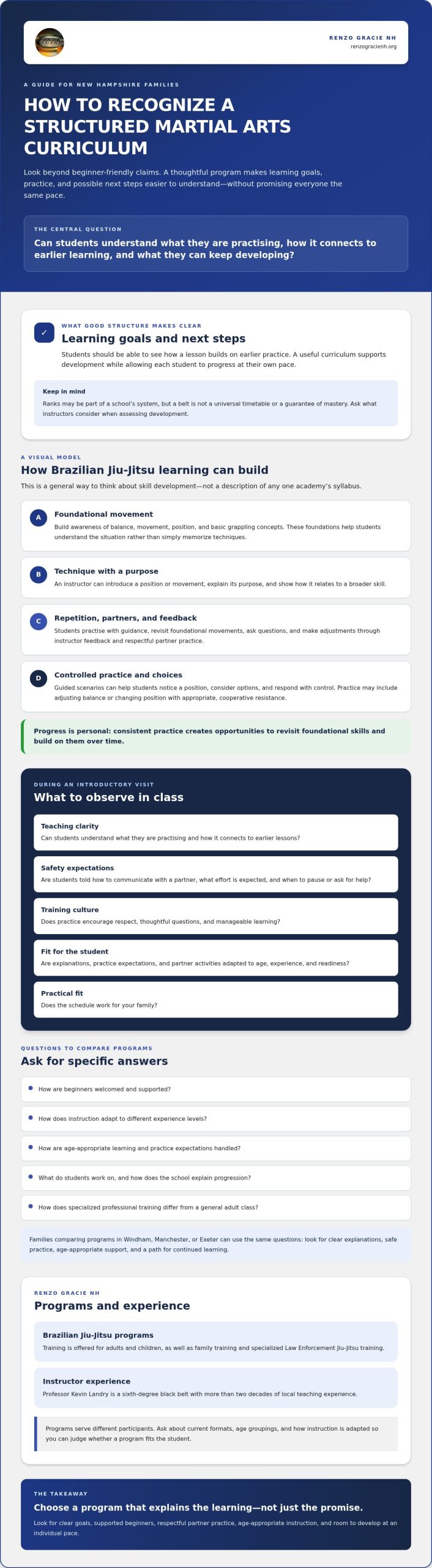
A Practical Checklist for Choosing Structured Martial Arts Classes in NH
A first visit can tell you more than a program description. Use this checklist to assess whether the instruction, class culture, and practical details fit the student, whether they’re an adult, a child, or a family exploring training together.
What to notice in a first class
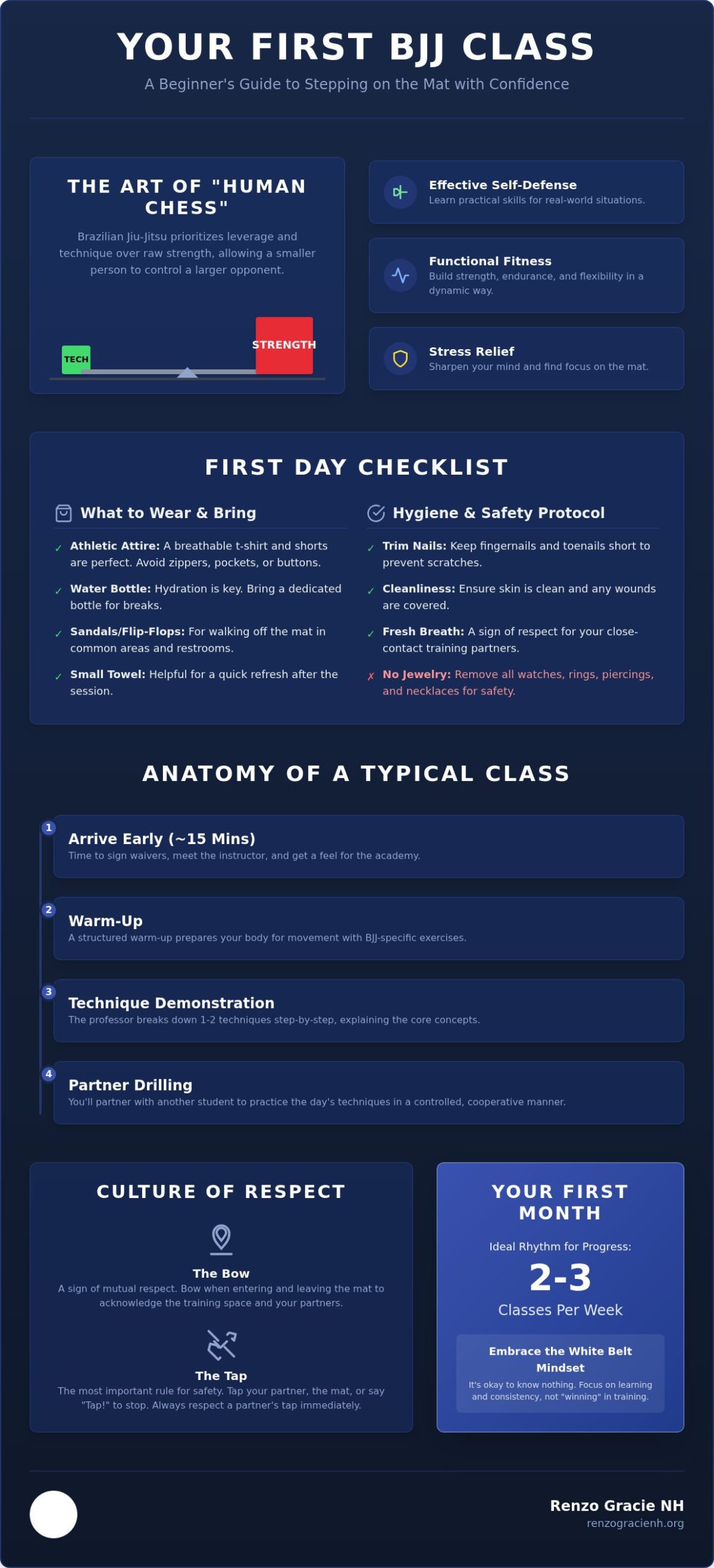
Before you visit, ask what a new student should expect and confirm the current class format, schedule, and any preparation needed. During the visit, notice whether the instructor explains drills clearly, demonstrates what students should do, and sets expectations. Observe how partners are paired and whether practice is supervised. Afterward, ask the prospective student how comfortable they felt, what questions they still have, and whether they’d like to learn more.
- Teaching clarity: Could a beginner follow the explanation and understand the purpose of the practice?
- Safety expectations: Were students shown how to practise respectfully and seek guidance?
- Curriculum answers: Can instructors explain how learners build skills and receive feedback without promising identical results or timelines?
- Schedule practicality: Do the confirmed class times and travel work with your household’s routine?
Adults considering Brazilian Jiu-Jitsu can use this guide to starting adult Jiu-Jitsu in NH to prepare questions. Parents can also review information about kids Jiu-Jitsu in New Hampshire, then confirm current program details directly with the academy.
How to compare programs for a family
Adult and child goals may differ, so ask how instructors account for each learner’s age and experience. Don’t assume family members train in the same class or format. If you hope to practise together, ask whether parent-child training is currently available and what participation involves. For family-specific context, see this guide to parent and child Jiu-Jitsu in Windham.
Compare your notes. A structured martial arts curriculum NH families can evaluate with confidence should come with clear answers about learning, supervision, and fit, not just appealing promises. To explore the academy’s Brazilian Jiu-Jitsu training and introductory class, find out how to experience Renzo Gracie NH.
Explore Renzo Gracie NH’s Brazilian Jiu-Jitsu Programs and Next Steps
Choosing a school is easier when you can connect its teaching approach to your own goals. Renzo Gracie NH is a Brazilian Jiu-Jitsu academy offering training for adults and children, family training, and specialized Law Enforcement Jiu-Jitsu training for professional defensive tactics. The academy is owned and operated by Professor Kevin Landry, a sixth-degree black belt under Renzo Gracie who has taught in the region for more than two decades.
That experience gives you useful context, but your next step is to ask how instruction and progression work for the person who plans to attend. A structured martial arts curriculum NH students can grow with should be understandable to newcomers. Instructors should be able to explain class expectations and how students receive guidance as they learn.
What to ask Renzo Gracie NH about its curriculum
Bring a few direct questions to your introductory visit. Ask which current class may suit your age, experience, and goals, and how instructors help students understand their progress. You can also ask what partner practice involves, how students are guided to train safely, and what support is available when a new skill feels challenging.
Confirm current schedules, age groupings, class formats, and program details with the academy rather than assuming they’re available or unchanged. If you’re exploring professional defensive tactics, ask specifically about the current law-enforcement training program and whether it fits your needs.
Take a low-pressure first step in New Hampshire
A complimentary introductory class gives new students a chance to experience instruction and decide whether the environment feels like a good fit. Use the visit to notice how directions are explained, how questions are handled, and how instructors guide partner practice. You don’t need to arrive with all the answers. Start by sharing what you hope to learn.
Before you go, note your questions about class fit, learning progression, and practical expectations. Afterward, consider whether the instruction felt clear and welcoming, and whether you can picture continuing to learn there. You can read more about the complimentary Jiu-Jitsu introductory class as you consider a first visit.
Every student’s path is personal. If you’re ready to explore your options, explore Renzo Gracie NH and ask about a suitable starting point for you or your family.
Take Your Next Step Toward Steady Progress
A strong martial arts program makes learning goals clear, builds skills through purposeful practice, and adapts instruction to students’ ages and experience. As you compare a structured martial arts curriculum NH schools offer, look beyond polished descriptions. Ask how instructors explain progress, guide safe practice, and help beginners find their footing.
Renzo Gracie NH teaches Brazilian Jiu-Jitsu to adults and children, and offers family training and specialized Law Enforcement Jiu-Jitsu training. Professor Kevin Landry, a sixth-degree black belt under Renzo Gracie, has taught in the region for more than two decades. New students can experience the instruction and ask about program fit in a complimentary introductory class.
Try a complimentary introductory class and discover whether Renzo Gracie NH is the right fit. Bring your questions, notice how the teaching feels, and take the next step at a pace that works for you.
Frequently Asked Questions
What should a structured martial arts curriculum include?
A structured martial arts curriculum should have clear learning goals, planned instruction, and practice that builds skills progressively. In Brazilian Jiu-Jitsu, that may mean connecting movement and positioning with technique, partner practice, and problem-solving. Instructors should explain how students develop and receive feedback, while keeping practice respectful and safe. Progress doesn’t have to follow a fixed timeline, and students shouldn’t be promised identical outcomes.
How do beginners progress in Brazilian Jiu-Jitsu?
Beginners often start by learning basic movement, balance, positioning, and grappling concepts, then reinforce them through coached repetition and partner drills. As they gain familiarity, instructors may introduce guided practice that helps students recognize options and apply skills with control. Progress depends on the individual and the school’s approach, so ask how instructors support new students and explain development. There’s no universal timetable for learning or promotion.
Can children and adults follow the same martial arts curriculum?
Children and adults may learn the same martial art, but instruction and expectations should suit each learner’s age, experience, and goals. Instructors can adapt explanations, practice activities, and partner guidance so students can participate appropriately. Renzo Gracie NH offers Brazilian Jiu-Jitsu programs for adults and children, but don’t assume they share a class or format. Ask the academy which current program best fits each family member.
How can I compare martial arts programs in New Hampshire?
Compare how schools welcome beginners, explain instruction, support safe partner practice, and communicate progress. Visit or ask questions at programs in Windham, Manchester, Exeter, or nearby communities, and confirm current age groupings, class formats, and schedules directly. Notice whether instructors adapt practice for different experience levels and whether the training culture feels respectful and encouraging. Clear answers about what students can expect are more useful than broad promotional promises.
Is Brazilian Jiu-Jitsu suitable for someone with no martial arts experience?
Brazilian Jiu-Jitsu can be a starting point for people with no previous martial arts experience. Beginners can ask how the school introduces foundational movement, explains partner expectations, and supports students who need time to become comfortable. You don’t need to know what to do on day one. Contact the academy to confirm which current class suits your experience and goals before attending.
What should I expect from a first martial arts class at Renzo Gracie NH?
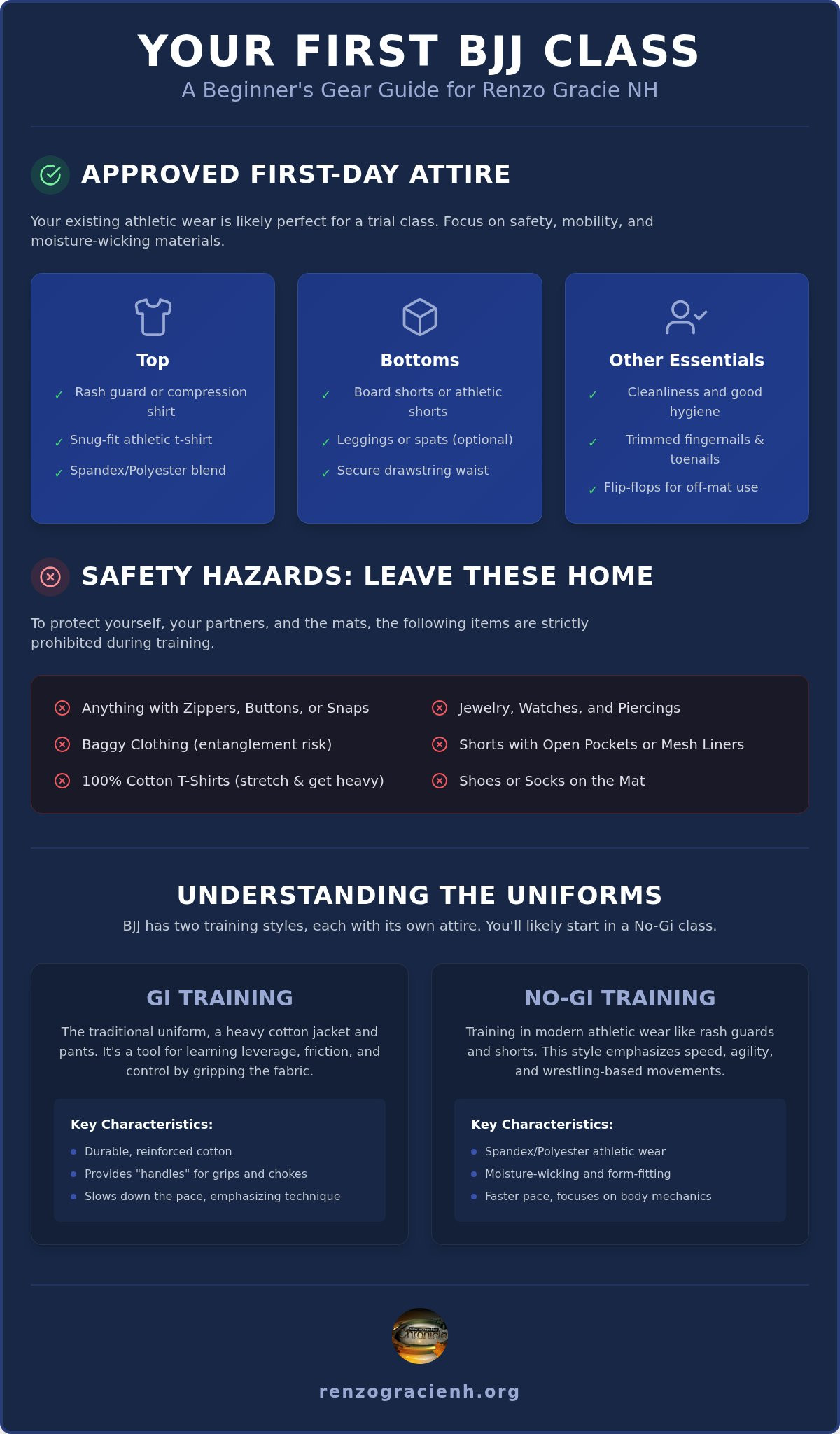
New students can begin with a complimentary introductory class at Renzo Gracie NH. Contact the academy beforehand to confirm the current format, schedule, and what to bring, since those details may change. During your visit, notice whether instructions are clear, partner practice is guided, and you feel comfortable asking questions. The class is an opportunity to experience the environment and ask how the program may fit your goals.
Does Renzo Gracie NH offer family martial arts training?
Yes. Renzo Gracie NH offers family training alongside Brazilian Jiu-Jitsu programs for adults and children. Ask the academy how current family training is organized, whether family members participate together, and which options suit your ages and goals. Don’t assume every class is shared. For families in Windham, Manchester, Exeter, and surrounding communities, confirming the format and schedule directly can help you decide whether training fits your routine.