Best NH Martial Arts School: Finding the Right Fit 2026
What if the best martial arts school isn’t the one with the most trophies, but the one you or your child feels ready to return to? Finding the best martial arts school New Hampshire has to offer means looking beyond a style name to the instruction, training experience, and fit with your goals.
It’s natural to have questions before starting. Martial arts programs can look very different, and beginners deserve an encouraging place to learn, ask questions, and progress at a comfortable pace. The right choice should suit your priorities, not just sound impressive.
This guide compares training approaches and offers practical ways to assess a school, from instructor experience and program fit to what an introductory class can show you. At Renzo Gracie NH, Professor Kevin Landry brings more than two decades of regional teaching experience and is a sixth-degree black belt under Renzo Gracie. The academy offers adult, kids’, family, and law enforcement Brazilian Jiu-Jitsu programs. A complimentary introductory class lets you experience the instruction before deciding whether it feels right for you or your family.
Key Takeaways
- The best martial arts school New Hampshire offers for you depends on how well its training, community, and routine match your goals.
- Compare martial arts by what students learn and practice, rather than assuming one approach is right for everyone.
- Assess instructor background, program fit, learning culture, and how clearly the school explains next steps.
- Start by naming your goal, identifying who will train, and finding a fitting program. Then use a class experience to help make your decision.
- Renzo Gracie NH’s Brazilian Jiu-Jitsu programs serve adults, children, families, and law enforcement professionals.
What Makes a Martial Arts School the Right Fit in New Hampshire?
Choosing a martial arts school can feel difficult when programs and styles are hard to compare. One academy may emphasize a traditional discipline, while another focuses on a specific kind of training. A useful first step is to learn about the history and types of martial arts, then consider what you want your own experience to involve. The best martial arts school New Hampshire has for you isn’t automatically the one with the broadest claims or most familiar name. It’s the one whose instruction and programs suit your priorities and give you a setting where you can keep learning.
What should you expect from a quality martial arts school?
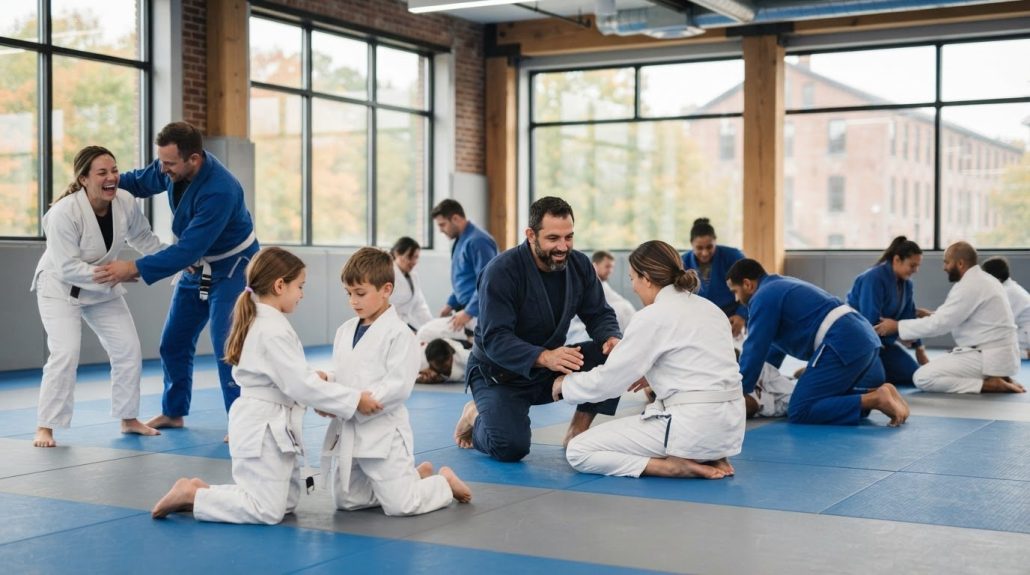
Look for instruction that explains what students are practicing and gives beginners a clear way to follow along. A respectful learning environment matters, too: students should be able to focus, ask questions, and learn at an appropriate pace. A structured curriculum can help students understand how foundational skills connect to more advanced learning. These are useful things to observe, not promises of a particular result.
When reviewing instructor experience, separate specific background from general promotional language. Rank, lineage, and teaching history are more informative when stated clearly. At Renzo Gracie NH, Professor Kevin Landry is a sixth-degree black belt under Renzo Gracie and has taught in the region for over two decades. Those details give prospective students concrete context about who leads the academy.
Which personal goals should guide your search?
Start with why you’re considering training. Are you looking to learn a martial art, add physical activity to your routine, build confidence through practice, share an activity with family, or pursue professional training? Different disciplines and programs emphasize different experiences, so one option won’t suit every person or purpose equally.
A good school fit brings your goals together with clear instruction, a respectful community, and a training routine you can realistically sustain. Use that definition to turn a vague search into practical questions: Does the program serve the person who plans to attend? Is the teaching understandable? Can training fit into everyday life?
- For an adult beginner: Notice whether explanations help you understand what to practice, even when the techniques are unfamiliar.
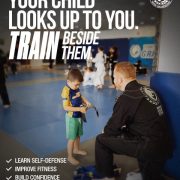
- For a child: Consider whether the environment encourages attention, respect, and steady participation.
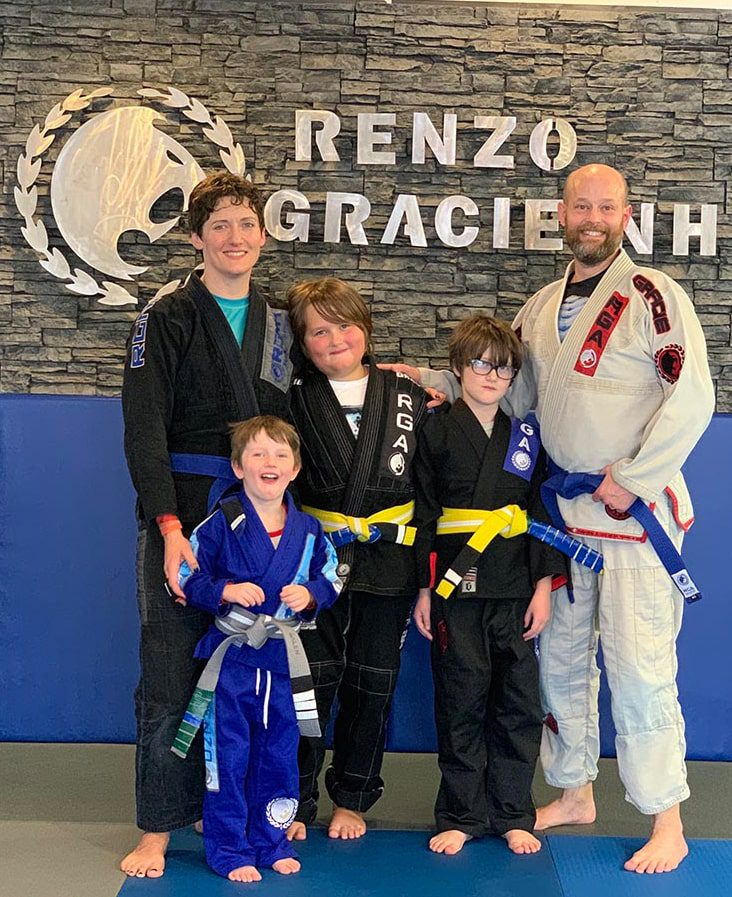
- For families: Think about whether training can be a shared activity that suits the people who want to participate.
- For law enforcement professionals: Look for a program focused on professional Jiu-Jitsu training and defensive tactics.
Local fit matters in Southern New Hampshire, too. If you’re considering options around Windham, Manchester, or Exeter, account for travel and the routine you can maintain. Compare each program’s focus with the student’s goals and the experience of learning there, rather than searching for a universal winner. Renzo Gracie NH offers adult, children’s, family, and law enforcement Jiu-Jitsu training. The next step is to consider whether its Brazilian Jiu-Jitsu approach matches the experience you want.
How Brazilian Jiu-Jitsu Compares With Other Martial Arts Approaches
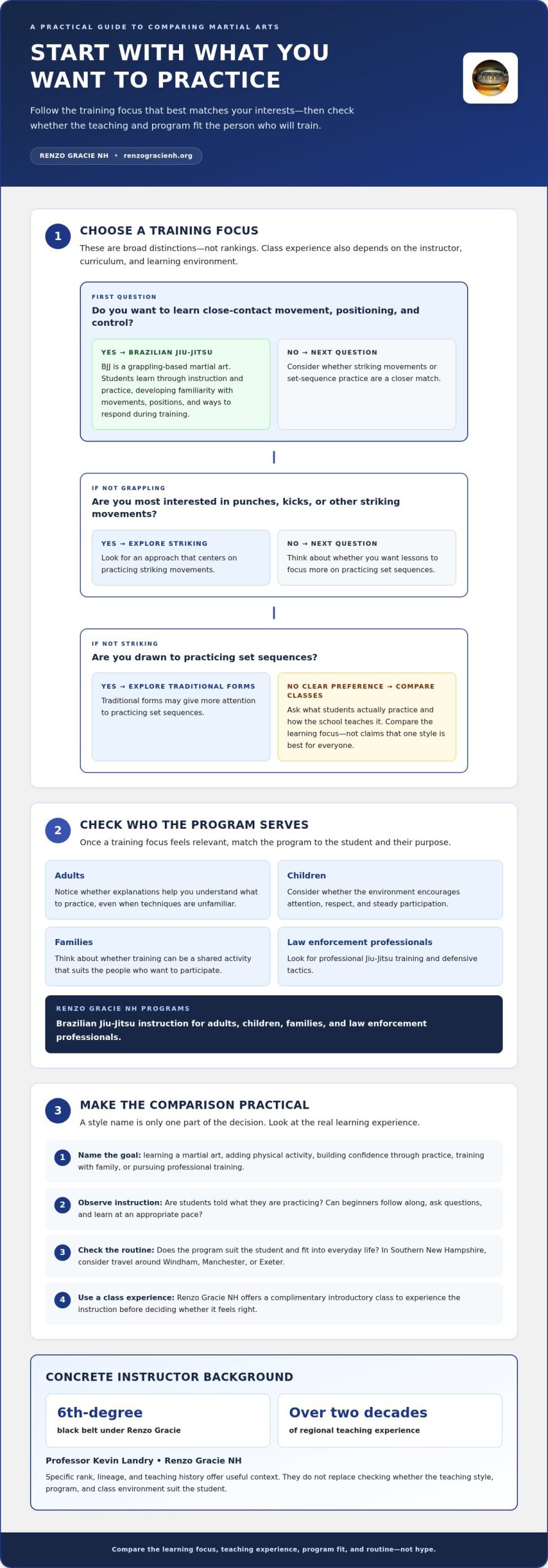
Martial arts differ in what students practice, how lessons are taught, and which skills receive the most attention. Some approaches emphasize striking movements, while grappling-based disciplines focus on close-contact movement, positioning, and control. Traditional forms may give more attention to practicing set sequences. These are broad distinctions, not rankings: the experience also depends on the instructor, curriculum, and class environment.
Could Brazilian Jiu-Jitsu match your goals?
Brazilian Jiu-Jitsu (BJJ) is a skill-based martial art centered on grappling. Students learn through instruction and practice, building familiarity with movements, positions, and ways to respond during training. It’s a focused discipline, not a universal answer for every student or goal. Choosing a style alone doesn’t guarantee a particular result.
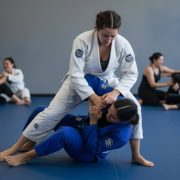
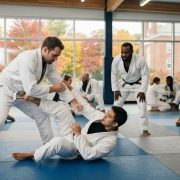
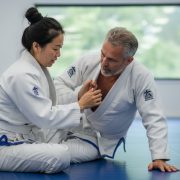
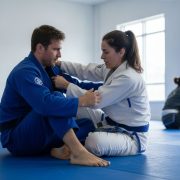
Renzo Gracie NH focuses on Brazilian Jiu-Jitsu instruction, with programs for adults, children, families, and law enforcement professionals. The student and purpose may differ, but the academy’s central discipline is the same. Consider whether learning grappling through structured practice fits what you’re seeking.
How can you compare disciplines without relying on hype?
Start with what you want to learn, then look at how a school teaches it and what students practice during class. Promotional language can describe a school’s aims, but it isn’t evidence of a particular outcome. Compare the actual learning focus and experience rather than relying on claims that one style is best for everyone.
The right discipline is the one whose learning focus and teaching experience align with the student’s priorities. Use the questions below to make that comparison concrete.
| Goal | Questions to consider | Relevant training focus |
|---|---|---|
| Learn grappling skills | Do you want to practice close-contact movement and positioning? | Brazilian Jiu-Jitsu’s grappling-based instruction and practice. |
| Explore striking skills | Are you more interested in practicing punches, kicks, or other striking movements? | Look for an approach that centers on striking practice. |
| Practice traditional forms | Would you enjoy learning and repeating set movements or sequences? | Consider an approach that emphasizes forms and their practice. |
| Find training for a specific student | Is the program designed around an adult, child, family, or professional learner? | Compare the intended student and purpose with the program’s stated focus. |
For anyone searching for the best martial arts school New Hampshire can offer, this framework replaces sweeping promises with a clearer question: does the training match what you want to practice? Consider how the instruction is explained, whether the class experience feels appropriate, and whether the program serves the student. If Brazilian Jiu-Jitsu aligns with your priorities, explore Renzo Gracie NH’s Brazilian Jiu-Jitsu approach.
Which Criteria Help You Compare New Hampshire Martial Arts Schools?
Use consistent criteria when comparing schools. Whether you’re considering training near Windham, Manchester, or Exeter, assess each option in the same way instead of letting a convenient location or polished promotion make the decision for you. Convenience matters, but the program should also make sense for the student.
For each school, note what you can verify, what you experience, and what you still need to understand. Specific details about instructors, programs, and how to get started are more useful than broad promotional language.
How should you assess instructor experience and teaching approach?
Look for a clear account of who teaches and what relevant experience they bring. Rank and lineage provide context, while teaching history helps explain an instructor’s experience working with students. Neither guarantees a particular result or class experience. Weigh those details alongside what you observe about the instruction.
At Renzo Gracie NH, Professor Kevin Landry is a sixth-degree black belt under Renzo Gracie and has taught in the region for over two decades. These are concrete credentials to consider as you learn about the academy’s Brazilian Jiu-Jitsu instruction.
What signs of program fit matter beyond credentials?
Check whether the program is intended for the student and purpose you have in mind. An adult, a child, a family, and a law enforcement professional may be looking for different learning experiences. Consider whether the school explains its program clearly and describes an approach grounded in respect and support. Then use a class experience to understand the atmosphere firsthand.
For insight into the principles behind the academy’s approach, explore its Jiu Jitsu philosophy guide. A school’s stated philosophy can help you understand what it prioritizes. Your own experience helps you decide whether that approach resonates.
Use this checklist as you compare programs:
- Instructor background: Can you identify the instructor’s rank, lineage, and relevant teaching experience from specific information?
- Program fit: Is the program designed for the student’s age group and purpose, such as adult, children’s, family, or professional Jiu-Jitsu training?
- Learning culture: Does the school describe how it values respect and support, and does the class experience feel appropriate to the student?
- Next steps: Is it clear how a new student can experience the instruction before deciding whether to continue?
For each point, record “clear,” “partly clear,” or “unclear,” along with a note about what you observed. Apply the same standard to every school. Specific credentials are more useful than broad claims, and a shorter drive shouldn’t outweigh a program that doesn’t fit the student’s goals or learning needs.
This process makes “best” personal and meaningful. The best martial arts school New Hampshire offers for one student may not suit another. Compare instructor experience, program purpose, learning culture, and the class experience together, then use those criteria to guide your decision.
Matching Martial Arts to Your Goals in Southern NH
Narrow your options by starting with the person who’ll train, not simply the nearest school. Whether you’re in Windham, Manchester, Exeter, or a nearby community, students have different goals and routines. Use these steps to connect those priorities with a suitable program.
- Name the goal. Decide what you hope to learn or make room for in your routine. You might want to begin a martial art, explore Jiu-Jitsu, find training for your child, share an activity as a family, or pursue professional training.
- Identify the student. Be clear about who plans to participate: an adult, a child, several family members, or a law enforcement professional. A child’s training needs may differ from a parent’s, even if both are interested in martial arts.
- Compare program fit. Match the student and purpose to the relevant program. Consider whether the training focus fits what you want to learn and whether the routine is practical for your life in Southern New Hampshire.
- Experience a class. A class gives you a chance to see the instruction and learning environment firsthand. Notice whether the teaching is understandable and whether the student can picture continuing to learn there.
Which program may fit adults, children, or families?
Adults exploring Jiu-Jitsu can start with the adult Jiu-Jitsu guide to learn about beginning. Parents considering a program for a child can use the children’s Jiu-Jitsu program guide as a starting point. If your goal is to train as a family, explore parent and child Jiu-Jitsu in Windham. These are distinct needs: family participation can be a shared goal, while an adult or child may also have individual reasons for training. Focus on who will participate and what they hope to learn.
What should law enforcement professionals prioritize?
For law enforcement professionals, Renzo Gracie NH offers dedicated Jiu-Jitsu training focused on grappling, control techniques, and professional defensive tactics. Consider whether that focus aligns with your professional learning priorities. Training should not be treated as a guarantee of a particular officer-safety outcome or department approval. The law enforcement Jiu-Jitsu training guide offers more context on the program.
Make your next step practical. Renzo Gracie NH offers a complimentary introductory class, so prospective students can experience the instruction and atmosphere before deciding whether the fit feels right. Book your complimentary introductory class.
Experience Renzo Gracie NH Before Choosing Your Martial Arts School
Program descriptions can narrow your options, but experiencing an academy firsthand can help you decide whether its instruction and atmosphere suit you. Renzo Gracie NH offers a complimentary introductory class, giving prospective students a chance to experience its Brazilian Jiu-Jitsu instruction before choosing whether to take another step.
The academy is led by Professor Kevin Landry, a sixth-degree black belt under Renzo Gracie who has taught in the region for over two decades. His rank and teaching experience offer useful context, but your own priorities matter too. Consider what you hope to learn, who will be training, and whether the class experience feels appropriate for that student.
What can a prospective student learn from an introductory class?
Use the class to notice how the instruction is presented and how the learning environment feels. Are the explanations clear enough to follow? Does the atmosphere feel welcoming? Can you picture yourself, your child, or your family learning in this setting? Focus on whether the experience aligns with the goals that brought you to martial arts.
Keep your judgment personal. A first visit is a chance to experience the academy’s Brazilian Jiu-Jitsu approach, not proof that one discipline or school suits every student. If you’re an adult beginner, consider whether the introduction helps you understand what learning Jiu-Jitsu could involve. If you’re exploring for a child or family, reflect on whether the atmosphere feels right for the people who would participate.
For more context before visiting, the guide to trying Jiu-Jitsu free in New Hampshire introduces the complimentary introductory experience. Use it alongside your own observations to form a clearer picture, rather than relying on a school description alone.
How can you take the next step?
After class, compare the experience with the priorities you identified earlier. Was the teaching clear? Did the atmosphere feel welcoming? Does Brazilian Jiu-Jitsu align with what you want to practice, and does the program fit the student? These questions can help you turn a first impression into a thoughtful decision without expecting one visit to answer every question about a long-term routine.
The best martial arts school New Hampshire has for you is the one that fits the student’s goals and feels like a place where learning can continue. If Renzo Gracie NH sounds like a fit, explore the complimentary introductory class and experience the academy for yourself.
Take the First Step Toward Training That Fits
Your next step doesn’t need to be a long-term decision. Treat it as a chance to explore: bring your goals into the room, experience the instruction, and notice whether the learning environment feels right. That firsthand perspective can help you choose with more confidence than a program description alone.
At Renzo Gracie NH, Professor Kevin Landry is a sixth-degree black belt under Renzo Gracie and brings more than two decades of regional teaching experience. The academy’s complimentary introductory class gives prospective students a practical way to experience its Brazilian Jiu-Jitsu instruction. The best martial arts school New Hampshire can offer is the one that aligns with what you want to learn and feels like a place where you can keep progressing.
Try a complimentary introductory Jiu-Jitsu class at Renzo Gracie NH and take that first step at your own pace. Your training can begin by simply showing up.
Frequently Asked Questions
How do I choose the best martial arts school in New Hampshire?
Choose a school by matching its instruction and program to the person who’ll train and the reason they want to begin. An adult seeking a new skill may prioritize a different program from a parent looking for a shared family activity. Consider how the school explains its teaching approach, whether the learning environment feels comfortable, and whether the routine works from your home or workplace in Windham, Manchester, Exeter, or nearby.
Is Brazilian Jiu-Jitsu a good martial art for beginners?
Brazilian Jiu-Jitsu can be a good starting point for someone interested in learning grappling through guided instruction and practice. Beginners don’t need to arrive knowing the techniques. Look for teaching that helps you understand what you’re learning and how to keep developing. If you’re new, notice whether explanations make sense and whether the class feels welcoming. Renzo Gracie NH offers adult Jiu-Jitsu training for people exploring the discipline.
Can adults and children train in Brazilian Jiu-Jitsu at the same academy?
Yes. Renzo Gracie NH has adult and kids’ Jiu-Jitsu programs at the same academy, so different family members can explore the discipline through programs intended for adults or children. That doesn’t necessarily mean everyone trains in the same class. If a parent and child each have individual goals, consider those separately and choose the program that fits each participant. Families can also explore the academy’s family-time option for shared participation.
What should I look for in a martial arts instructor?
Look for clear information about an instructor’s rank, lineage, and teaching experience, then consider how they communicate during instruction. A credential provides context, but it doesn’t guarantee that a particular teaching style will suit you. Notice whether explanations are understandable and whether the instructor’s approach supports focused learning. At Renzo Gracie NH, Professor Kevin Landry is a sixth-degree black belt under Renzo Gracie and has taught in the region for over two decades.
Is Brazilian Jiu-Jitsu suitable for families who want to train together?
It may suit families who want martial arts to be a shared activity while allowing adults and children to pursue their own training needs. Renzo Gracie NH offers family time alongside its adult and kids’ Jiu-Jitsu programs. Before choosing, talk as a family about what each person hopes to get from participating. One family member may be interested in learning a new skill, while another values having an activity to share.
What is the difference between Brazilian Jiu-Jitsu and other martial arts?
Brazilian Jiu-Jitsu centers on grappling, while other martial arts may emphasize different practices, such as striking techniques or set forms. The distinction is about what students learn and practice, not a universal ranking of styles. When comparing approaches, consider which skills interest you and what kind of instruction you’d like to experience. Renzo Gracie NH focuses on Brazilian Jiu-Jitsu, making it an option for students drawn to grappling.
Can law enforcement officers train in Jiu-Jitsu in New Hampshire?
Yes. Renzo Gracie NH offers Law Enforcement Jiu-Jitsu Training focused on grappling, control techniques, and professional defensive tactics. Officers can compare that focus with their professional learning priorities and decide whether it aligns with what they want to study. The program is designed for law enforcement professionals, but training isn’t a guarantee of a particular officer-safety outcome or department approval.