Martial Arts for Stress Relief: A Practical Guide for Adults
What if stress relief came from focused practice, not fighting harder? When work and daily demands keep your mind switched on, another repetitive workout may not appeal, and stepping into a combat-sport setting can feel intimidating. Yet martial arts for stress relief adults can approach at their own pace may offer a structured way to move, concentrate, and make steady progress.
It’s reasonable to wonder whether training can help you manage stress, and whether you need to be fit or experienced before you begin. You don’t. Brazilian Jiu-Jitsu asks you to focus on movement, technique, and the moment in front of you. Practice can build fitness and confidence over time, but it isn’t a treatment for stress-related or mental health conditions. It may become one meaningful part of a balanced routine.
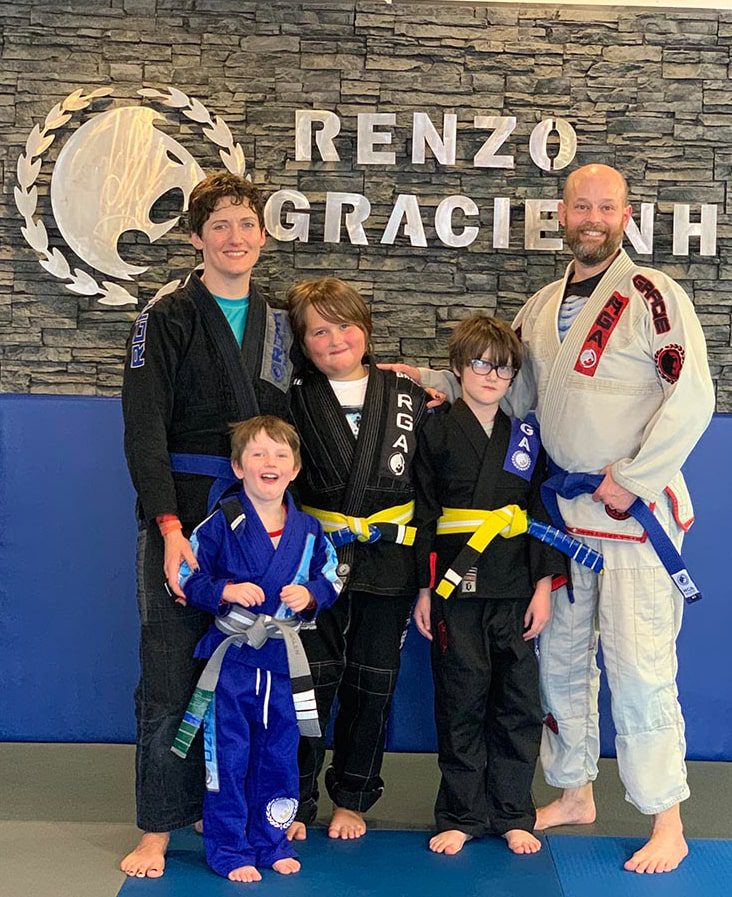
This guide explains how martial arts may support stress management, what to look for in a welcoming training environment, and how to start without rushing. At Renzo Gracie NH, adults of different skill levels can learn in a supportive setting, with a complimentary introductory class as a low-pressure first step.
Key Takeaways
- Set realistic expectations: martial arts may support wellbeing, but it isn’t a guaranteed stress remedy or a substitute for mental health care.
- Compare solo exercise with group training to find the routine and level of interaction that suit you.
- Use a simple try-and-reflect plan to explore martial arts for stress relief adults can sustain, adjusting effort to your comfort and recovery.
- Brazilian Jiu-Jitsu is grappling-based skill practice, and participation doesn’t require a goal of competing.
- Learn what structured adult Brazilian Jiu-Jitsu looks like at Renzo Gracie NH, led by Professor Kevin Landry, a sixth-degree black belt under Renzo Gracie.
Can Martial Arts Help Adults Manage Stress? Start With Realistic Expectations
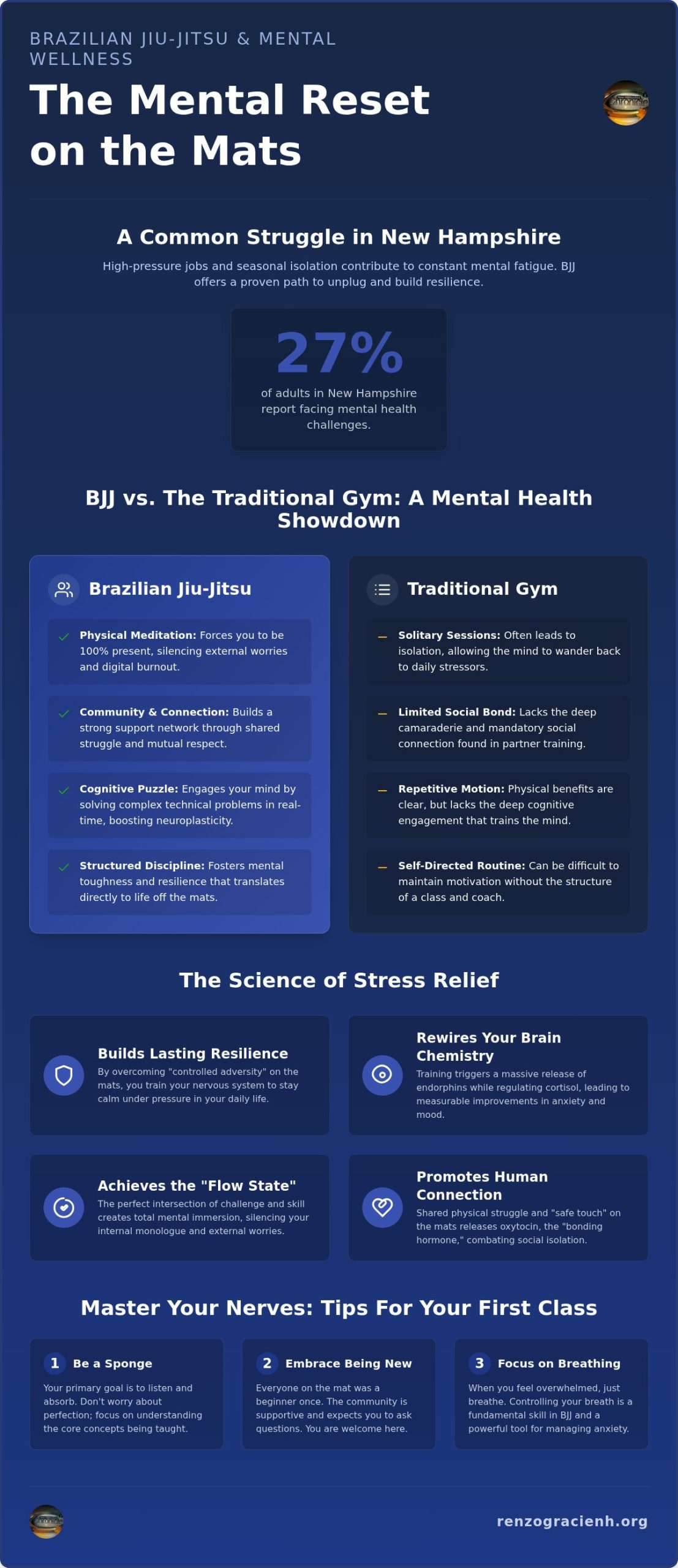
Work can end for the day while your mind keeps replaying deadlines, decisions, and unfinished tasks. An activity that creates a clear break may help, but stress relief isn’t automatic, and no single routine suits everyone. The question behind “martial arts for stress relief adults” is best answered with realistic expectations: training may support wellbeing, but results depend on your experience and circumstances.
A class gives you a set time to move, listen, and practise a skill alongside other people. Following an instructor’s directions gives your attention something specific to return to, such as learning a movement or adjusting your balance. That focus may help some students feel more present during training. Enjoyment, consistency, class intensity, health, and personal circumstances all shape the experience. A challenging session may energize one person and feel like too much for another.
Martial arts can complement, but not replace, mental health care. The Martial arts therapy overview discusses martial arts as a complementary approach, not a substitute for appropriate professional support. Think of training as one possible part of caring for your wellbeing, not a treatment or a promise that distress will go away.
What adults may gain from a structured martial arts class
Structure can make it easier to get started when motivation is low. Instead of planning every part of a workout yourself, you follow instruction and practise one skill at a time. Shared practice also brings interaction with instructors and classmates, which may feel encouraging if you enjoy learning with others. These are potential supports, not guaranteed emotional or physical outcomes. Progress might simply mean becoming more familiar with a movement or feeling more at ease in class.
Notice how the routine feels during and after training. Do you enjoy having a task to concentrate on? Is the pace manageable? Those observations are more useful than expecting every class to leave you calm, energized, or confident. If the session feels too demanding, adjust your effort or allow time to recover so the activity remains sustainable.
When stress may need support beyond exercise
Exercise can be one piece of self-care, but persistent or overwhelming distress deserves attention beyond a training routine. If stress is affecting sleep, relationships, work, or your ability to manage daily life, consider speaking with a qualified mental health professional or healthcare provider. Reaching out isn’t a sign that you’ve failed to cope. It’s a practical way to get support that fits your needs.
You can still explore martial arts if it feels appropriate. Keep expectations flexible, choose a manageable pace, and treat practice as an addition to your broader wellbeing plan. If you already have care or guidance, training doesn’t need to replace it. Let your comfort and needs guide the decision.
How Martial Arts Training Can Create Focus, Movement, and Connection
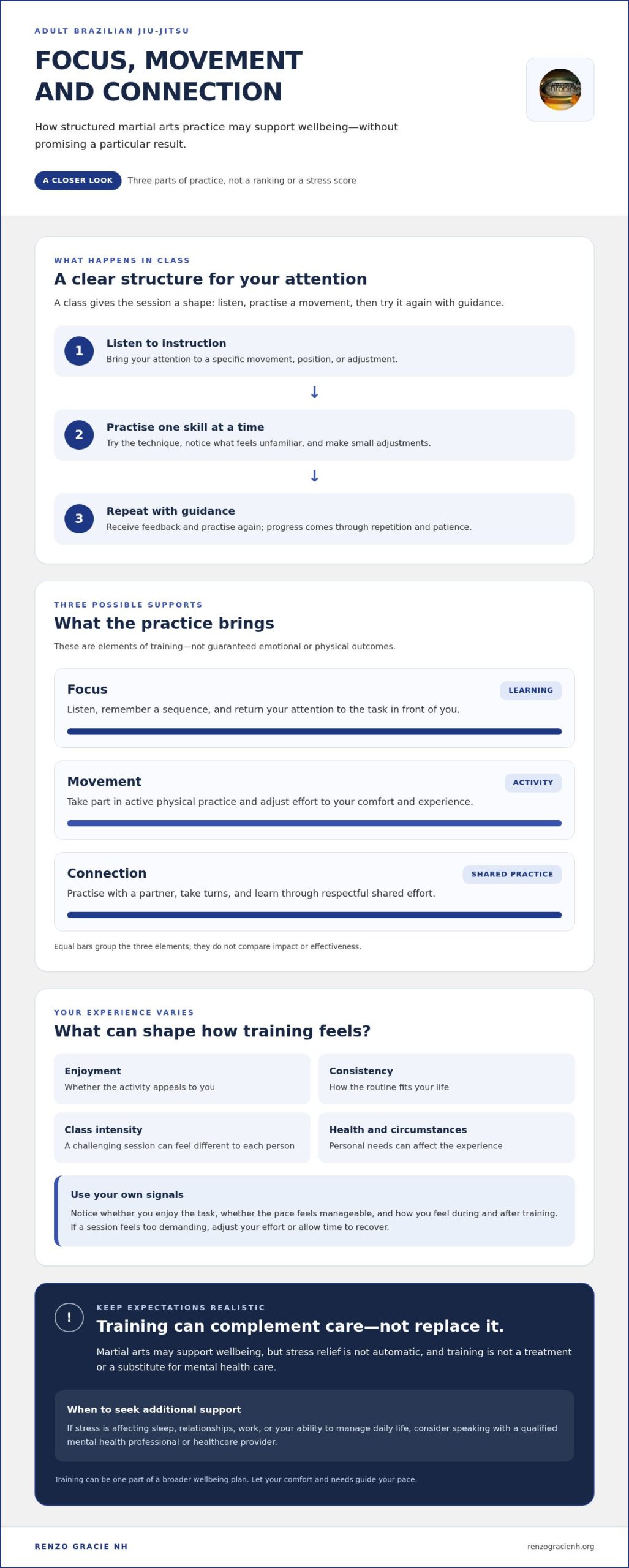
A martial arts class gives the session a clear shape: listen to an instructor, practise a movement, then try it again with guidance. In Brazilian Jiu-Jitsu, that might mean learning to move from one position to another or respond to a partner’s movement. The task is specific and immediate, giving your attention somewhere to land while you’re on the mat.
Three possible benefits are worth separating: focus from learning, movement from physical practice, and connection from shared training. They may contribute to a sense of wellbeing, but they aren’t medical effects or guaranteed stress relief. Your experience depends on your preferences, comfort, and the pace of instruction.
Focused practice: one task at a time
Skill practice asks you to listen, remember a sequence, and make small adjustments. If a technique feels unfamiliar, you can try it, receive a correction, and practise again. That cycle gives the class a clear focus without requiring you to master everything at once. Progress comes through repetition and patience, not an instant transformation.
The physical side matters too. Classes involve movement and active participation, while you can adjust effort to suit your comfort and experience. A beginner’s goal might be as simple as following the instruction and getting a feel for a new movement. Some people enjoy combining mental attention with physical activity; others prefer a different routine. Either response is valid.
Training with other people can build connection
Partner practice makes learning interactive. You take turns practising a movement, pay attention to your partner, and respond to the instructor’s feedback. Ideally, this is cooperation rather than a contest: each person helps create a respectful space to learn, make mistakes, and improve. Shared effort can make a class feel welcoming, especially when students are encouraged to learn at different levels.
That interaction may offer a sense of belonging if you value learning alongside others, but community isn’t a guaranteed cure for loneliness or distress. Some adults enjoy a group setting; others need time to feel comfortable. Notice whether the atmosphere supports respectful practice and whether you feel able to ask questions and learn at your own pace.
These elements can work together without promising a particular result. A focused task occupies your attention, movement makes training active, and a partner turns practice into a shared experience. The appeal of martial arts for stress relief adults can sustain may come from that steady combination, not from fighting harder or expecting every class to change how they feel.
To experience guided practice firsthand, explore adult Brazilian Jiu-Jitsu training at Renzo Gracie NH, where instruction supports skill development and personal progress.
Brazilian Jiu-Jitsu or Solo Exercise: Which Stress-Relief Routine Fits You?
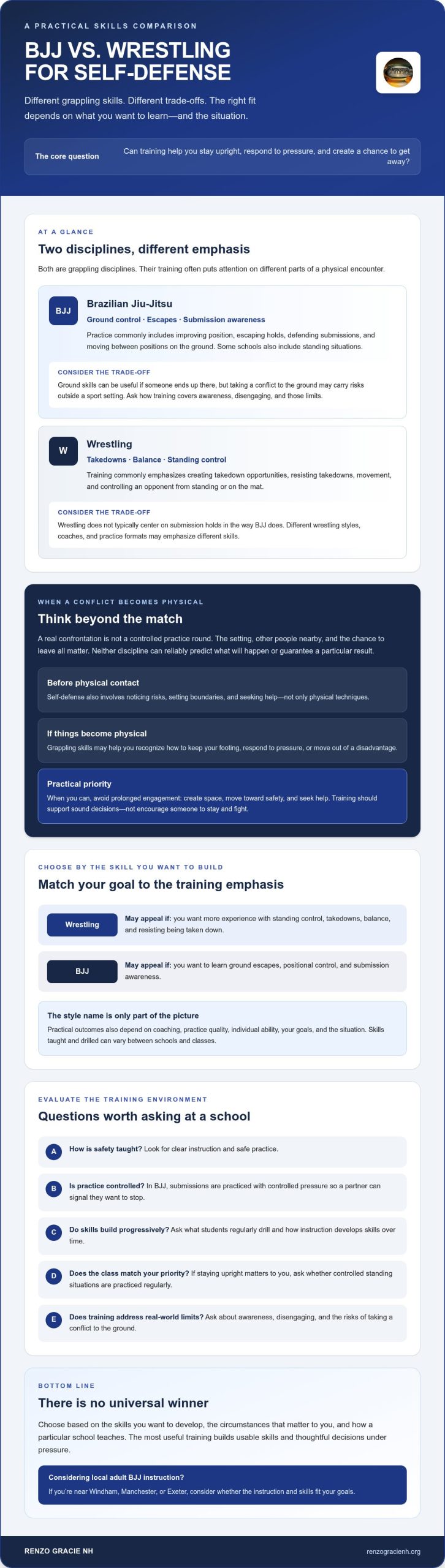
A solo walk, a strength workout, and a Brazilian Jiu-Jitsu class all involve movement, but they ask different things of you. A class follows an instructor’s plan and includes interaction; exercising alone lets you set the pace and choose what to do. Neither is automatically better for stress management. The right fit depends on what helps you show up and feel comfortable.
What makes Brazilian Jiu-Jitsu different from solo workouts?
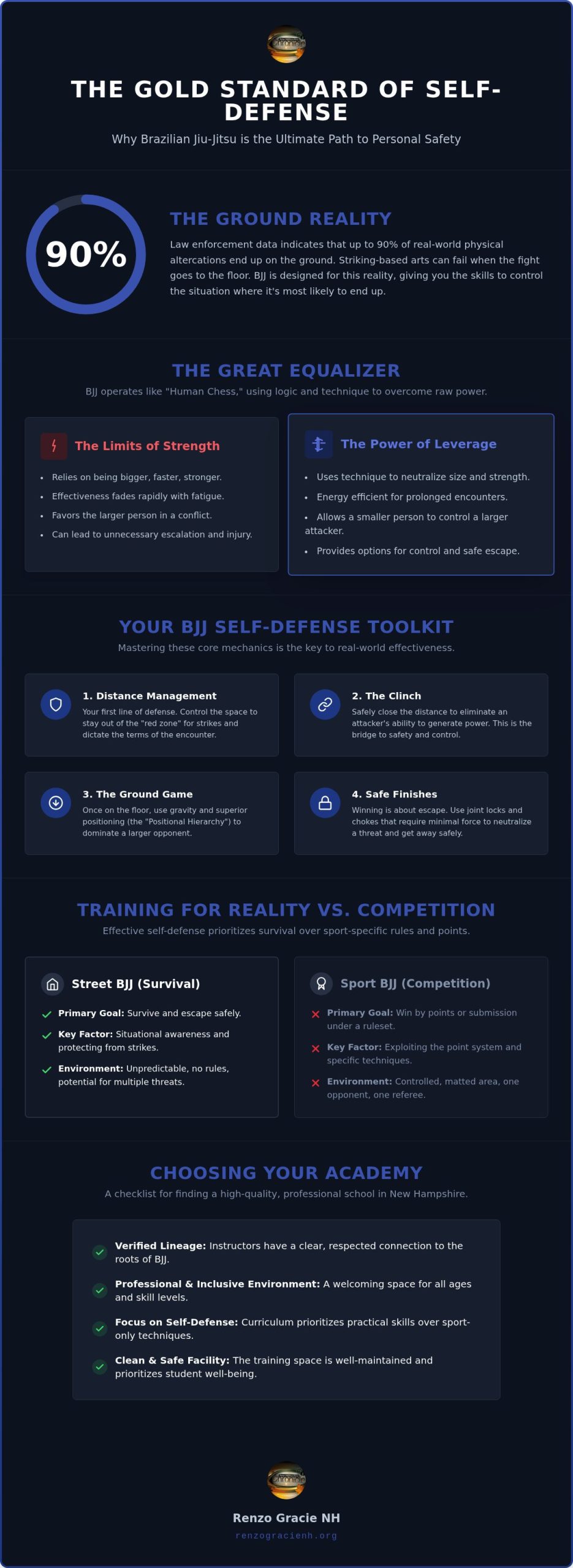
Brazilian Jiu-Jitsu is grappling-based skill practice. Students learn coached movements and practise them with a partner, responding to another person rather than following a fixed solo routine. That adds an interactive, problem-solving element to exercise. You don’t need to compete: you can approach training as a way to learn and practise, with participation focused on your own goals.
Solo exercise offers a different kind of flexibility. You might walk a familiar route or follow your own strength routine without coordinating with a class or partner. Use this comparison to consider which setting feels more motivating and manageable:
| Fit factor | Brazilian Jiu-Jitsu class | Solo exercise |
|---|---|---|
| Structure | Instructor-led skills and practice | You choose the activity and pace |
| Interaction | Partner practice and group learning | Usually independent |
| Variety | New movements and problem-solving | Depends on the routine you choose |
| Good fit if you prefer | Guidance and shared practice | Independence and control |
Choose a routine that suits your comfort and schedule
Think about the kind of structure you’re most likely to return to. If you enjoy guided learning and don’t mind practising with a partner, a martial arts class may hold your interest. If you prefer quiet movement or full control over your pace, solo exercise may suit you better. You can also combine them, choosing different activities on different days according to your energy and schedule.
Partner practice may feel unfamiliar at first. Notice how the instruction, pace, and shared practice feel as you learn. A supportive beginner setting can help you approach new movements gradually. For a closer look at what starting can involve, explore this adult beginner Jiu-Jitsu guide.
The best routine is one you can attend consistently and safely. For adults considering martial arts for stress relief, personal fit matters more than choosing the activity that sounds most intense. Start with what feels manageable, then consider whether it’s enjoyable enough to become part of your life.
How to Try Martial Arts for Stress Relief Without Overcommitting
You don’t need to commit to a demanding routine to find out whether martial arts suits you. Treat the first step as an experiment: set a simple intention, try an introductory class, and notice how the experience fits your life. A measured approach helps you explore martial arts for stress relief adults can sustain without expecting quick results or pushing past your comfort.
Set a personal goal and a realistic first step
Start with a reason that matters to you. You might want to learn a new skill, add regular movement to your week, or try a focused group activity. Then decide what would make your first month feel worthwhile. That could mean showing up for a class, learning a basic movement, or simply feeling more familiar with the training environment. Keep the goal personal; there’s no universal schedule or timeline for progress.
Use this five-step plan to begin:
- Identify your goal. Choose one practical reason for trying a class.
- Choose a beginner-friendly setting. Look for clear instruction and an atmosphere where newcomers can learn at their own pace.
- Try one class. Focus on listening and experiencing the basics, rather than judging your ability.
- Reflect afterward. Consider what felt engaging, challenging, or uncomfortable, and how you felt after the session.
- Decide what comes next. Continue, adjust your approach, or take more time before choosing.
Make a first class feel more approachable
Being new is reason enough to ask for guidance. Tell the instructor you’re a beginner and share any comfort concerns that could affect your participation. If a movement feels unfamiliar, ask for clarification rather than forcing your way through it. Listening, observing a demonstration, and practising fundamentals are meaningful parts of learning, even if everything doesn’t click on the first attempt.
A complimentary introductory class at Renzo Gracie NH gives adults a low-pressure way to experience Brazilian Jiu-Jitsu instruction. Read more about the free introductory Jiu-Jitsu class in New Hampshire as you consider your first visit.
Keep your starting pace manageable, and adjust your effort based on how you feel during practice and how well you recover afterward. Soreness, nerves, or difficulty with an unfamiliar movement are useful reasons to speak up and talk with the instructor. If you have individual health concerns, follow advice from a qualified professional about what activity is appropriate for you.
When you’re ready to try it, explore a complimentary introductory class and experience adult Brazilian Jiu-Jitsu in a supportive setting.
Explore Adult Brazilian Jiu-Jitsu at Renzo Gracie NH
A practical approach to martial arts for stress relief adults can sustain begins with a good fit: clear instruction, steady skill development, and a training environment where newcomers can learn without pressure to prove themselves. Renzo Gracie NH offers adult Brazilian Jiu-Jitsu instruction for different skill levels, with an emphasis on personal development and supportive practice. Training can provide structure and a new skill to work on, though each person’s experience is their own.
A supportive place to build skills at your own pace
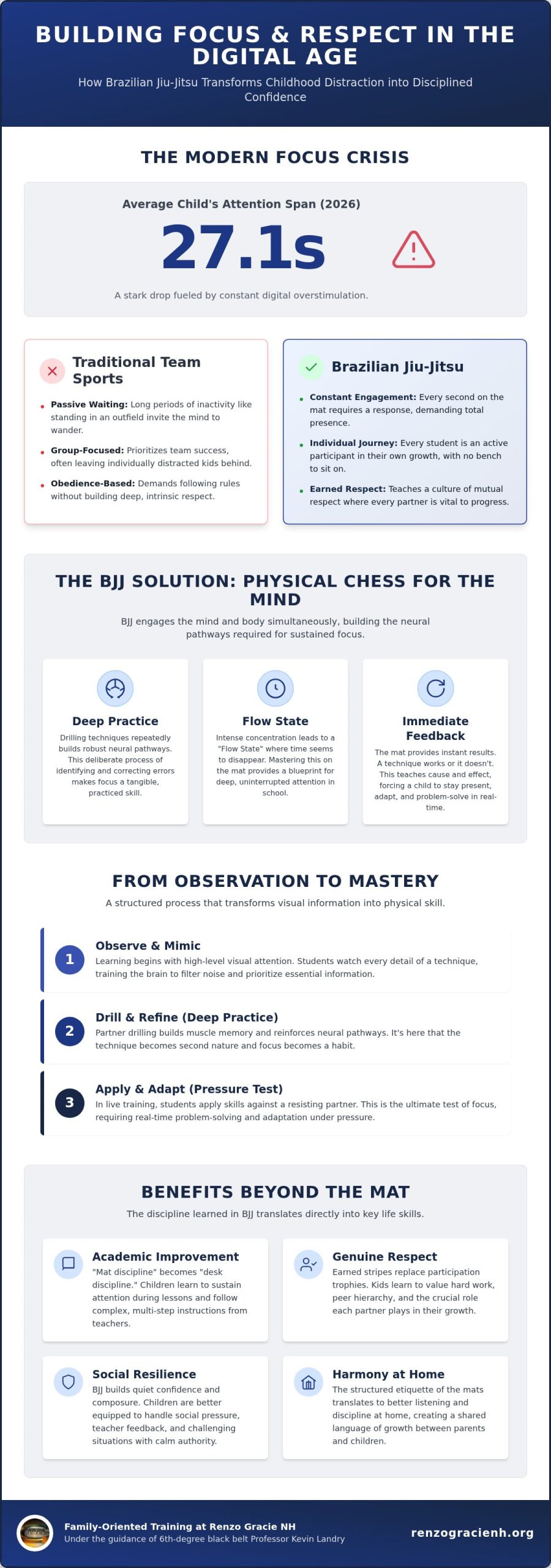
Brazilian Jiu-Jitsu develops through practice. Students work on movements and techniques over time, building familiarity step by step rather than needing to know everything on day one. That process can give adults a meaningful focus as they learn, while respecting that people arrive with different backgrounds, comfort levels, and reasons for training.
Respect and encouragement matter in a learning environment. Partner practice is an opportunity to develop skills together, not a demand to compete or show toughness. Students can concentrate on understanding instruction, practising fundamentals, and making progress at a manageable pace. Consistency can help learning develop, but there are no guaranteed results for stress, fitness, confidence, or mental health.
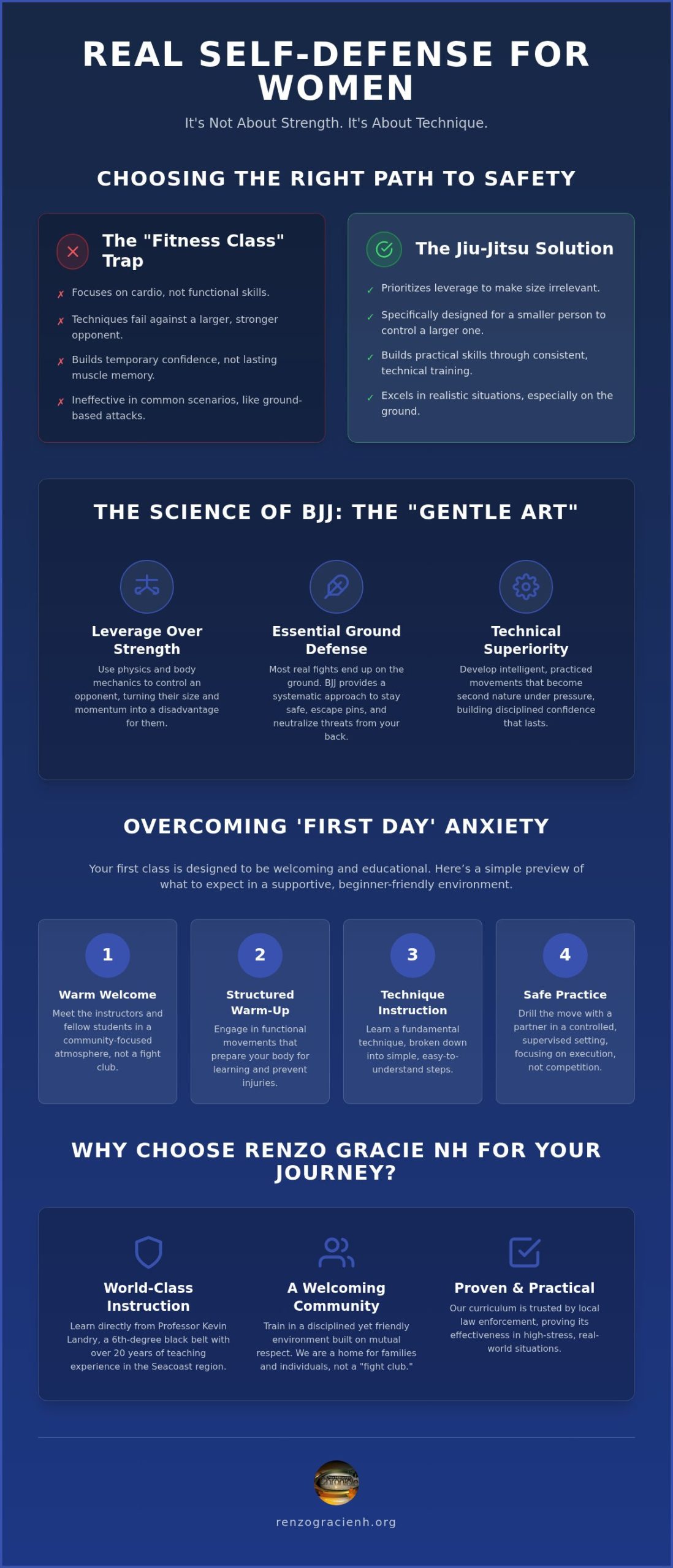
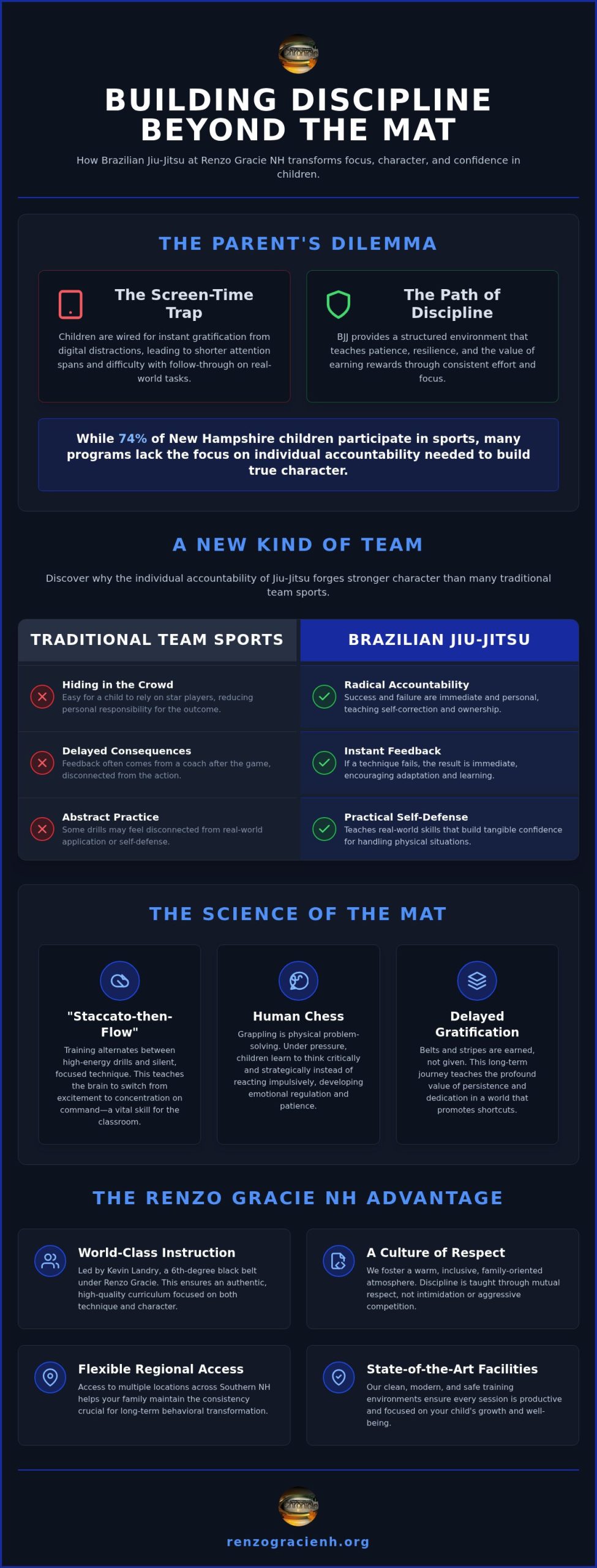
Instruction is led by Professor Kevin Landry, a sixth-degree black belt under Renzo Gracie who has taught in the region for over two decades. His experience provides a foundation for adult students as they work through the discipline’s techniques and principles. Whether you’re new to Brazilian Jiu-Jitsu or have experience in another setting, learning and personal development remain central to practice.
Take a first step with a complimentary introductory class
Reading about a class can only tell you so much. A complimentary introductory class lets you experience the teaching environment firsthand and decide how the instruction and practice feel. Approach the first visit as an opportunity to observe, learn, and get familiar with Brazilian Jiu-Jitsu. You don’t need prior experience or a long-term commitment already decided.
Renzo Gracie NH serves adults in Windham, Manchester, and Exeter, New Hampshire. If you’re in one of these communities and curious about adding structured skill practice to your routine, try an introductory class and see how the environment feels. Start at a welcoming pace, then decide what you’d like to do next.
Choose a First Step That Fits Your Life
You don’t need to decide today whether martial arts will become a long-term routine. Let curiosity lead: try a class, notice how the instruction and pace feel, and give yourself room to make an informed choice. For adults exploring martial arts for stress relief, the most useful next step is one that feels manageable and supports steady participation, without expecting a guaranteed change in how you feel.
At Renzo Gracie NH, adult Brazilian Jiu-Jitsu is taught by Professor Kevin Landry, a sixth-degree black belt under Renzo Gracie with over two decades of teaching experience in the region. A complimentary introductory class lets new students experience the training environment firsthand, without needing to have everything figured out before stepping onto the mat.
Ready to explore at your own pace? Try a complimentary introductory Jiu-Jitsu class at Renzo Gracie NH in Windham, serving students from Windham, Manchester, and Exeter. Take the first step toward learning something new.
Frequently Asked Questions
Can martial arts help adults manage stress?
Yes, martial arts may help adults manage stress as a structured activity, but the experience varies and training isn’t a treatment. The phrase “martial arts for stress relief adults” is best understood as a search for a routine, not a promise of a particular result. After class, notice whether you feel engaged, fatigued, or unsettled. That check-in can help you decide whether the activity suits you.
Is Brazilian Jiu-Jitsu a good martial art for stress relief?
Brazilian Jiu-Jitsu may suit adults who enjoy learning through movement and problem-solving, though it won’t be everyone’s preferred activity. Consider whether you leave class interested in practising again, rather than judging the session by whether you felt instantly relaxed. If close partner contact or grappling feels uncomfortable, that preference matters. A solo activity may be a better personal fit.
Can I start martial arts as an adult with no experience?
Yes. You can begin without prior martial arts experience; introductory instruction helps you learn basic movements, terminology, and class expectations. You don’t need to arrive already fit or know the techniques. Adults in Windham, Manchester, and Exeter can start with an introductory class, listen closely, and ask for clarification when a direction is unfamiliar. Focus on learning how class works, not keeping up with experienced students.
How often should adults train martial arts for stress relief?
There’s no single weekly schedule that suits every adult. Consider your existing commitments and recovery needs, then choose a pace you can maintain without making training another source of pressure. Keep a brief note of attendance, energy, and soreness over time. If you routinely skip because the plan feels too demanding, scale back and reassess rather than treating missed sessions as a failure.
What happens if martial arts training feels too intense?
If a session feels too intense, pause and tell the instructor what you’re experiencing. You can ask to see a technique again, take a break, or reduce your effort. Speaking up is part of training responsibly. Unfamiliar movements may feel awkward, but pain or concerning symptoms shouldn’t be ignored. For persistent pain, injury, or individual health concerns, stop and follow advice from a qualified healthcare professional.
Does martial arts replace therapy or medical care for anxiety?
No. Martial arts may be one part of a broader wellbeing routine, but it doesn’t diagnose or treat anxiety and can’t replace therapy, medical care, or prescribed treatment. If anxiety is disrupting sleep, work, relationships, or daily tasks, speak with a qualified mental health professional or healthcare provider. Continue any existing care as advised, and consider training only as an additional activity that fits your needs.
Is Brazilian Jiu-Jitsu competitive, or can adults train without competing?
Adults can practise Brazilian Jiu-Jitsu without making competition a goal. Training can focus on learning techniques, understanding positions, and developing skills at your own pace, rather than preparing for a tournament. If you’re unsure what to expect, share your personal goals with the instructor early. That conversation can help you understand how class practice relates to what you hope to learn.