How to Start Jiu-Jitsu If You’re Not Flexible
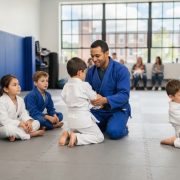
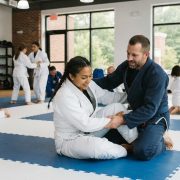
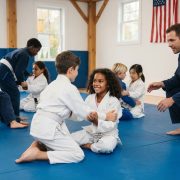
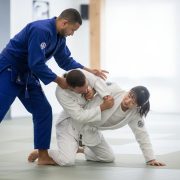
You can start Brazilian Jiu-Jitsu without being flexible. If you’re wondering, “I’m not flexible, can I do jiu-jitsu?” the answer is yes: flexibility isn’t a prerequisite for your first class. You can develop useful mobility as you learn.
It’s understandable to worry that stiff hips, tight hamstrings, or limited range of motion will make class difficult. Jiu-Jitsu uses leverage, timing, and strategy, not flexibility alone, and beginners can learn movements at a pace that suits them.
This guide explains how to approach class when you feel stiff, which mobility habits can support training, and how to stretch comfortably before and after practice. You’ll also learn why functional movement matters more than forcing your body into a pose. Start where you are, focus on steady progress, and let your skills develop with you.
Key Takeaways
- Use class warm-ups and technique practice to build body awareness while you learn.
- Focus mobility work on the hips, hamstrings, back, and shoulders instead of forcing deep stretches.
- Learn when dynamic movement and held stretches fit best around training.
- Choose steady, comfortable progress over trying to match another student’s range of motion.
How Do I Deal with a Lack of Flexibility at Jiu Jitsu Classes?
Start with controlled movement, not forced stretches. Limited flexibility alone doesn’t identify a specific injury. Pay attention to pain and avoid forcing uncomfortable positions.
-
Build Mobility Through BJJ Training
Use warm-ups, drilling, and rolling to explore movement gradually. These parts of class can support mobility and body awareness over time. During a hip escape, for example, notice how your hips and spine move together. Breathe through each technique and stay relaxed during rolls. Don’t force a position to match another student’s range.
-
Use BJJ-Specific Stretches and Drills
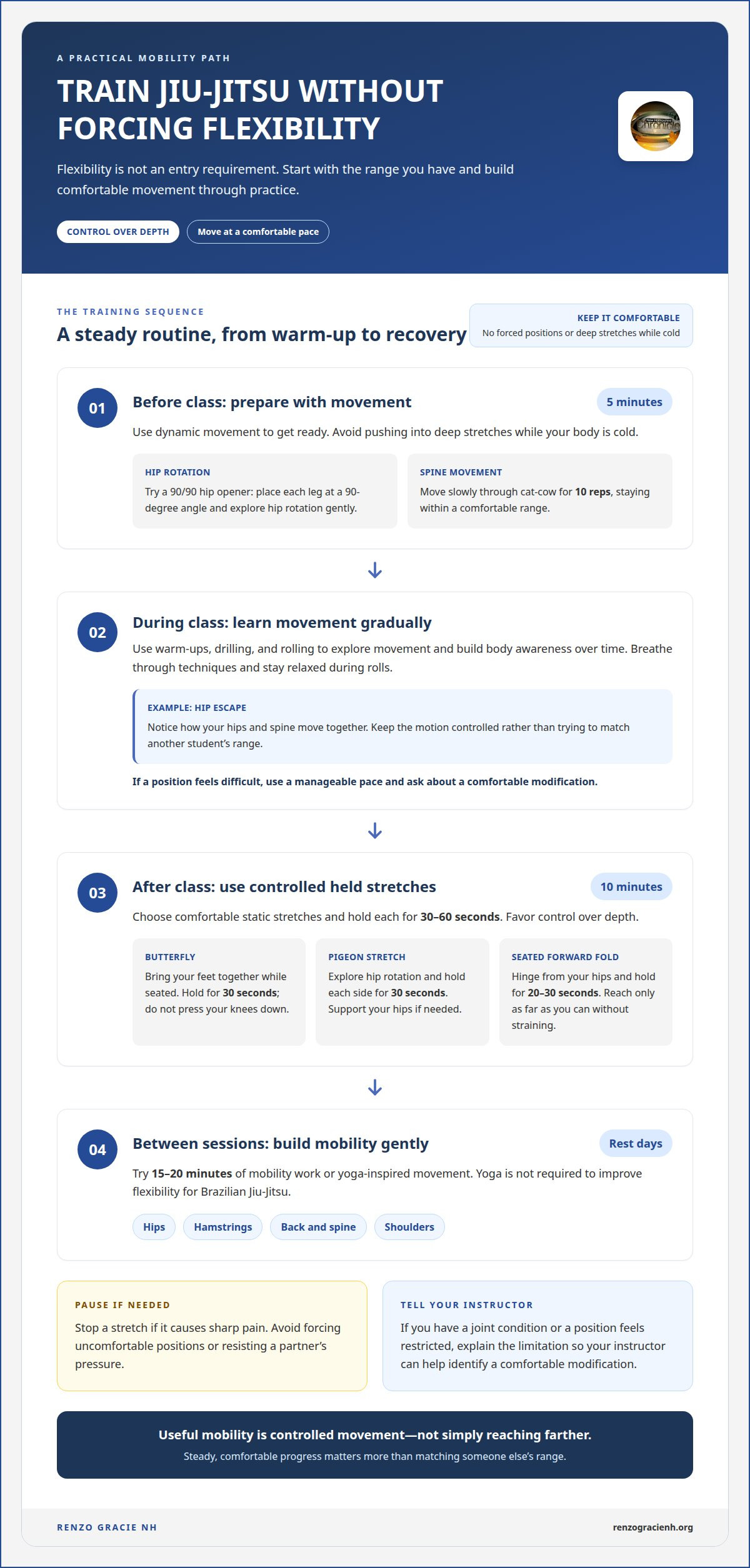
Prepare with dynamic movement before class, then use controlled stretches afterward. A 90/90 hip opener places each leg at a 90-degree angle and encourages hip rotation. Try cat-cow slowly for 10 reps to move your spine through a comfortable range. Spend 5 minutes on dynamic movement before class, rather than pushing into deep stretches while cold.
-
Work on Spine and Shoulder Mobility
Add gentle spine and shoulder movement to your practice. Cat-cow gives your back a slow, deliberate motion; shoulder circles can help you notice stiffness before drilling. Keep both movements controlled and within a comfortable range. On rest days, try 15-20 minutes of mobility work or yoga-inspired movement. Yoga isn’t required to improve flexibility for Brazilian Jiu-Jitsu.
-
Understand Flexibility Benefits and Injury Risks
Build mobility for smoother transitions, comfortable positions, and better awareness of your body’s limits. Flexibility can support movement, but forcing a stretch or resisting a partner’s pressure can make a position uncomfortable. After class, spend 10 minutes on static stretching, holding each stretch for 30-60 seconds. Stop a stretch if it causes sharp pain, and favor control over depth.
Hip, hamstring, back, shoulder, and spine mobility
Use a short sequence that targets the areas you use during grappling. Move within a comfortable range and keep each position controlled.
-
Stretch Tight Hips and Lower Back
Begin with a butterfly stretch, bringing your feet together while sitting. Hold for 30 seconds, then repeat without pressing your knees downward. For hip rotation, add a pigeon stretch and hold each side for 30 seconds. Keep your hips supported if the floor position feels uncomfortable.
Next, try slow pelvic tilts while lying on your back. Gently rock your pelvis, then return to neutral without forcing your lower back flat. This gives you a small, controlled movement to explore before trying larger stretches. Notice whether one side feels tighter, and keep both sides within a comfortable range. Avoid bouncing or pulling hard on your knees.
-
Use Hamstring and Lower-Back Stretches
Sit tall for a seated forward fold, then hinge from your hips. Hold for 20-30 seconds and keep your back straight. Reach only as far as you can without rounding sharply or straining. A gentler version is bending one knee while extending the other leg, then switching sides.
For spine and shoulder mobility, add slow seated trunk rotations. Turn your chest comfortably to one side, return to center, and repeat on the other. Pair each turn with relaxed shoulder rolls, keeping your neck easy. These movements let you explore rotation without forcing an end position. A brief routine can focus on hips, hamstrings, and lower back, then add these upper-body motions. Apply the sequence around Brazilian Jiu-Jitsu practice as a way to build familiarity with the movements.
Whether beginners need flexibility to start Brazilian Jiu-Jitsu
Start Brazilian Jiu-Jitsu without waiting to become more flexible. If you’re asking, “I’m not flexible, can I do jiu jitsu?” the answer is yes: flexibility isn’t an entry requirement. Judo and wrestling use different techniques, but beginners in each can learn without arriving with a particular range of motion.
If you have a joint condition, tell your instructor which positions are difficult. They can help identify comfortable modifications for practice.
-
Start Without Requiring Flexibility
Join class with the movement range you have now. If “I’m not flexible, can I do jiu jitsu?” is holding you back, focus on learning one position at a time. For example, practice where your hands go during a guard entry before adding the full movement. Don’t force a leg or shoulder into a painful position.
-
Follow Warm-Ups and Beginner-Friendly Instruction
Follow the warm-up at a manageable pace, then break unfamiliar techniques into smaller actions. During a technical stand-up, learn the hand placement and foot position separately before linking them. Instructors can modify positions when a movement is difficult. Use those adjustments instead of trying to copy your partner’s exact movement.
-
Train Flexibility as a Beginner
Set aside 10-15 minutes daily for gentle flexibility work. Choose movements that relate to class, such as hip rotations or a comfortable hamstring stretch. Keep your breathing steady, and adjust the position if you feel strain. Consistent practice can help you explore movement without making the session a test of how far you can stretch.
-
Consider Limited Motion and Joint Conditions
Describe specific limitations before a drill begins. For example, explain that a shoulder position feels restricted or turning your hip is uncomfortable. Your instructor can suggest a modified technique or starting position. Practice within a range you can control, and pause if discomfort changes how you move.
Functional flexibility versus static stretching
Use both movement and held stretches, but give them different purposes. In Brazilian Jiu-Jitsu, moving with control matters as much as reaching a position.
- Practice functional flexibility through the movements you use in class. For example, move between seated guard and a technical stand-up with control. Functional flexibility means accessing a useful range while moving, not simply reaching farther in a stationary pose. Keep your balance and breathing steady. If a transition feels restricted, reduce its range and focus on smooth movement rather than forcing the finish.
- Use dynamic movement to prepare for training. Controlled leg swings, hip rotations, and shoulder circles take your joints through changing positions. Keep each repetition deliberate, without bouncing or sudden pulls. Before drilling a guard recovery, for instance, rehearse the hip turn at an easy pace. The aim is to feel ready to move, not tired from intense stretching.
- Set aside static stretching for after class or a separate mobility session. Static stretching means holding a position for 30 seconds or more. A seated hamstring stretch is one example: settle into mild tension, breathe calmly, and release without yanking. Choose a position that targets the area you want to work. Stop short of sharp pain, and don’t treat a deeper reach as proof of better training.
- Match the stretch to your goal. If you’re preparing to drill, choose controlled movement; if you’re cooling down, a comfortable held stretch may suit you. You can combine both approaches in your routine rather than expecting one stretch to improve every movement. During an introductory class, notice which movements feel easier after warming up, then discuss suitable options with the instructor.
Put the approach into practice in a Free Introductory Class and learn how movement fits into training.
Renzo Gracie NH
Renzo Gracie NH gives adults a place to begin Brazilian Jiu-Jitsu without waiting to become flexible first. The Adult Jiu Jitsu Program is a next step if you want to learn techniques, build movement skills, and develop at your own pace. A Free Introductory Class lets you experience training and see how the movements feel before deciding what comes next.
Bring questions about limited mobility or positions that feel difficult. You can start with the range of motion you have and build familiarity as you learn. Children interested in training can join the Kids Jiu Jitsu Program. Contact Renzo Gracie NH in Windham, Exeter, or Manchester to talk about getting started.
Take Your First Step on the Mats
Your starting point isn’t a flexibility test. It’s a chance to learn how your body moves, ask questions, and discover which techniques feel comfortable. If you’re wondering, “Can I do jiu-jitsu if I’m not flexible?” let that question lead to a first step, not a reason to wait. Progress comes from showing up, staying curious, and practicing with care.
Renzo Gracie NH welcomes people exploring training for themselves or their family, as well as professionals seeking Law Enforcement Jiu-Jitsu Training. With locations in Windham, Exeter, and Manchester, you can choose a path that fits your goals and begin with an open mind. You don’t need to arrive with every movement mastered. Start with what you can do today, and let each class help you build confidence and skill.
Contact Renzo Gracie NH to get started. Your first step can be a steady one.
Frequently Asked Questions
Do you need flexibility to start Brazilian jiu-jitsu?
No, you can begin Brazilian Jiu-Jitsu without being flexible first. A useful first goal is learning the shape and purpose of a technique, not matching an advanced student’s range. For example, during guard practice, focus on where your hands and feet belong. As you gain familiarity, explore adjustments that suit your movement comfortably.
Can beginners with limited flexibility do BJJ safely?
Beginners with limited flexibility can take part by moving at a controlled pace and communicating clearly with their training partner. Agree to slow down during a new drill, and reset if a position feels strained. For instance, ask your partner to pause while you adjust your leg placement. Choose control over speed as you learn each movement.
How can inflexible beginners adapt BJJ positions and techniques?
Adapt a position by changing your angle, stance, or starting point rather than forcing your body into place. If a guard position feels restricted, practice the entry in smaller parts and ask your instructor to show a variation. Keep the technique’s purpose in mind, such as creating space or recovering balance, while finding a comfortable way to perform it.
What stretches or mobility exercises help BJJ beginners?
Choose movements that address the areas you notice during class, then keep each repetition smooth. For example, practice controlled hip rotations before drilling guard movement, or use gentle shoulder rolls before working on frames. Add a stretch only if it feels comfortable, and avoid bouncing or forcing a deeper range. A simple routine you can repeat consistently is easier to follow.
Does BJJ improve flexibility over time?
Brazilian Jiu-Jitsu training can support mobility and body awareness over time. Warm-ups, drilling, and rolling expose you to varied positions and transitions, helping you learn how your body moves. Notice everyday changes, such as feeling more comfortable turning your hips during a drill. Pair practice with gentle mobility work, and focus on controlled movement rather than chasing a specific range.
Should I tell my BJJ coach that I am not flexible?
Yes, tell your instructor which movements feel restricted or uncomfortable before practice begins. Specific details help, such as “my shoulder feels tight when I reach overhead” or “I struggle to rotate my hips.” Your instructor can then suggest a modification or demonstrate a different entry. Sharing a limitation is practical information that helps you participate with clearer direction.