Use of Force Continuum Training NH: Modern Defensive Tactics for Law Enforcement
What if the biggest threat to your career isn’t a lack of effort, but a training model that leaves you with no options between a verbal command and a high-impact strike? It’s a question many New Hampshire officers face as they navigate the complexities of RSA 627:5 in high-stress environments. You’ve likely felt that flash of uncertainty when a subject resists. The fear of litigation is real. Static drills often fail when a situation turns dynamic, leaving you feeling underprepared for the physical realities of the job.
We believe you deserve better than “good enough” training. Our specialized curriculum for use of force continuum training NH bridges the gap between legal theory and physical mastery. Through evidence-based Jiu-Jitsu, you’ll discover how to maintain subject control while reducing the risk of injury to everyone involved. This article explores how modern defensive tactics align with the 24-hour annual in-service requirements and the 4-hour use of force refresher mandates. You’ll learn to evolve your skillset from a rigid line into a versatile toolbox of control. We’ll show you how to build the confidence needed to protect yourself and the community with disciplined, effective techniques.
Key Takeaways
- Align your physical tactics with NH RSA 627:5 by viewing the force continuum as a versatile toolbox rather than a linear, rigid progression.
- Bridge the “Force Gap” with evidence-based use of force continuum training NH that emphasizes leverage and positioning to control subjects safely.
- Transition from ineffective static drills to live resistance training to better simulate the physiological stress and decision-making of a real-world encounter.
- Build lasting confidence through a sustainable training schedule that focuses on long-term skill retention, consistency, and increased officer safety.
- Discover the benefits of a professional, LEO-specific environment led by a 6th-degree black belt mentor committed to your personal and professional growth.
Defining the Use of Force Continuum in New Hampshire
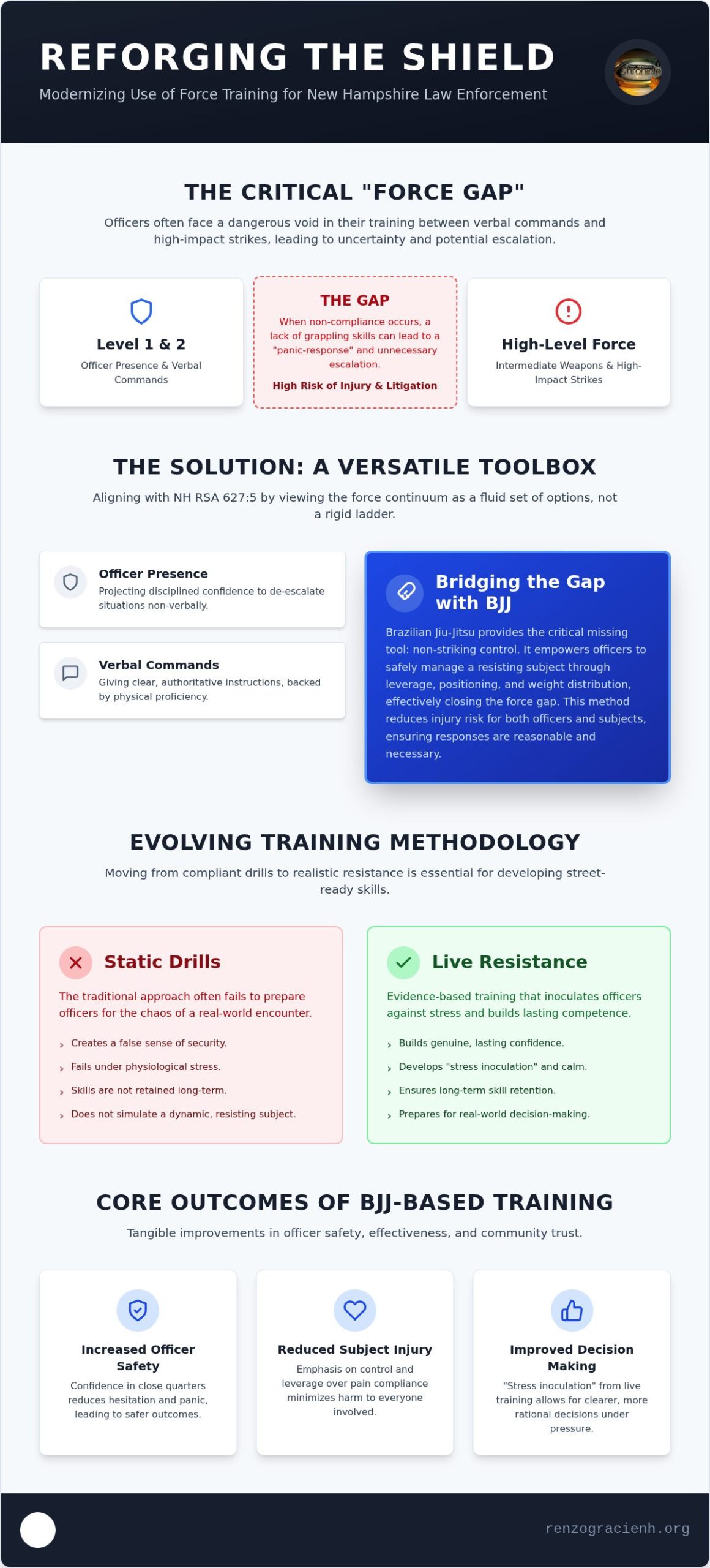
The Use of Force Continuum is the mental map every NH officer carries into the field. It’s a standard that guides decision-making under extreme pressure. In New Hampshire, this isn’t just a suggestion; it’s a professional requirement rooted in RSA 627:5. Every encounter begins with Level 1: Officer Presence. This isn’t just about showing up in uniform. It’s about projecting a sense of disciplined confidence that can often de-escalate a situation before a word is even spoken. When you carry yourself with poise, you signal that you’re in control of the environment and yourself.
When presence isn’t enough, we move to Level 2: Verbal Commands. You’ve been trained to give clear, authoritative instructions. But what happens when non-compliance becomes the reality? This is where many officers feel the most stress. If you don’t have a deep well of physical proficiency to draw from, your verbal commands might lose their impact. Physical skill is the foundation of the entire continuum. It gives you the internal calm to stay professional when words fail. It’s the difference between a controlled resolution and a chaotic struggle.
NH Standards and Subject Control
Your training must align with the New Hampshire Police Standards and Training Council (NHPSTC) to remain effective and legally defensible. As we move through 2026, the legal necessity for force to be “reasonable and necessary” is more scrutinized than ever. The Use of Force Continuum is a fluid decision-making framework that allows an officer to transition between levels of control based on the evolving threat. Effective use of force continuum training NH ensures that you aren’t just following a policy, but rather applying a calibrated response that respects the law and protects the individual. This alignment builds trust between the department and the community you serve.
The Gap Between Policy and Physical Skill
Reading a department policy is a vital first step, but it’s not the same as having the physical skill to execute it during a dynamic encounter. There is a dangerous gap between knowing what you’re allowed to do and being able to do it. When an officer lacks grappling skills, a “panic-response” can take over. This often leads to an unnecessary escalation of force because the officer feels they’ve run out of options. Brazilian Jiu-Jitsu (BJJ) fills the vital void between verbal de-escalation and the use of intermediate weapons. It provides the leverage and control needed to manage a subject without resorting to high-impact strikes. By building these skills, you’re evolving your ability to stay within the legal continuum while ensuring everyone’s safety. Specialized use of force continuum training NH transforms your theoretical knowledge into a practical, life-saving asset.
Why Brazilian Jiu-Jitsu is Essential for Subject Control
Control is restraint. Restraint is safety. In the modern policing landscape, the ability to physically manage a subject without resorting to high-impact strikes is a critical skill. Brazilian Jiu-Jitsu (BJJ) provides a philosophy where the goal is to neutralize a threat through superior positioning rather than aggression. By mastering leverage, you effectively reduce the “Force Gap.” This gap is the dangerous space where an officer feels they must escalate to intermediate weapons because they lack the confidence to handle a resisting subject at close quarters. High-quality use of force continuum training NH focuses on closing this gap, ensuring that your physical response remains proportional to the resistance you face.
The psychological benefits of this training are just as vital as the physical ones. When you’ve spent hours grappling against live resistance, you develop a form of “stress inoculation.” You don’t panic when a subject grabs your vest or pulls you toward the ground. Instead, you breathe. You think. You move with purpose. This internal calm is what allows you to stay within the guidelines of the Use of Force Continuum as defined by the National Institute of Justice. You become a more capable officer because you have the tools to stay composed when the situation turns volatile.
The Mechanics of Non-Striking Control
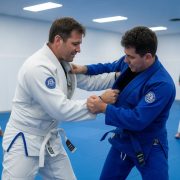
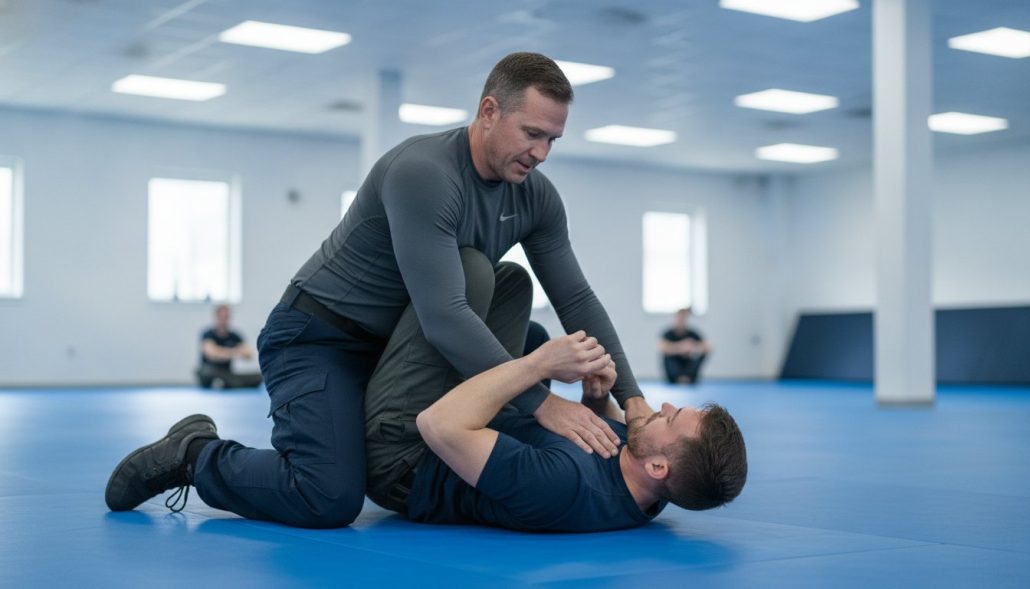
Traditional defensive tactics often rely on pain compliance or impact. These methods are unpredictable and frequently result in injuries to both the officer and the subject. BJJ shifts the focus to weight distribution and mechanical advantage. By utilizing “clinched” positions, you stay close to the subject, which significantly limits their ability to generate power for a strike. This approach is highly effective for officer safety and aligns perfectly with modern transparency requirements. On a body camera, a controlled restraint through weight distribution looks professional and disciplined. It demonstrates a commitment to resolving the encounter with the least amount of force necessary.
Weapon Retention and Grappling
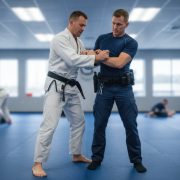
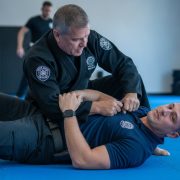
A real-world struggle rarely stays on the feet. If your training is limited to standing tactics, you’re at a severe disadvantage the moment the encounter hits the pavement. Ground fighting is not about “winning” a match; it’s about stabilization and weapon retention. You must know how to protect your duty belt while simultaneously controlling a subject’s movement. BJJ teaches you to leverage the ground as a tool, using it to pin a subject and create a stable platform for handcuffing. This level of technical proficiency is what separates a chaotic scuffle from a professional arrest. If you want to evolve your tactical toolkit, starting with Law Enforcement Jiu-Jitsu Training is a logical step toward long-term mastery and safety.
Static Drills vs. Live Resistance: The Training Reality
Static drills are comfortable. They are also dangerous. Practicing a technique on a partner who lets you win creates a false sense of security. When a real subject resists, that security shatters. This is the “compliant partner” trap. It ignores the physiological reality of a fight. Genuine use of force continuum training NH must include live resistance to be effective. Without it, you’re merely practicing a dance that won’t hold up under the pressure of a real-world encounter.
BJJ “rolling” is the solution. It’s a controlled environment where your partner actively tries to stop you. This simulates the unpredictability of a struggle on the street. You learn to manage your breathing while someone is trying to control your movement. Through repetitive, resisted drills, you develop “unconscious competence.” This means you move from thinking about a technique to simply executing it. This bridges the gap from the mat to the street, ensuring your skills are ready when the 4-hour annual use of force refresher isn’t enough to maintain your edge.
The Science of Stress Inoculation
Conflict triggers an immediate adrenaline dump. Your heart rate spikes. Your fine motor skills degrade. Live resistance training acts as a form of stress inoculation. It lowers your baseline heart rate during these high-stakes moments. It teaches you to stay calm when things go wrong. When you’re confident in your ability to control a subject, you’re far less likely to resort to excessive force out of fear or panic. This level of professional poise is essential for modern policing. A confident officer is a safer officer for the community.
Sport BJJ vs. Law Enforcement BJJ
Not all Jiu-Jitsu is created equal. Sport BJJ might focus on “guard playing” to win a tournament match on points. Law enforcement BJJ is a different discipline entirely. It prioritizes “top control” and “hand fighting” to ensure the subject stays pinned and their hands remain visible. You must adapt every technique for the presence of weapons. Protecting your duty belt is the absolute priority. At Renzo Gracie NH, we focus on professional defensive tactics that acknowledge these specific gear and legal constraints. We don’t just teach you how to grapple; we teach you how to survive and control within the scope of your duties. This specialized approach to use of force continuum training NH ensures you’re prepared for the street, not just the tournament mat. It’s about evolving your skills to meet the demands of the job with disciplined confidence.
Implementing Defensive Tactics: A Guide for NH Officers
Evolving from a policy reader to a proficient practitioner takes a plan. It’s not about a single weekend seminar. True mastery comes from a methodical approach to use of force continuum training NH. First, you must find a reputable academy that understands the specific needs of law enforcement. A sport-centric gym might teach you how to win a medal, but an LEO-focused program teaches you how to stay safe on duty. Second, follow the 2-day-a-week rule. Consistency beats intensity every time. You’re building muscle memory that needs regular maintenance to remain sharp. Short, focused sessions are more effective for long-term retention than infrequent, grueling marathons.
Don’t train only in a t-shirt and shorts. Once you’ve grasped the basics, start integrating your duty gear. Wearing your vest and belt changes your center of gravity and limits your range of motion. You need to know how these tools affect your ability to move and retain your weapon during a struggle. Finally, always review your department’s specific policies alongside your physical training. Your skills must always align with the legal standards of New Hampshire, ensuring every action you take is both reasonable and necessary.
Building a Departmental Training Culture
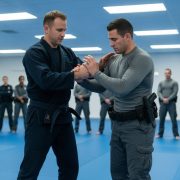
Peer-to-peer training sessions are a force multiplier for any department. When officers train together, they build a shared language of control and safety. The Training Coordinator plays a pivotal role here by vetting external programs and ensuring they meet NHPSTC standards for the required 24 hours of annual in-service training. Implementing law enforcement jiu jitsu training is a proactive way to lower departmental liability. It demonstrates a commitment to evidence-based tactics that prioritize de-escalation and subject safety through superior technical skill rather than brute force.
Overcoming Common Training Barriers
Shift work is the most common hurdle. Fortunately, most professional academies offer flexible schedules to accommodate the unique hours of first responders. Don’t let the “I’m too old” or “out of shape” misconception stop your progress. Jiu-Jitsu is specifically designed for the smaller or older person to overcome a larger adversary through leverage and technique. Understanding the first jiu jitsu class what to expect can alleviate the anxiety of starting something new. You’ll find an environment built on mutual respect and professional growth. If you’re ready to elevate your tactical toolkit, you can sign up for a free introductory class to experience the curriculum firsthand.
Renzo Gracie NH: Professional Defensive Tactics in Windham
Mastery is a journey, not a destination. At Renzo Gracie NH, we provide the environment and expertise needed for New Hampshire law enforcement to reach that goal. Our program is led by Professor Kevin Landry, a 6th-degree black belt with over 20 years of regional teaching experience. His deep roots in the Renzo Gracie Association ensure that every technique you learn is part of a prestigious, evidence-based lineage. This level of technical depth is essential for effective use of force continuum training NH. You aren’t just learning moves; you’re building a foundation of subject control that stands up to legal scrutiny and real-world resistance.
Our academy serves as a hub for officers from Windham, Manchester, and Exeter who are looking to evolve their skillsets. We’ve intentionally moved away from the intimidating atmosphere often found in combat sports. Instead, we’ve cultivated a culture of disciplined confidence and mutual respect. It’s a place where a veteran sergeant can train alongside a new recruit, both focused on the joy of personal progress. We believe that a supportive community is the best place to develop the “quiet authority” required for modern policing.
Why NH Officers Choose Renzo Gracie NH
Lineage matters in defensive tactics. When you train here, you’re tapping into a global network of grappling excellence that has been refined for decades. This isn’t just about sport; it’s about practical, life-saving application. We prioritize safety and discipline above all else, ensuring that every student can train consistently without the fear of unnecessary injury. For those just starting their journey, we recommend exploring our guide on jiu jitsu for beginners adults NH. It provides a roadmap for what to expect as you transition from a novice to a proficient practitioner of subject control.
Start Your Professional Training Today
Taking the first step is often the most difficult part of the process. We make it easier by offering a free introductory class for law enforcement officers. This allows you to step onto the mat, meet Professor Landry, and experience our curriculum without any initial commitment. We also offer departmental training opportunities and group rates for agencies looking to build a more capable and confident force. By investing in use of force continuum training NH at our Windham facility, you’re choosing to become a more resilient and effective protector of your community. Discover the strength found in collective effort and start your path to mastery today. We’re here to be your supportive partner in professional growth and officer safety.
Mastering Control for a Safer Career
Evolving your defensive tactics is about more than just checking a box for annual in-service requirements. It’s about building the disciplined confidence to handle high-stress encounters with poise and technical precision. By moving beyond static drills and embracing the reality of live resistance, you bridge the gap between policy and physical execution. This approach ensures you remain within the legal framework of use of force continuum training NH while prioritizing the safety of everyone involved. You’ll discover that a higher level of technical skill leads to a lower reliance on high-impact force.
The path to mastery is accessible to every officer, regardless of age or current fitness level. At Renzo Gracie NH, Professor Kevin Landry brings over 20 years of experience serving the Windham, Manchester, and Exeter communities. As a 6th-degree black belt, he provides a specialized Law Enforcement Jiu-Jitsu Training curriculum designed for the unique challenges of the job. You don’t have to navigate these complexities alone. Our academy is a supportive partner in your professional development.
Ready to discover a more effective way to protect and serve? Claim Your Free Introductory Class at Renzo Gracie NH today. Take the first step toward a more secure and empowered future on the mat and on the street. We’re ready to help you grow.
Common Questions About Defensive Tactics in New Hampshire
What is the use of force continuum in NH law enforcement?
In New Hampshire, the use of force continuum is a mental framework guided by RSA 627:5 that helps officers select the most reasonable level of response to a subject’s resistance. Rather than a rigid ladder, many departments view it as a versatile toolbox of options. It begins with officer presence and verbal commands before progressing to physical control, intermediate weapons, or deadly force. Professional use of force continuum training NH ensures you can navigate these levels with legal and tactical precision.
How does BJJ help with the use of force continuum?
Brazilian Jiu-Jitsu provides the physical mechanics needed to stay within the legal boundaries of subject control. It focuses on leverage, weight distribution, and positioning to neutralize resistance without relying on high-impact strikes. This fills the critical gap between verbal de-escalation and the use of weapons. By mastering these grappling techniques, you gain the ability to restrain a subject safely, which directly supports the preservation of life and reduces the need for escalation during a struggle.
Is BJJ training safe for older law enforcement officers?
Absolutely. One of the core principles of Jiu-Jitsu is that technique and leverage overcome brute strength and youth. Our academy in Windham prioritizes a safe, supportive environment where longevity is the goal. We focus on controlled movements that minimize the risk of injury while building functional strength. Many officers in Manchester and Exeter start their training later in their careers to gain a technical edge that doesn’t rely solely on athleticism or speed to be effective.
Do I need prior experience to start law enforcement BJJ in NH?
No prior experience is necessary to join our Law Enforcement Jiu-Jitsu Training program. We welcome officers of all skill levels, and most of our students begin with zero martial arts background. We start with the fundamental movements and gradually build your confidence through a structured curriculum. You can begin your journey by attending a free introductory class, which is specifically designed to show you how these tactics apply to your daily duties on the street without any pressure.
How often should a police officer train in defensive tactics?
Consistency is far more important than intensity when building muscle memory. We recommend training at least two days per week to ensure that your skills remain sharp and your responses become instinctive. While the state mandates a 4-hour annual refresher, this is rarely enough to maintain true physical proficiency. Regular sessions at a professional academy help you move from conscious thought to “unconscious competence,” which is vital during the high-stress moments of a real-world encounter.
Can BJJ training reduce a department’s liability in New Hampshire?
Yes. When officers are highly proficient in subject control, the likelihood of excessive force complaints and injuries to subjects decreases significantly. Effective use of force continuum training NH demonstrates that a department is proactive about officer safety and community relations. By using disciplined, non-striking techniques, officers can justify their actions as reasonable and necessary. This professional approach builds trust with the public and provides a stronger legal defense if an encounter is scrutinized by the department or the public.
Does Renzo Gracie NH offer specialized classes for police?
We offer a dedicated Law Enforcement Jiu-Jitsu Training program that is separate from our standard sport-focused curriculum. These sessions are led by Professor Kevin Landry and focus specifically on the needs of first responders in Windham and the surrounding regions. We cover gear integration, weapon retention, and handcuffing transitions while wearing a duty belt. These classes are designed to be practical and directly applicable to the legal and physical constraints you face while serving the community in uniform.
How do I start training if I have a busy shift schedule?
We understand that shift work is a reality for first responders in Manchester and Exeter. Our academy offers a flexible schedule to accommodate different rotations, making it easier to stay consistent with your training. The best way to start is by claiming your free introductory session. This allows you to meet our instructors, see the facility, and discuss how to integrate defensive tactics into your lifestyle without any initial commitment. It’s about finding a rhythm that works for you.