What to Wear to First BJJ Class: Gym Clothes or Gi
You don’t need a gi to take your first step on the mats. For what to wear to your first BJJ class, clean athletic clothes are usually enough, especially a fitted top and pocketless shorts. Choose comfortable gear that stays in place and won’t snag or restrict movement.
It’s natural to wonder whether you need special equipment before you begin. You can learn the basics without arriving fully kitted out. Knowing a few simple clothing and mat-etiquette rules can help you feel more comfortable in class.
This guide covers what to wear for gi and no-gi training, what to wear under a rash guard, and why footwear stays off the mats. You’ll also find practical tips for keeping your gear clean, so you can focus on learning, moving, and settling into class.
Key Takeaways
- Start in clean, fitted athletic clothes if you don’t have a gi, and avoid garments with pockets, zippers, or hard fasteners.
- Train barefoot on the mats, but wear easy-to-remove footwear when walking off them.
- Wash your gi or no-gi gear after every class, and arrive with trimmed nails and any cuts covered.
- Wear a rash guard directly against your skin; choose close-fitting shorts, and follow your academy’s rules for spats and layers.
1. Can I wear regular gym clothes for jiu jitsu?
Yes. For what to wear to your first BJJ class, clean athletic clothes usually work, and you don’t need to own a gi before starting. Choose a fitted workout shirt and pocketless shorts that stay in place when you bend, stretch, and move on the mat. Compression layers can be practical because loose clothing may snag or tear during grappling.
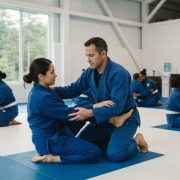
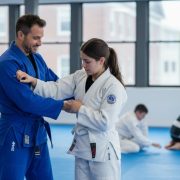
Under a BJJ gi, wear athletic underwear or compression shorts beneath the trousers. A fitted athletic T-shirt works under the jacket if you don’t have a rash guard. Women can wear a supportive sports bra. Some academies require a rash guard under the gi jacket, so the required layers depend on the school’s uniform rules.
Some academies lend newcomers a gi for a first class. Ask whether trial students can borrow one or should bring their own, since arrangements vary. If you plan to buy a gi later, check the academy’s uniform rules first. Some schools limit colors or patches.
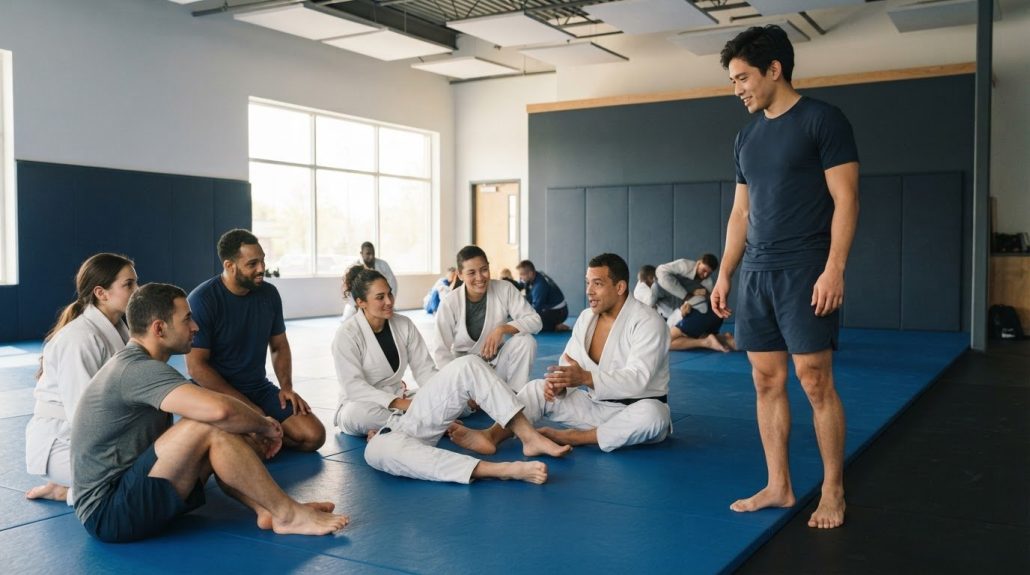
For a no-gi class, wear a close-fitting shirt and athletic shorts without pockets. A rash guard should fit snugly without restricting breathing or shoulder movement. Avoid loose T-shirts, open pockets, zippers, buttons, belt loops, and hard metal details. Fingers and toes can catch in openings, while fasteners can hurt a training partner or damage the mats.
Remove jewelry, including rings, necklaces, and earrings, before class. Tie long hair back securely, and choose clothes that provide comfortable coverage when bending and rolling. These BJJ clothing tips are specific to Brazilian Jiu-Jitsu. Other martial arts may have different training formats and equipment needs, so follow the clothing instructions for your class.
A common beginner mistake is wearing baggy gym clothes or shorts with pockets. Another is assuming every gi class supplies a uniform or allows every color. Keep your first outfit simple: fitted athletic layers, pocketless shorts for no-gi, and no jewelry. That’s practical gear for learning without buying a full kit first.
2. Footwear and mat etiquette
Brazilian Jiu-Jitsu is practiced barefoot on the mats. Leave shoes and socks at the edge, even if you wear clean indoor sneakers. Socks can slide during movement, and footwear doesn’t belong on the training surface. Follow the same rule during instruction, drills, and partner practice.
Wear footwear whenever you walk off the mats. For example, put on slides before visiting the restroom, then remove them before returning to the training area. Slides or flip-flops are handy because they’re easy to take on and off. Keep them beside the mat, out of classmates’ way.
Choose footwear that stays on your feet while walking between the mat and changing area. Avoid going barefoot through shared spaces and then returning directly to training. The simple routine is to step off the mat, put on footwear, walk where needed, and remove it at the mat edge. This also makes the mat boundary clear to everyone in class.
Before class, make sure your feet are clean and your toenails are trimmed. Short nails help prevent accidental scratches during close movement. Remove jewelry, including necklaces, before training, since a chain can catch during a scramble. A fitted rash guard or athletic top should stay secure, without loose ties or dangling details near fingers and toes.
Don’t bring outdoor shoes onto the mat, even for a quick demonstration. Keep a dedicated pair of slides in your gym bag, and place them where they’re easy to reach. If you’re unsure where footwear belongs, watch how classmates enter and leave the mat, then follow the instructor’s direction. These small habits show respect for shared training space and help class move smoothly.
3. Training hygiene and gear washing
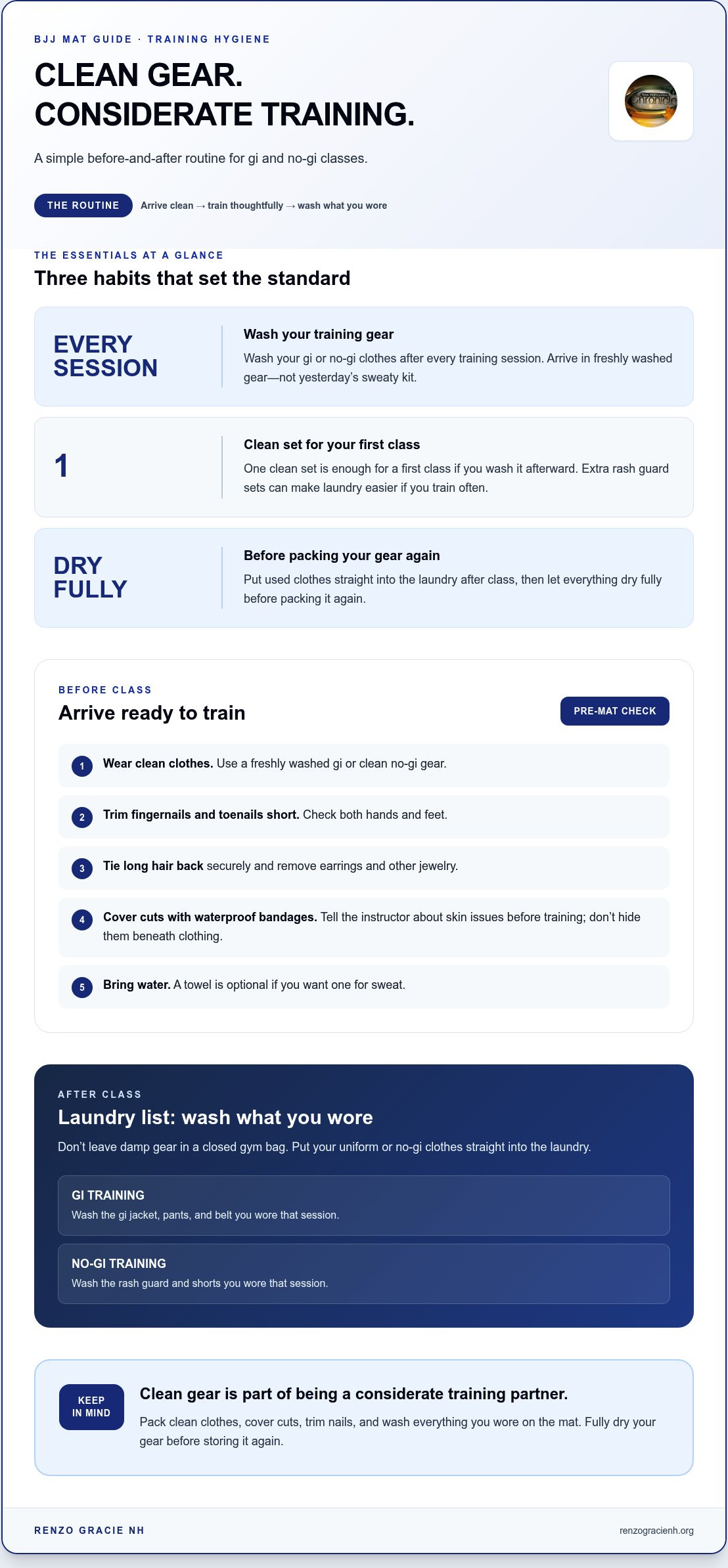
Clean gear is part of being a considerate training partner. Arrive in a freshly washed uniform or clean no-gi clothes, not yesterday’s sweaty kit. Wash your gi and no-gi gear after every training session. Clean clothing also feels more comfortable during close-contact drills, when fabric stays against your skin and your partner’s.
Before class, trim your fingernails and toenails short. Check both hands and feet, since a rough nail can scratch someone during a grip or scramble. Tie long hair back securely, and remove earrings and other jewelry before stepping onto the mat. Bring a water bottle for class, and pack a towel if you want one for sweat.
Be open about cuts and skin concerns. Cover cuts with waterproof bandages, then tell the instructor about skin issues before training. Don’t hide a rash beneath a long-sleeved top or gi jacket. The instructor needs to know so they can guide you appropriately. Clean, intact clothing doesn’t replace addressing a skin concern before close-contact practice.
After class, put your uniform or no-gi clothes straight into the laundry instead of leaving damp gear in a closed gym bag. Wash the gi jacket, pants, belt, rash guard, and shorts you wore that session. Let everything dry fully before packing it again. Reusing damp clothing can be uncomfortable for you and your training partners.
If you train often, having extra rash guard sets can make laundry easier and help you avoid reusing damp gear. For your first class, one clean set is enough if you wash it afterward. Build a simple routine: pack clean clothes, water, and a towel; cover cuts; trim nails; then wash everything you wore on the mat.
4. Should I wear a shirt under a rash guard?
For no-gi grappling, wear a rash guard directly against your skin, not over another shirt. Choose a close-fitting short- or long-sleeved top that lets your shoulders move freely and doesn’t restrict breathing. If you don’t own a rash guard, a fitted athletic T-shirt may work for a first class if the class permits it.
Keep your layers simple. An extra shirt under a rash guard can bunch up, shift out of place, and make movement uncomfortable. Women can wear a supportive sports bra beneath the rash guard or athletic top. Choose a top that stays secure during bends, reaches, and partner drills.
For shorts, choose board shorts or compression shorts without pockets, zippers, sharp buttons, or exposed metal. Fingers and toes can catch in pockets, while hard fasteners can scratch a training partner or damage the mats. Pocketless grappling shorts should fit securely without loose fabric that twists during movement.
Spats are optional for no-gi training, but academy rules vary. Some schools require shorts over spats, so follow the class dress code. Before leaving home, check the waistband, seams, and closures, and remove anything that could snag. Footwear stays off the mat, so changing shoes won’t replace suitable training clothes.
For a simple first-class outfit, pair a fitted athletic top with pocketless shorts. If you already own a rash guard, wear it as your base layer. Choose clothing that covers you comfortably and stays in place, then follow the academy’s format and clothing rules. Ready to put your gear to use? Explore a beginner jiu jitsu class.
Renzo Gracie NH: Adult Jiu Jitsu Program
Renzo Gracie NH’s Adult Jiu Jitsu Program offers a structured way for adults to learn Brazilian Jiu-Jitsu. New students can begin with a Free Introductory Class, without first assembling a full uniform or equipment kit. Wear the simple, comfortable clothing described here and build your skills through instruction and practice.
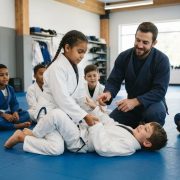
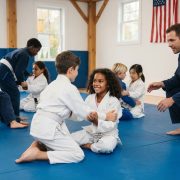
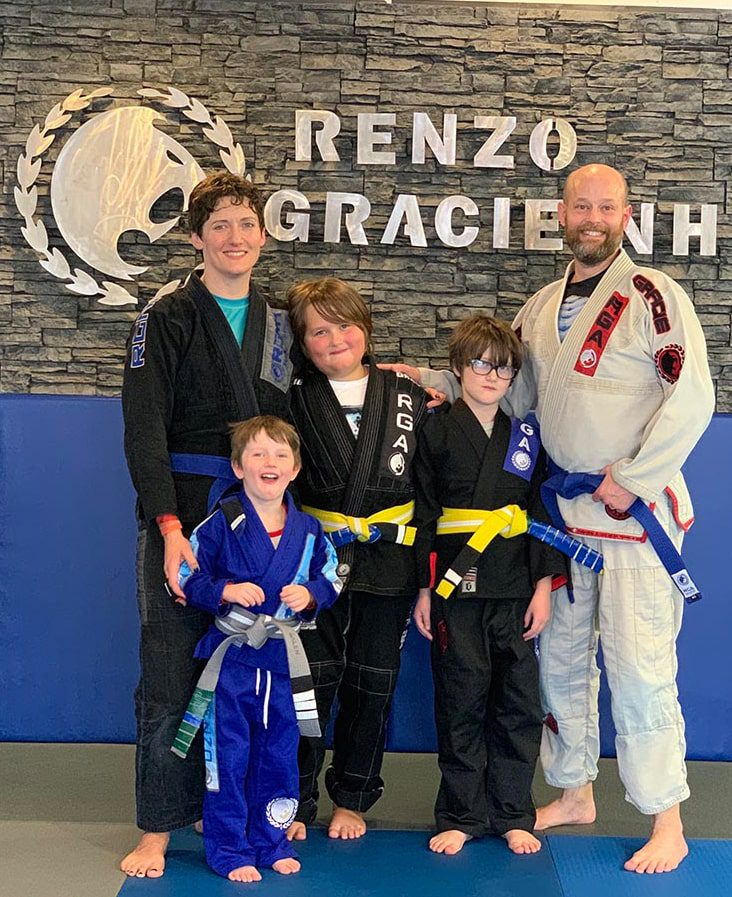
Jiu-Jitsu can also be a shared family activity. Renzo Gracie NH offers a Kids Jiu Jitsu Program alongside its adult program, as well as family training for parents and children. Law enforcement professionals can take part in the academy’s Law Enforcement Jiu-Jitsu Training, designed for professional defensive tactics.
To take the next step, contact Renzo Gracie NH about its Free Introductory Class.
Take Your First Step on the Mats
Choosing what to wear to your first BJJ class is one small part of getting started. The bigger step is deciding to learn, meet training partners, and build confidence through practice. You don’t need to know every move before you begin. Curiosity and a willingness to learn are a strong foundation.
Renzo Gracie NH offers an Adult Jiu Jitsu Program, a Kids Jiu Jitsu Program, and Law Enforcement Jiu-Jitsu Training for professional defensive tactics. Each program gives students a place to learn Brazilian Jiu-Jitsu through instruction suited to its focus.
If you’re ready to explore training, contact Renzo Gracie NH. Take the first step at your own pace, and give yourself room to grow with every class.
Frequently Asked Questions
Can I wear regular gym clothes for jiu jitsu?
Yes, regular athletic clothes can work for a first class, especially if it’s a no-gi session. Choose clothes you can move in, and bring clean gear rather than wearing your training outfit from the street. At Renzo Gracie NH in Windham, Manchester, or Exeter, the class format determines whether gym clothes or a gi is appropriate.
Do I need to buy a belt for my first class?
No, you usually don’t need to buy a belt before your first class. You may be able to wear athletic clothes for a no-gi session, while gi training follows the academy’s uniform policy. If you buy a beginner gi later, check whether it includes a belt and confirm the required uniform color and fit before purchasing.
What should I wear to Jiu-Jitsu women’s classes?
Wear a supportive sports bra beneath a close-fitting rash guard or athletic top, along with secure training bottoms. A fitted layer can provide comfortable coverage through bends and movement without shifting around. Avoid spaghetti straps, tank tops, and crop tops if they don’t meet the class clothing rules. Choose clothing that stays in place during partner drills.
How Much Does a Gi Cost?
The price can vary with the weave, construction, and included pieces, so compare what comes in the package. A traditional gi has a jacket, pants, and belt. Look for reinforced stitching at the collar and lapels, which take substantial stress during grips and grappling.
Is expensive gear better for beginners?
Not necessarily. For beginners, the key is gear that fits comfortably, allows movement, and meets the academy’s uniform rules. Before choosing a gi, inspect the collar and lapel stitching, check that the sleeves and pants allow movement, and see whether a belt is included. A higher price alone doesn’t tell you whether it suits your training.
Should I wear a shirt under a rash guard?
No. A rash guard is worn directly against the skin, so an extra shirt underneath can bunch up during movement. For a first no-gi session without a rash guard, a fitted athletic T-shirt can serve as your top layer. Women can wear a supportive sports bra beneath the rash guard or fitted athletic top for secure coverage.