How to feel safer walking alone at night in Exeter
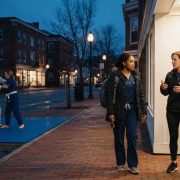
Feeling safer on a solo night walk starts with a plan, not just something to carry. To learn how to feel safe walking alone at night in Exeter, choose a familiar, well-lit route, let someone know where you’re going, and stay aware of your surroundings. A safety alarm and pepper spray work differently, so choose only what you feel comfortable carrying and using.
It’s understandable if a familiar journey feels different after dark, when visibility is lower and fewer people may be nearby. Small, practical steps can help you feel more prepared without adding stress. This guide explains how to weigh an alarm against pepper spray, share your route and arrival plans, and stay alert near your home or car. You’ll also find simple ways to respond if a situation feels wrong, so you can make a calm plan before setting out.
Key Takeaways
- Choose between a safety alarm and pepper spray based on what you can carry confidently and use under pressure.
- Share your route and expected arrival with someone you trust, while keeping your phone accessible for changing plans.
- As you approach your home or car, stay aware of your surroundings and be ready to move towards a public, well-lit place.
- Understand why darkness and fewer people nearby can affect how a walk feels, then build confidence through calm preparation and practical skills.
1. Is it better to carry pepper spray or a safety alarm?
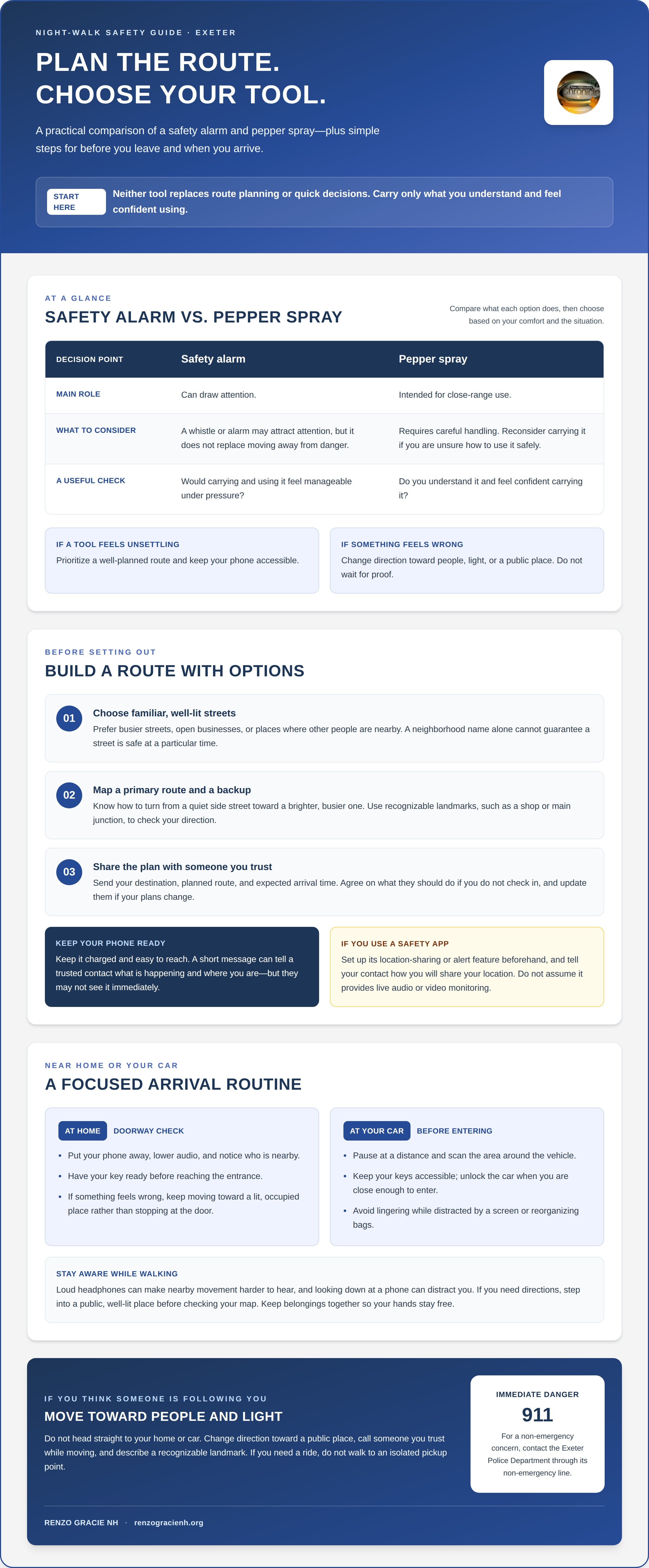
Neither option replaces route planning or quick decisions. A safety alarm can draw attention; pepper spray is intended for close-range use and requires careful handling. Choose only an option you understand and feel confident carrying. If either would distract or unsettle you, prioritize a well-planned route and keep your phone accessible.
In Exeter, choose well-lit, busier streets for a night walk rather than relying on a neighborhood name to guarantee safety. Where possible, take a familiar route with open businesses or other people nearby. No area-wide crime figure can tell you whether a particular street is safe at a specific time. Recorded incidents describe the broader area, not the conditions on your exact route.
Before leaving, map a primary route and a backup. If a quiet side street feels uncomfortable, for example, know how to turn toward a brighter, busier street. Pick recognizable landmarks, such as a shop or main junction, so you can check your direction without stopping somewhere isolated. Planning these choices ahead of time can help you feel safer walking alone at night in Exeter.
Trust your instincts. If a situation feels wrong, don’t wait for proof or continue toward a quieter stretch. Change direction, cross to a busier side, or enter a public place. If you think someone is following you, move toward people and light, then call someone you trust. A whistle or alarm may attract attention, but it doesn’t replace moving away from danger.
Routes can feel different after dark. If your usual streets are empty or poorly lit, take the longer, busier alternative. If you’re unsure how to use pepper spray safely, reconsider carrying it; a simple alarm may feel more manageable. Choose what supports a clear plan, rather than letting a safety tool encourage you to take a route that feels unsafe.
2. Sharing plans and contacting someone for help
Before leaving, send a trusted person your destination, planned route, and expected arrival time. For example, tell them you’re walking from downtown Exeter to your car and when you expect to arrive. If your plans change, send an update instead of relying on them to guess where you went. Agree on what they should do if you don’t check in, such as calling you first.
For immediate danger in Exeter, call 911. For a non-emergency concern, contact the Exeter Police Department through its non-emergency line. A specific non-emergency number isn’t included here, so don’t mistake 911 for a general check-in service.
Your phone gives you a way to call for help or alert someone discreetly if a situation feels threatening. Keep it charged and easy to reach, rather than buried under other items. If you’re uncomfortable speaking, a short message to a trusted contact can say what’s happening and where you are. Don’t assume they’ll see it immediately; they may be unavailable or away from their phone.
Personal safety apps may let you share your location, send an emergency alert, or connect with someone who can respond. Set up the feature before leaving and tell your contact how you’ll share your location. Don’t assume an app provides live video or audio monitoring. If you choose to send a voice message or call, explain your location and immediate need clearly.
If you think someone is following you, head toward a well-lit public place with people nearby. Call a trusted person while moving, and describe a recognizable landmark or business so they can understand where you are. If you need help getting home, ask someone you trust to arrange a ride. Don’t walk to an isolated pickup point just to meet them.
Make a clear check-in plan: share your route, arrival time, and a backup contact before setting out. If you don’t arrive as planned, your contact can try reaching you and decide whether further help is needed. These simple steps make it easier to respond without assuming a message will bring immediate assistance.
3. Staying alert when arriving home or at a car
Pay attention during the last few steps. Before reaching your front door, put your phone away, lower any audio, and notice who is nearby. Have your key ready before you reach the entrance, rather than searching your bag on the doorstep. If something feels wrong, keep moving toward a lit, occupied place instead of stopping beside your door.
At a car, pause at a distance and scan the area before approaching. Check the space around the vehicle and notice anything that makes you uncomfortable. Keep your keys accessible, then unlock the car when you’re close enough to enter. Avoid lingering in a parking area while distracted by a screen or reorganizing bags.
Keep your attention on your surroundings as you walk alone. Loud headphones can make it harder to hear nearby movement, while looking down at a phone can distract you from streets and entrances. If you need directions, step into a public, well-lit place before checking your map. Keep your belongings together in one bag so your hands stay free and you can move without juggling items.
If you think someone may be following you, don’t head straight to your home or car. Stop somewhere visible and scan your surroundings, then change direction toward a public place or other people. Call someone you trust while moving to safety and describe a clear landmark. At home, wait to unlock the door until you’re ready to enter, then go inside promptly and close it behind you.
A simple arrival routine can help you stay focused: put away distractions, scan the area, prepare your key, and keep moving toward a safer, occupied space if anything feels off. These steps don’t require special equipment. They help you make deliberate choices when your attention might otherwise shift to finding keys, opening a door, or loading a car.
4. Why nighttime walks can feel less safe
Darkness changes what you can see, hear, and judge. A familiar Exeter street may feel different when shopfronts are closed, faces are harder to recognize, and fewer pedestrians are nearby. Reduced visibility also affects road safety: in the United States, 76% of pedestrian traffic deaths in 2024 happened in the dark. That figure describes traffic deaths, not the likelihood of being attacked on a particular Exeter route.
Reduced visibility can make ordinary sounds or movement harder to interpret. Someone behind you might be walking in the same direction, but limited sightlines can make that harder to tell. Notice what’s happening without immediately deciding that every uncertain situation signals danger. If something concerns you, change direction toward people or a public place, then reassess.
Taxis and ride-hailing services in Exeter may be available at night, but availability depends on the time and pickup location. Arrange your ride before setting out, and confirm the vehicle and destination when it arrives. If a car isn’t available or the pickup point feels isolated, move to a public place rather than waiting alone at the curb.
Campus escorts and safe-walk schemes are tied to specific institutions and their arrangements, not every Exeter street. If your route starts or ends on a campus, use an escort only while that institution’s service is operating. For other journeys, make a separate transport and check-in plan rather than assuming an escort covers the route.
Treat discomfort as a prompt to take a practical step, not as proof that danger is present. Look for a clear direction toward light, people, or an open public space. A quick scan can help you choose your next move. Night changes visibility and how many people are around; planning for those conditions gives you more options without treating every dark street as unsafe.
Renzo Gracie NH
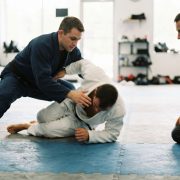
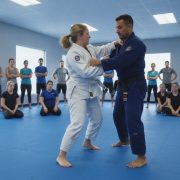
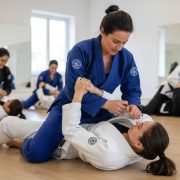
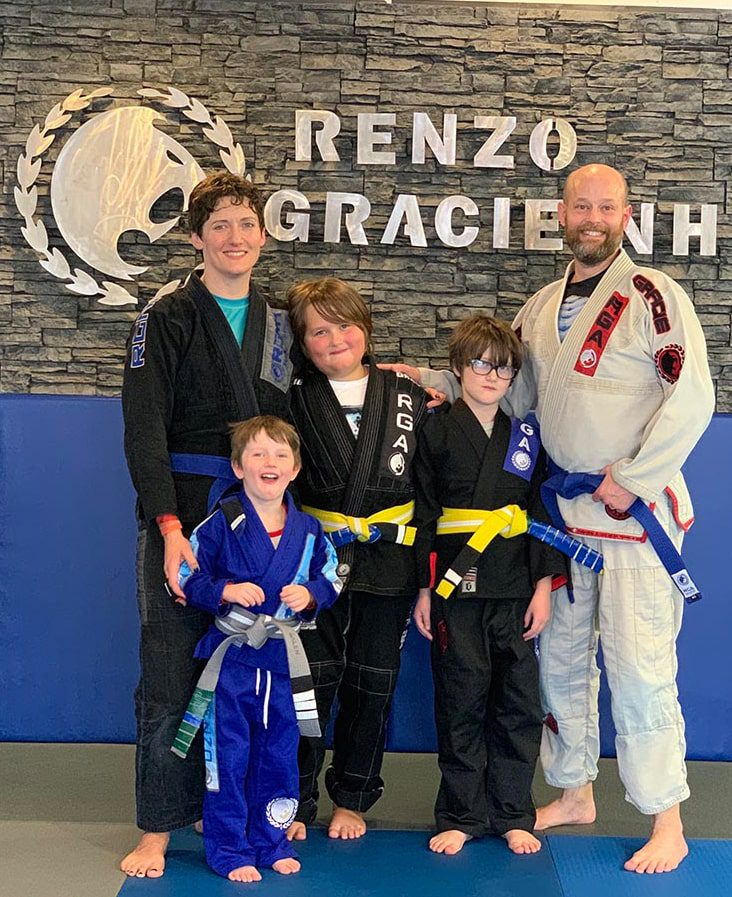
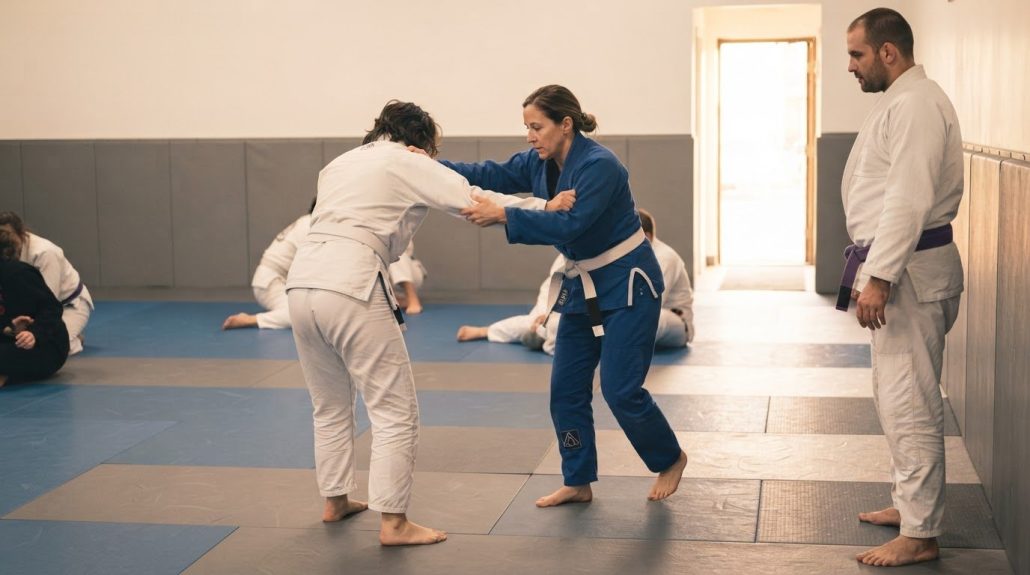
Renzo Gracie NH offers structured Jiu Jitsu training for people who want to build confidence and develop practical skills through consistent practice. Training can complement the planning habits in this guide, but it doesn’t replace choosing safer routes, staying alert, or contacting emergency services when needed.
Adults can explore the Adult Jiu Jitsu Program, while families can consider the Kids Jiu Jitsu Program as a shared way to develop focus and perseverance. Law enforcement professionals can train through Law Enforcement Jiu-Jitsu Training. A Free Introductory Class is a way to experience the instruction.
If you’d like to explore training as part of your personal safety and confidence journey, contact Renzo Gracie NH.
Build confidence through your next step
Feeling more prepared comes from making choices that fit your needs and practicing skills over time. A plan for a night walk can help you respond thoughtfully, while regular training offers another way to develop focus, awareness, and confidence. Choose a manageable pace and build from there. If you’re considering how to feel safer walking alone at night in Exeter, confidence can grow through steady preparation rather than a single decision or piece of equipment.
Renzo Gracie NH provides Jiu Jitsu training for adults, children, and law enforcement professionals. Training can support personal development, but it doesn’t replace sound safety planning or emergency help when needed. If you’d like to explore whether training is a good next step for you or your family, contact Renzo Gracie NH. Take the next step with patience, focus, and confidence in your ability to keep learning.
Frequently Asked Questions
Is it safe to walk alone at night in the UK?
For a walk in Exeter, New Hampshire, there isn’t one answer for every route or evening. Darkness can reduce visibility, and quieter streets may mean fewer people nearby. Consider conditions on your particular journey, including lighting and foot traffic, and change your plans if the situation feels uncomfortable.
How can I feel more confident when walking alone at night?
To feel safer walking alone at night in Exeter, rehearse a simple response plan before leaving. Decide what you’ll say if you need help, where you could go, and whom you’d call. You might practice saying, “Please stay with me while I call someone,” so the words come more easily under stress. Choose steps that feel manageable and repeat them until they feel familiar.
What should I do if I feel like someone is following me?
Don’t confront the person or lead them to your home. Move toward a staffed, public place and tell an employee directly that you feel unsafe. Call 911 if you face immediate danger. If you’re uncertain, contact someone you trust while you move to safety, and describe a recognizable nearby landmark so they understand where you are.
Is it better to carry pepper spray or a safety alarm?
A safety alarm draws attention, while pepper spray is a personal defensive tool that requires careful handling. Consider which option you can access calmly and understand how to use; carrying something unfamiliar may add stress rather than confidence. Read the product’s directions before carrying it, and don’t let either option replace decisions that help you leave an uncomfortable situation.
Should I hold my pepper spray while walking at night?
Keeping pepper spray in your hand throughout a walk isn’t a useful default. It can occupy a hand and distract you from your surroundings. Store it securely and accessibly, following the product’s instructions, rather than handling or displaying it unnecessarily. If carrying it makes you more anxious, reconsider whether another safety measure better suits your needs.
What else can you do to increase personal safety?
Practice calm, clear boundary-setting and think through how you’d create distance from an uncomfortable interaction. A self-defense class can provide a structured setting to build awareness and practice responding to pressure. Focus on skills that support avoidance, decision-making, and getting to safety, rather than expecting training to remove every risk. Choose instruction that suits your experience and comfort level.