Self-Defense for Exeter Third-Shift Workers: A Guide

The safest response to a tense moment may begin long before anyone gets close. For third-shift workers, self defense for third shift workers Exeter starts with practical choices about arriving, leaving, and staying alert when fewer people are around. Training can help, but it is only one part of a thoughtful safety plan.
It is understandable to feel less certain when a situation turns tense, especially after a long shift or when your schedule makes regular classes difficult. You deserve clear steps, not pressure to confront someone or rely on a single technique. A repeatable routine can help you decide when to create distance, de-escalate, leave, or get help.
This guide covers safety habits before, during, and after work, then explains what Brazilian Jiu-Jitsu can contribute. BJJ develops technique, control, fitness, and personal discipline through structured practice. It does not guarantee safety or replace awareness, workplace procedures, or emergency help. At Renzo Gracie NH, Professor Kevin Landry brings more than two decades of regional teaching experience. New students can begin with a complimentary introductory class. You will find practical guidance for building confidence at a pace that fits your life.
Key Takeaways
- Build a repeatable safety routine around your workplace’s procedures, trusted contacts, and ways to request help.
- Think of self defense for third shift workers Exeter as more than physical techniques: prevention, boundaries, de-escalation, and leaving all matter.
- Compare workplace procedures, scenario-based instruction, and ongoing Brazilian Jiu-Jitsu practice by what each can help you prepare for.
- Understand how BJJ’s structured grappling practice develops movement, balance, control, and calm decision-making without promising a particular outcome.
- Explore adult Jiu-Jitsu as an ongoing way to build skills, with instruction from Professor Kevin Landry, who has taught in the region for more than two decades.
Why third-shift self-defense starts before you clock out in Exeter
Working late does not mean something bad will happen. Still, arriving or leaving when fewer people are around makes it sensible to think through your options in advance. A calm plan can reduce uncertainty when fatigue, a quiet parking area, or an unexpected interaction makes it harder to decide what to do.
Self-defense is broader than physical techniques. It includes noticing your surroundings, setting boundaries, de-escalating a tense exchange, creating distance, leaving when you can, and using physical skills only if needed. For people considering self defense for third shift workers Exeter, start by planning for everyday transitions rather than assuming every late shift is dangerous.
Which moments in a third shift deserve a plan?
Think through the shift from door to door: your commute, parking area, building entrances, breaks, handover, and trip home. In Exeter, as anywhere, your workplace layout and procedures matter more than assumptions about the town. Learn which entrances are available, who is on duty, and how staff can request assistance. A useful plan answers practical questions: Where will you go if your usual exit feels uncomfortable? Who can you contact? What is the established way to ask for support?
- Before work, know where you intend to park and which entrance you will use.
- During breaks, follow workplace guidance about where to go and how to reach coworkers.
- At handover and clock-out, understand who remains on site and how to request support if a situation feels uncomfortable.
What does practical self-defense include?
Awareness and prevention can help you notice discomfort early. Stay attentive to your surroundings, keep a clear route to leave, and use workplace procedures. If an interaction becomes tense, a calm, direct boundary may help. Avoid escalating an argument. When there is a safe opportunity, move toward other people or a safer place and get help.
Physical skills are one layer, not the whole plan. Brazilian Jiu-Jitsu is a grappling martial art with techniques distinct from striking styles. Structured practice can develop movement, balance, and control, but it cannot predict how another person will act. Training supports judgment; it does not replace awareness, workplace procedures, or assistance.
Preparation can help you make considered choices, but it cannot guarantee personal safety. A useful plan gives you options before pressure rises: recognize when to disengage, know how to leave, and understand whom to contact. If you are unsure about a workplace procedure, seek clarity through the appropriate workplace channel before you need it. Planning ahead is not about expecting trouble. It is a practical way to feel more organized during the transitions that bookend a shift.
How Brazilian Jiu-Jitsu fits into a realistic self-defense skill set
Brazilian Jiu-Jitsu (BJJ) is a grappling martial art taught through structured instruction and practice with a training partner. Rather than focusing on strikes, it teaches students to work through close-contact positions, use body movement, and develop control. For someone exploring self defense for third shift workers Exeter, this can be one part of preparation, as long as training is viewed as skill-building rather than a promise about what will happen in a real encounter.
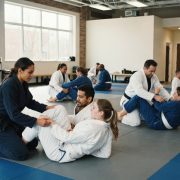
Training offers a coached setting to practise movement and balance while another person is close, with agreed boundaries. A beginner might focus first on staying stable, understanding how their position changes, and responding thoughtfully rather than reacting in a rush. Repeated practice gives students opportunities to work through physical problems with guidance. Progress is gradual; no single class creates mastery.
What can grappling practice help a beginner develop?
Close-contact practice gives students a chance to work on balance, coordination, and control of their own movement. BJJ also asks students to solve positional problems with guidance, then adjust as a partner moves. This is not a script for a workplace confrontation. It is a structured way to learn physical skills, listen to instruction, and build confidence through steady effort.
What are the limits of martial arts training?
A class cannot recreate every workplace encounter. Real situations may involve unfamiliar surroundings, other people, fatigue, or uncertainty about what is happening. The OSHA guidance on worker fatigue and shift work addresses fatigue as a concern for worker safety, a reminder that readiness involves more than physical training. If leaving is possible, prioritize creating distance, moving toward assistance, and following workplace procedures. No martial art can ensure a particular outcome or make confrontation advisable.
Brazilian Jiu-Jitsu is one layer in a broader safety plan, not a substitute for awareness, leaving, or getting help. That is the realistic role of grappling practice: it can give you experience moving and thinking during close contact, while your first priority remains avoiding or leaving an unsafe situation. Training can support judgment, but it cannot control another person’s choices.
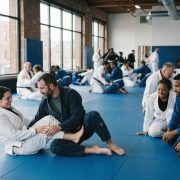
For adults, consistent instruction provides a setting to build technique, control, fitness, and personal development over time. At Renzo Gracie NH, Professor Kevin Landry is a sixth-degree black belt under Renzo Gracie and has taught in the region for more than two decades. If you are curious about learning in a supportive environment, begin with a complimentary introductory class.
Comparing self-defense options for Exeter third-shift workers
No single approach covers every part of personal safety. Workplace procedures provide information tied to your actual site, scenario-based safety instruction can help you think through possible responses, and Brazilian Jiu-Jitsu (BJJ) offers ongoing, coached physical practice. For self defense for third shift workers Exeter, consider the different purpose of each rather than treating them as competing solutions.
| Option | Purpose and format | Strengths | Limitations |
|---|---|---|---|
| Workplace procedures | Site-specific guidance, communication, and established ways to request support. | Connects directly to your building, work routines, and available staff. | Does not provide ongoing physical practice or control what happens outside the workplace. |
| Scenario-based safety instruction | Guided discussion or practice for responding to possible situations. | Can help you consider choices such as setting a boundary, de-escalating, or leaving. | A practice scenario cannot account for every real-world detail or guarantee an outcome. |
| Ongoing BJJ practice | Structured martial arts instruction with repeated grappling practice. | Builds physical skills progressively through coached practice over time. | Does not teach your workplace’s procedures or reproduce every encounter. |
How do workplace safety steps differ from martial arts training?
Workplace guidance is rooted in the place where you work: whom to notify, how to communicate, and which procedures apply to your site. Make those details part of your preparation for arriving, changing tasks, or leaving. A martial arts class serves a different purpose. It gives you a setting to practise skills with instruction, but it cannot change your work environment or tell you which staff member is available during a shift.
When might a grappling-focused class suit your goals?
BJJ may suit you if you want progressive, coached practice that develops close-contact skills over time. That differs from a one-time information session, which may offer useful ideas but not the same repeated physical practice. Neither format is right for everyone, and neither should replace leaving a situation or seeking help when that is the safer choice.
BJJ alone is not a complete answer. You may face unfamiliar surroundings, other people, or circumstances that make physical engagement unsafe; grappling skills cannot remove those factors. Workplace procedures and communication address needs a class cannot, while ongoing training develops a different set of skills. These options can contribute to a more balanced plan without promising that any one method will prevent harm.
For professional defensive-tactics context, Renzo Gracie NH also publishes a law enforcement Jiu-Jitsu training guide. It addresses a specialized professional setting, distinct from a general workplace plan or an adult student’s regular BJJ practice. Start with the needs of your own shift, then decide which kind of learning would add useful support.
Build a before, during, and after-shift safety routine
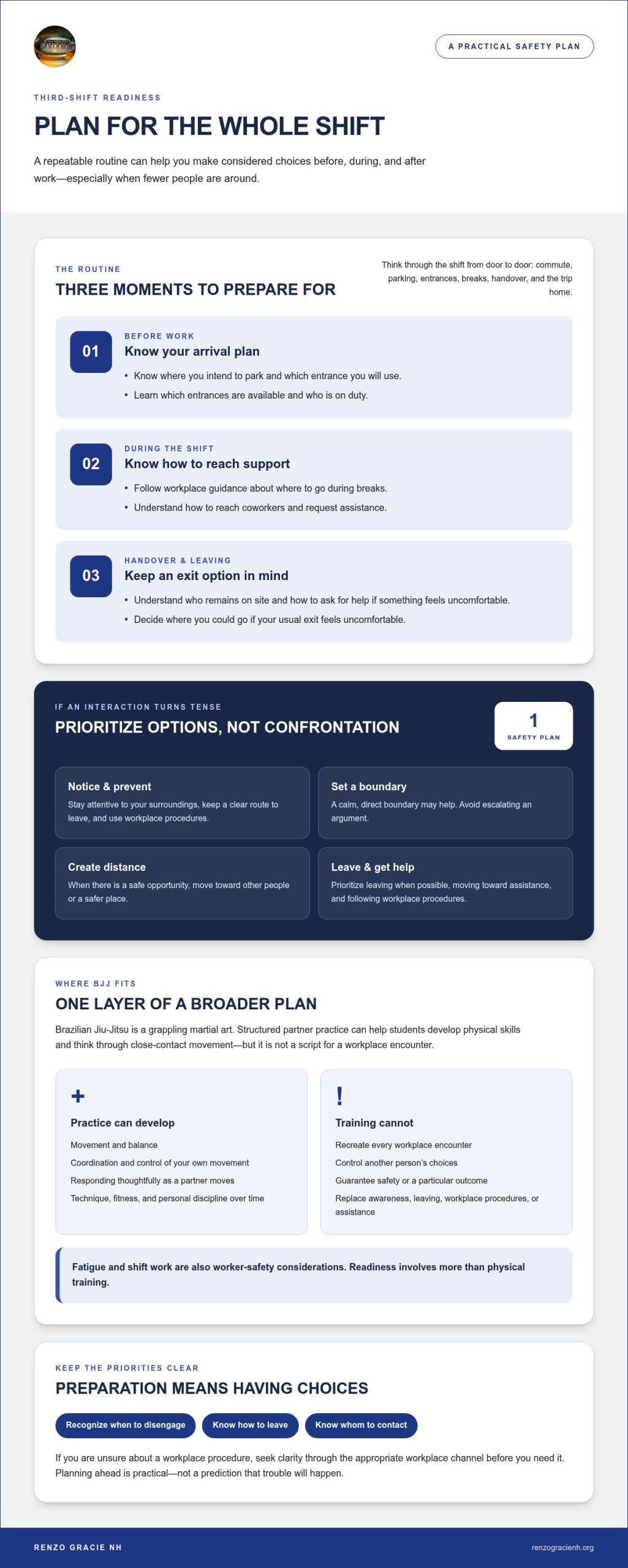
A routine works best when it fits your actual commute and workplace, not an idealized schedule. Keep it simple enough to repeat, then adjust it when your route, shift, or worksite changes. For self defense for third shift workers Exeter, preparation means knowing your options and following the procedures that apply where you work.
Before work: prepare the route and communication
Before your shift, review how you will get there and whom you can contact at work. If it suits your circumstances, consider sharing your plans with someone you trust. Follow your employer’s established check-in and safety procedures rather than assuming a particular process is available.
- Review your commute. Think through your route, where you will park, and which entrance you are expected to use. Identify familiar, accessible places where you could seek assistance if your plans change.
- Know your workplace contacts. Understand who is on duty, how to reach them, and how to request support. If a procedure is unclear, raise the question through an appropriate workplace channel before you need the information.
- Set a communication plan. If it feels useful, tell a trusted person when your shift starts and when you expect to finish. Keep the arrangement realistic, and follow any workplace check-in process that applies.
During and after work: respond with priorities in order
While working, stay attentive to changes around you and use established communication channels. If an interaction feels uncomfortable, keep your words clear, create distance, and look for a safe opportunity to leave. Once away, seek assistance and report concerns through the appropriate workplace process.
- During breaks and handover, follow site procedures and keep track of how to reach a coworker or supervisor. Do not assume someone else knows you need support; communicate directly when appropriate.
- At clock-out, pause long enough to orient yourself. Follow your workplace’s exit procedures. If a situation feels unsafe, move toward assistance or a safer place instead of pressing on with your usual routine.
- After an unsettling event, get to a safer location first, then report what happened through the relevant workplace channel. Clear details can help the appropriate people understand the concern and respond according to site procedures.
Training can complement this routine without dictating your schedule. If changing shifts make a fixed habit difficult, focus on gradual, sustainable practice rather than expecting to train at the same time every week. Adults curious about structured skill-building can explore adult Jiu-Jitsu in New Hampshire. Regular practice develops skills over time, but it does not replace workplace procedures, awareness, or leaving when that is the safer choice.
To experience coached practice, try a complimentary introductory class and explore adult Jiu-Jitsu in a welcoming learning environment.
Explore adult Jiu-Jitsu training near Exeter as a next step
After building a shift safety routine, you may want to develop physical skills through regular instruction. Adult Brazilian Jiu-Jitsu at Renzo Gracie NH offers structured practice in technique, control, fitness, and personal development. It is general martial arts training, and it cannot replace awareness, workplace procedures, or getting help.
You do not need to arrive with experience. Beginners can learn the basics step by step, ask questions, and grow more comfortable with practice over time. The goal is not instant mastery. It is steady learning in a respectful environment, with progress built through instruction and repetition.
What can an adult beginner expect from training?
Training introduces techniques through coaching and structured practice. Students work on movement, control, and problem-solving while building fitness and focus. The learning process is gradual, so a first class is a chance to experience the environment and begin, not a test of what you already know. Professor Kevin Landry, a sixth-degree black belt under Renzo Gracie, has taught in the region for more than two decades.
How can training become a sustainable part of your routine?
With a changing work schedule, consistency does not mean forcing training into every week. Consider your sleep and recovery, then look for a manageable way to practise when your routine allows. A complimentary introductory class gives you a chance to experience instruction before deciding whether adult Jiu-Jitsu suits your goals and lifestyle.
If you are exploring self defense for third shift workers Exeter, think of training as one part of preparation, not a guarantee of safety or a reason to confront someone. It can help you build physical skills over time, while your shift plan still prioritizes awareness, distance, leaving when safe, and workplace support.
For details about getting started, see the guide to a free introductory Jiu-Jitsu class in New Hampshire. If you are ready to take a first step, try a complimentary Jiu-Jitsu class and experience the learning environment for yourself.
Take one steady step toward feeling more prepared
A safer, more confident routine does not have to come together all at once. Choose one useful change for your next shift, such as reviewing how to reach workplace support or making a plan for leaving work. Small steps are easier to keep and can turn uncertainty into a clearer sense of what you will do.
If you would also like to build physical skills, let curiosity guide your next move. Training can be part of your preparation, alongside awareness, good judgment, and workplace procedures. It is not a promise about what will happen in a real situation, but it can offer a supportive place to learn and grow at your own pace.
For anyone exploring self defense for third shift workers Exeter, beginning with a class can make training feel more approachable. Try a complimentary Jiu-Jitsu class and take a first step toward developing confidence, focus, and practical skills.
Frequently Asked Questions
Can Brazilian Jiu-Jitsu help third-shift workers with self-defense?
Yes. Brazilian Jiu-Jitsu can help develop grappling skills and comfort with close-contact movement, which may be one useful part of self-defense preparation. For self defense for third shift workers Exeter, view training alongside practical choices such as knowing whom to contact at work and when to leave. Class practice cannot reproduce every situation or guarantee how an encounter will unfold, so do not treat any technique as a complete safety plan.
What should I do if I feel unsafe leaving work at night?
If you feel unsafe, pause your usual exit routine and move toward a place where you can seek assistance, such as an occupied part of the building or a staffed area, if accessible. Tell an appropriate coworker or supervisor what concerns you and follow your workplace’s procedures for requesting help. If there is immediate danger, contact emergency services. You do not need to walk alone or confront someone to prove you are capable.
Is Jiu-Jitsu suitable for adults who have never trained before?
Yes. Adults can begin without prior martial arts experience and learn through coached instruction at a gradual pace. You do not need to know techniques before your first class. Focus on listening, asking questions, and learning the basic movements one step at a time. At Renzo Gracie NH, adult Jiu-Jitsu is available to people in Exeter, Windham, and Manchester who want to build skills, fitness, and personal discipline.
Is grappling better than striking for self-defense at work?
Neither approach is automatically better for every person or situation. Grappling focuses on close-contact control and positional problem-solving, while striking arts train different physical responses. A workplace encounter may involve space, obstacles, other people, or uncertainty, so choosing a style does not replace judgment. Consider what kind of practice you want, but prioritize prevention, creating distance, leaving safely, and following workplace procedures over physical engagement.
Can self-defense training guarantee that I will be safe on a night shift?
No. Training can help you practise skills and think through responses, but it cannot control another person’s actions, remove every hazard, or promise a specific result. Your safety plan should still include your workplace’s procedures, communication options, and a way to seek assistance. Treat martial arts as preparation, not protection you can count on in every circumstance. If a situation feels unsafe, prioritize getting away and seeking help.
How can I fit Jiu-Jitsu training around a third-shift schedule?
Start by considering your actual sleep and recovery needs rather than forcing a routine that leaves you exhausted. If your shifts rotate, look for a manageable pattern that can flex from week to week, and build consistency gradually. Missing a session during a demanding work stretch does not erase your progress. The aim is sustainable practice that supports your wellbeing, not an extra source of pressure.
Can I try a Jiu-Jitsu class near Exeter before joining?
Yes. New students can start with a complimentary introductory class at Renzo Gracie NH. It is a chance to experience the teaching environment and see how an introductory class feels before deciding whether to continue. The academy serves the Exeter, Windham, and Manchester area, making it a local next step for adults curious about Brazilian Jiu-Jitsu. You can begin as a newcomer without previous training experience.