Defensive Tactics for Police Officers: Debunking 5 Dangerous Training Myths
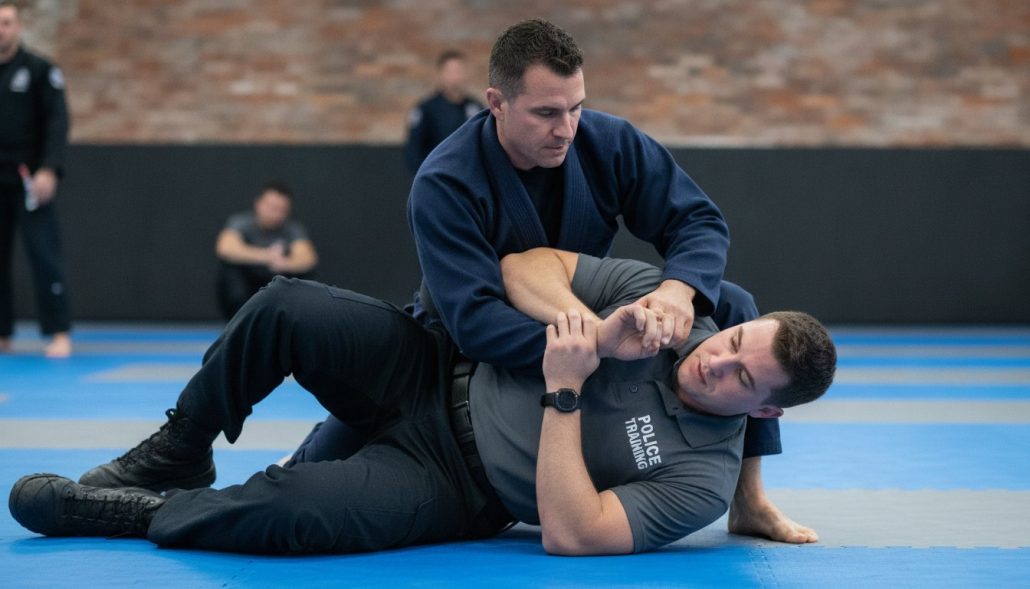
In St. Paul, Minnesota, police departments reported a 37% reduction in the use of force after incorporating Brazilian Jiu-Jitsu into their defensive tactics. This data proves that specialized training in jiu jitsu for reducing police use of force isn’t just a trend; it’s a vital evolution in professional safety. You know the weight of that split-second decision in the field. It’s the gap between academy drills and a real-world struggle with a larger subject. Most officers feel the pressure of potential litigation and the very real risk of injury during a difficult arrest.
You deserve to feel confident. You need tools that work. Discover why traditional training myths are failing you and how BJJ-based tactics provide a more professional, effective approach to subject control. We’ll examine five dangerous misconceptions that might be compromising your safety and show you how technical leverage can transform your performance on duty. It’s time to move beyond outdated methods and build a foundation of disciplined, effective control.
Key Takeaways
- Mechanical leverage beats brute strength. Understand why relying on pain compliance is a gamble when facing subjects in high-adrenaline states.
- Protect your career and your health. Learn how jiu jitsu for reducing police use of force improves optics on camera and significantly lowers the risk of officer injury.
- Training is a perishable skill. Discover why static academy drills often fail in real-world altercations and how to keep your tactical tools sharp through consistent practice.
- Professional confidence through control. Find out how specialized BJJ training helps officers gain superior subject control while reducing reliance on weapons.
Myth 1: You Need Superior Size and Strength for Effective Defensive Tactics
One of the most persistent lies in law enforcement is that “bigger is better” when it comes to physical control. It’s a mindset that puts officers and subjects at unnecessary risk. Defensive tactics for police officers are technical systems designed to ensure safe subject control. They aren’t about winning a fight. They’re about ending one safely. When an officer relies solely on brute strength, they’re operating on a deficit. There will always be someone stronger, more athletic, or more desperate on the other side of the badge.
Relying on size is a liability in our modern, diverse police force. We have smaller officers, female officers, and veteran officers who may not have the explosive power they once did. If your training requires you to be a heavyweight athlete to succeed, the training has failed you. This is why jiu jitsu for reducing police use of force has become the gold standard. It levels the playing field. It transforms a physical struggle into a technical problem with a technical solution. It allows you to work smarter, not harder.
The Science of Leverage in Law Enforcement
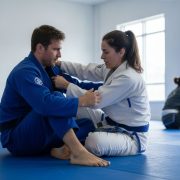
Leverage is the great equalizer. By utilizing mechanical advantages, a smaller officer can safely control a much larger subject without needing to match their power. This involves using larger muscle groups, like your legs and hips, against the subject’s smaller joints or weaker positions. Brazilian jiu-jitsu specializes in this exact science. It teaches you how to move your body efficiently to maximize your impact while minimizing your effort. For New Hampshire officers, specialized law enforcement jiu jitsu training provides the specific tools needed to manage these high-pressure encounters with disciplined confidence and professional poise.
Why Strength-Based Tactics Lead to Excessive Force
When strength fails, desperation sets in. This is the “escalation of force” trap. If an officer tries to “muscle through” resistance and finds they can’t, they often feel forced to escalate to high-impact strikes or weapons to maintain control. It’s a reactive cycle that leads to injuries and litigation. Technical proficiency breaks this cycle. Instead of a messy scramble, jiu jitsu for reducing police use of force allows for a technical flow. You don’t need to punch when you can control a limb. You don’t need to panic when you understand the mechanics of the human body. This transition from “muscling” to “managing” is what keeps everyone safer on the street and protects your career.
Myth 2: Pain Compliance is the Most Reliable Way to Control a Subject
Pain compliance is a legacy tactic. It relies on the idea that if you hurt someone enough, they’ll stop resisting. We’ve all seen the pressure points and joint locks designed to cause sharp, localized discomfort. In theory, the subject submits to avoid the pain. In reality, this approach is often the weakest link in defensive tactics. It assumes the person you’re dealing with is rational and physically sensitive. When those conditions aren’t met, the system breaks down immediately.
The “Adrenaline Factor” changes everything. When a subject is in crisis, under the influence of narcotics, or experiencing a mental health episode, their pain receptors often shut down. Adrenaline is a powerful anesthetic. An academic review of martial arts in policing highlights how these physiological shifts make traditional compliance techniques unreliable. If they don’t feel the pain, they won’t stop the behavior. This is a primary reason why jiu jitsu for reducing police use of force has moved toward mechanical control rather than sensory punishment.
The Failure of Pressure Points and Joint Pain
Pain doesn’t always lead to submission; it often triggers more resistance. This is known as “pain-induced aggression.” When you apply a technique that causes intense pain without physical restraint, the subject’s natural “fight or flight” response kicks into overdrive. They fight harder to get away from the source of the discomfort. This creates a dangerous escalation where the officer feels they must apply even more force. Modern officer safety training NH focuses on moving away from these unpredictable legacy methods. Relying on a subject’s willingness to give up because it hurts is a gamble you shouldn’t have to take.
Technical Control: Position Over Pain
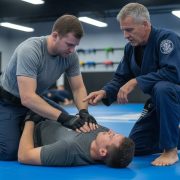
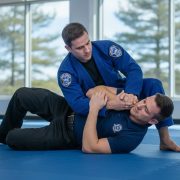
True control comes from geometry and physics. At Renzo Gracie NH, we teach the “Position Before Control” philosophy. This means using weight distribution and limb isolation to remove the subject’s ability to fight back. It’s about taking away their options. By securing a dominant position, you can manage the situation without causing unnecessary injury. Mechanical compliance is the use of leverage to physically prevent movement regardless of the subject’s pain threshold. It’s a more humane, professional, and reliable way to handle high-stress arrests. If you’re ready to evolve your skillset, exploring our specialized defensive tactics training is a great first step toward mastering these technical controls.
Myth 3: Striking is the Best Way to End a Physical Struggle Quickly
Punching is a gamble. It’s high risk with a low professional reward. When you trade blows, you’re inviting a chaotic exchange where anyone can get lucky. Beyond the physical danger, there’s the “Optics Problem.” In an era of body cameras and viral cell phone videos, a strike to a subject’s face is rarely interpreted as a tactical intervention by the public. It looks like a brawl. This is where jiu jitsu for reducing police use of force provides a more professional path forward. It replaces the chaos of a fight with the discipline of a system.
There’s also the physical toll on the officer. Human hands are fragile. Striking a subject’s head often results in broken knuckles or lacerations, exposing you to bloodborne pathogens and weeks of medical leave. By choosing arrest and control techniques training NH, you learn to bypass the striking range entirely. You move from a state of reactive fighting to one of proactive management. It’s about protecting your career as much as your physical well-being.
The Clinch: The Safest Zone in a Fight
Space is the enemy. If there’s distance between you and a subject, they have the room to generate power for a strike or reach for a weapon. Closing that distance into a clinch is the safest move an officer can make. BJJ clinch work allows you to “glue” yourself to the subject, neutralizing their ability to swing effectively. From this position of quiet authority, you can control their center of gravity. You aren’t “trading shots” anymore. You’re dominating the space and preparing for a transition into a safe, controlled takedown.
Takedowns vs. Knockouts: Professionalism on Camera
Perception matters in modern policing. A controlled descent to the ground looks like a professional restraint. A knockout punch looks like an assault. BJJ-based takedowns are designed to bring a subject to the floor with minimal impact, allowing you to move immediately into dominant positions for handcuffing. This reduces the risk of excessive force litigation significantly. When you control the descent, you control the narrative. You prove that your goal was always safety, not punishment. This technical approach is a cornerstone of jiu jitsu for reducing police use of force, ensuring that every interaction remains within the bounds of professional conduct.
Myth 4: Academy Training Provides All the Tactical Skills an Officer Needs
The academy provides the foundation. It’s a critical starting point, but it isn’t the finish line. Defensive tactics are a perishable skill. If you don’t practice them regularly, your ability to execute under pressure fades. It’s much like learning a second language; without consistent use, you lose the fluency required for real-world conversations. For an officer, that lack of fluency can lead to hesitation or a reliance on higher levels of force during a struggle. You need a system that stays with you long after graduation day.
Most academy blocks are limited by time. They often fall into the “Static Training” trap, where you practice techniques on a partner who is essentially letting you win. This creates a false sense of security. On the street, subjects don’t follow a script. They pull, push, and scramble. This is why jiu jitsu for reducing police use of force is so effective; it prepares you for the unscripted reality of a fight through consistent, dynamic practice. It moves you from “knowing” a move to “owning” it.
The Importance of Live Resistance (Rolling)
Live resistance is the missing piece in many training programs. In BJJ, we call this “rolling.” It’s a form of controlled sparring where both partners are actively trying to achieve a dominant position or escape. This isn’t about winning a trophy. It’s about stress inoculation. When you’ve spent hours managing a resisting partner in the gym, you don’t panic when a subject resists on a call. You stay calm. You breathe. Specialized LEO jiu jitsu programs New Hampshire focus on this dynamic movement because it’s the only way to ensure your skills actually work when the adrenaline hits.
Building Muscle Memory for High-Stress Situations
Stress robs you of fine motor skills. When your heart rate spikes, complex “katas” or intricate wrist locks often fail. You need gross motor skills. High-percentage BJJ moves are designed to work even when you’re exhausted and your hands are shaking. By building deep muscle memory through repetition, your body reacts before your mind has time to second-guess. This is the core of jiu jitsu for reducing police use of force: making effective control your default setting.
To ensure these skills remain sharp and effective, many professionals supplement their training with specialized guidance from experts like Roy Harris, who provides private and online instruction focused on technical precision and control.
Essential skills for every officer should include:
- Takedown defense: Keeping the fight on your terms and staying on your feet.
- Ground survival: Knowing how to protect yourself and get back up if you’re knocked down.
- Weapon retention: Ensuring your tools stay in your possession during a close-quarters struggle.
Consistent training is the only way to bridge the gap between the academy and the street. If you’re ready to sharpen your skills in a supportive environment, join us at Renzo Gracie NH for a free introductory class and see the difference that professional, ongoing instruction makes for your safety on duty.
Implementing Modern Defensive Tactics in New Hampshire
Modern policing requires modern solutions. Brazilian Jiu-Jitsu has emerged as the gold standard for defensive tactics because it prioritizes control over damage. By focusing on leverage and technical subject control, implementing jiu jitsu for reducing police use of force is a proactive step toward building community trust and ensuring officer longevity. It’s about having a plan before the struggle begins. It’s about going home safe every night. This strategic shift ensures that every interaction is handled with technical precision rather than reactive panic.
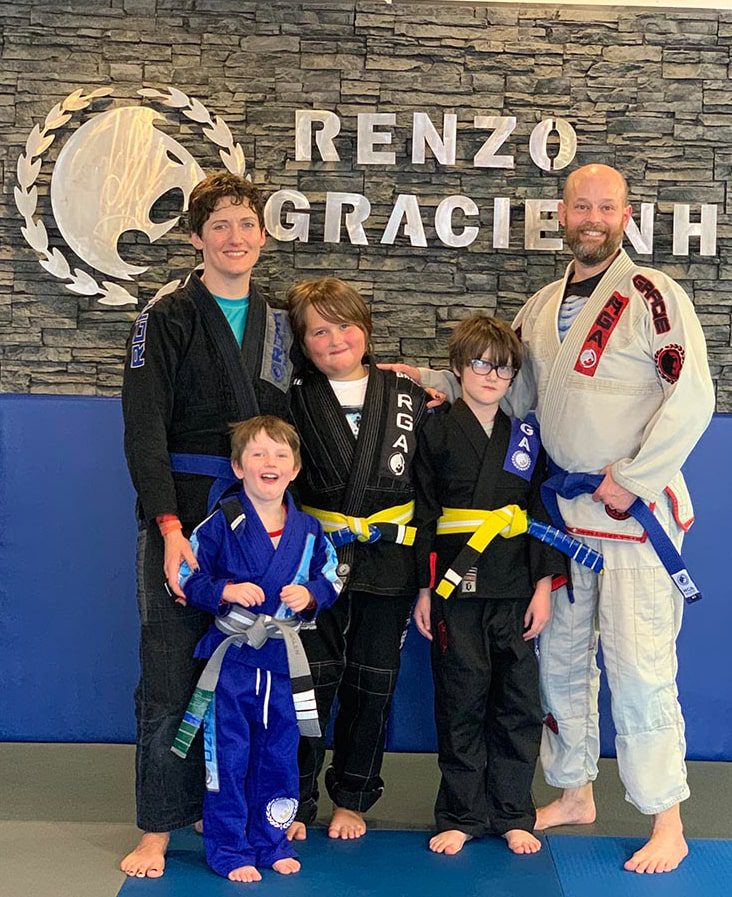
Renzo Gracie NH stands as the premier resource for New Hampshire officers looking to evolve their tactical skillset. Our Law Enforcement Jiu-Jitsu Training is led by Professor Kevin Landry, a 6th-degree black belt with over 20 years of experience teaching in the Windham and Manchester regions. He understands the unique challenges faced by local departments. This isn’t a generic martial arts class; it’s a specialized curriculum built for the professional needs of the modern officer. We focus on what works in the field.
Why Renzo Gracie NH for Law Enforcement?
We provide a safe, clean, and professional environment that respects the weight of your badge. You won’t find an intimidating or aggressive atmosphere here. Instead, you’ll find a community of supportive partners who are dedicated to mutual growth and disciplined confidence. Our LEO-specific training focuses on the high-percentage techniques that matter most on duty: clinching, takedown defense, and ground control. We offer a low-risk way to start your journey through a free introductory class, allowing you to experience our culture firsthand. Show up. Train hard. Stay safe.
Getting Started: The Path to Officer Excellence
Take the first step. Visit our academy in Windham. Meet our instructors and see how we train. We believe that every officer deserves the best possible tools for subject control. Our community is built on respect and perseverance, ensuring that you feel guided through every stage of your development. The journey from your first day to long-term mastery is a steady progression. It doesn’t matter if you’re a seasoned veteran or a new recruit; we’re here to help you build the strength and vitality needed for a long, healthy career. We value your personal success and the safety of our community above all else.
Ready to transform your approach to defensive tactics? Sign up for a Free Introductory Class today and discover how specialized jiu jitsu for reducing police use of force can improve your safety and professional confidence on the street.
Elevate Your Professional Safety and Control
You are the front line of community safety. Your training should reflect that high level of responsibility. We’ve explored how technical leverage and mechanical control outperform brute strength and pain compliance every time. By choosing jiu jitsu for reducing police use of force, you are investing in a system that prioritizes both your safety and the rights of the subjects you encounter. This isn’t just about learning new moves; it’s about building a foundation of disciplined confidence that stays with you under pressure. For those seeking to broaden their tactical skills, performancekravmaga.com provides additional perspectives on practical defensive techniques.
At Renzo Gracie NH, we provide a specialized LEO curriculum led by Professor Kevin Landry, a 6th-degree black belt. Our academy serves as a supportive partner for NH officers, offering a clean and professional environment to sharpen perishable skills. Don’t leave your safety to chance or outdated myths. It’s time to bridge the gap between academy theory and the unscripted reality of the street.
Claim Your Free Introductory Class at Renzo Gracie NH Today!
We’re here to help you evolve, grow, and serve with excellence. Join a community that values your personal success and long-term well-being. We look forward to seeing you on the mats.
Frequently Asked Questions
Is Brazilian Jiu-Jitsu (BJJ) safe for police officers to use on the street?
BJJ is exceptionally safe because it focuses on controlling a subject’s movement through leverage rather than impact. By securing dominant positions, you can manage resistance without relying on high-risk strikes that often lead to broken hands or facial injuries. This technical approach protects both the officer and the subject during a physical struggle, ensuring the encounter ends with professional restraint.
How often should a police officer practice defensive tactics to stay proficient?
Consistency is the only way to maintain mastery; training twice a week is generally the minimum for keeping muscle memory sharp. Defensive tactics are perishable skills that fade without regular, dynamic practice against live resistance. Regular sessions ensure your reactions remain instinctive. You’ll find that steady momentum in the gym translates directly to better performance and reduced anxiety during high-stress calls.
Does BJJ training help with de-escalation in law enforcement?
Technical proficiency directly improves de-escalation by increasing your confidence and composure. When you know you can control a physical encounter, you’re less likely to panic or overreact with higher levels of force. This disciplined confidence allows you to remain calm and use jiu jitsu for reducing police use of force as a professional tool for peaceful, controlled resolution.
Can smaller officers really control larger subjects using these tactics?
The entire system is built on the science of leverage and mechanical advantage. By using your larger muscle groups against a subject’s weaker joints, you can neutralize a significant size discrepancy. This levels the playing field. It allows smaller or female officers to safely manage aggressive subjects who would otherwise be difficult to control through brute strength alone.
What is the difference between sport BJJ and Law Enforcement BJJ?
Sport BJJ focuses on points and competition, while Law Enforcement BJJ prioritizes subject control and weapon retention. LEO-specific training accounts for the weight of your duty belt and the constant presence of firearms. It emphasizes transitions to handcuffing positions and maintaining tactical awareness of your surroundings rather than hunting for submissions in a tournament setting.
Do I need to be in great shape to start training defensive tactics?
You don’t need to be an elite athlete to begin. The training itself builds the strength and vitality required for the job. Our program is designed to be accessible to individuals of all skill levels and ages. You’ll discover that your fitness improves naturally as you focus on personal progress and master the technical mechanics of grappling.
Are BJJ techniques considered ‘excessive force’ by most departments?
Most BJJ techniques are viewed as professional restraint because they avoid striking and high-impact trauma. Using jiu jitsu for reducing police use of force is often seen as a more humane alternative to using batons or chemical irritants. Because the goal is control rather than injury, these tactics often result in fewer complaints and significantly reduced litigation risks for the department.
How do I find a reputable LEO BJJ program in New Hampshire?
Look for an academy with experienced instructors who understand the specific legal and tactical needs of law enforcement. In Windham and Manchester, Renzo Gracie NH offers a specialized curriculum led by Professor Kevin Landry, a 6th-degree black belt. A reputable program will prioritize officer safety and offer a professional environment where you can train alongside other dedicated first responders.