New Hampshire Defensive Tactics Training for Law Enforcement
In New Hampshire, law enforcement defensive tactics training develops control, restraint, personal safety, and communication skills for physical encounters. Officers must complete at least 24 hours of in-service training annually, and that training must be separate from defensive tactics training. The two requirements serve different purposes.
Physical control calls for more than technique. Officers also need to recognize changing behavior, communicate clearly, and adjust their response as an encounter unfolds. Law enforcement defensive tactics training in NH can bring these elements together, helping officers practice judgment as well as movement.
This article explains how defensive tactics instruction can address aggression, use-of-force principles, de-escalation, and communication during control. It also considers how repeated practice and realistic scenarios support skill development, and where specialized Jiu-Jitsu training fits into professional preparation. The key is disciplined, practical instruction that keeps judgment and control central.
Key Takeaways
- Effective tactics instruction develops control, restraint, and personal safety while reinforcing skills for high-pressure encounters.
- Use-of-force decisions involve assessing behavior, surroundings, available resources, and potential consequences.
- Clear, respectful communication and de-escalation can help officers manage encounters before they intensify.
- Integrated practice helps officers adapt their positioning and communication as conditions change; Jiu-Jitsu training can support physical-control skills.
Response to aggression instruction
In New Hampshire, defensive tactics instruction can develop control, restraint, and personal safety skills. Training may also address de-escalation, weapon retention, and responses to aggression.
Curriculum and Certification Comparisons
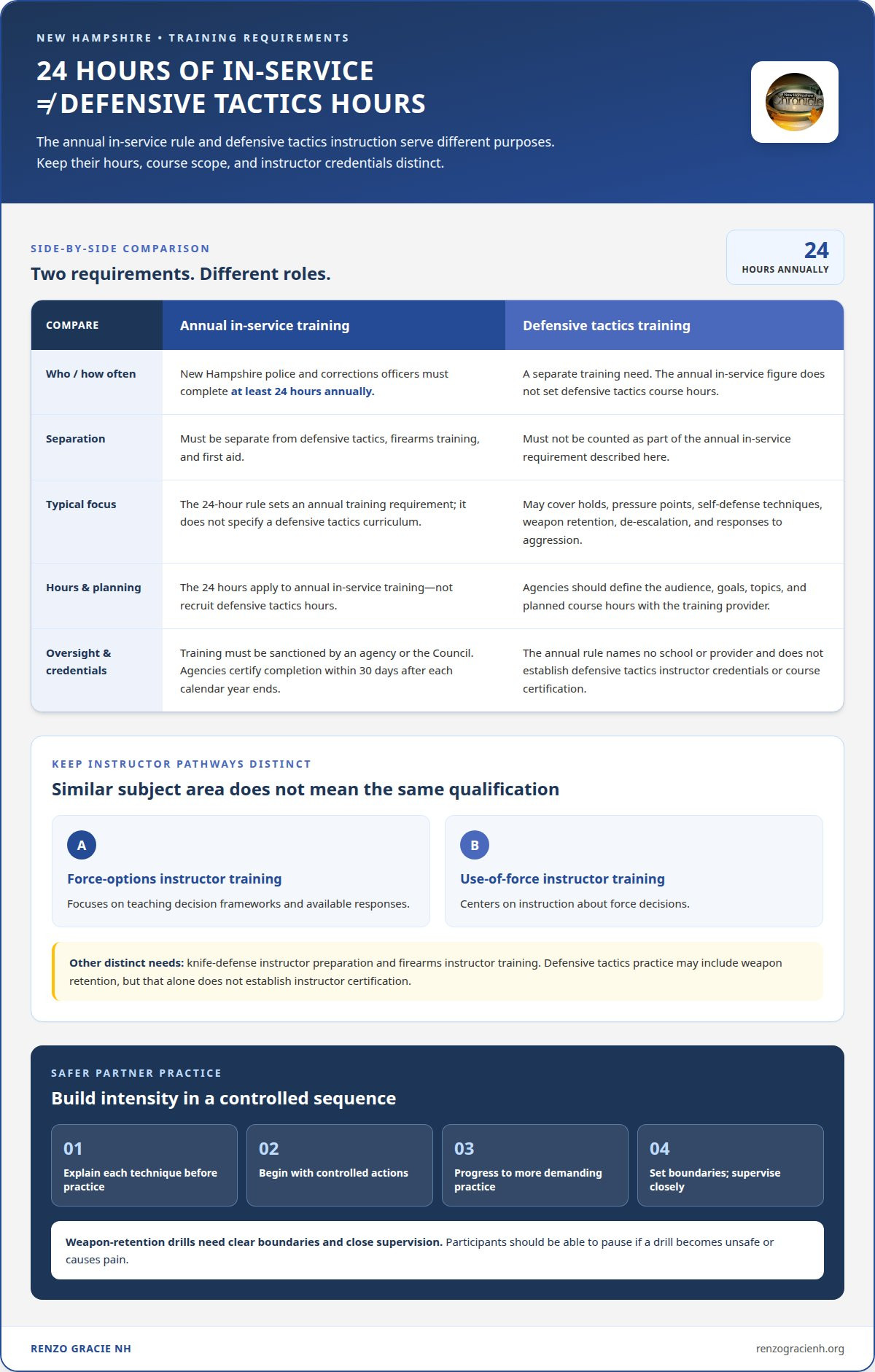
Compare courses by their skills, practice format, and intended participants. Useful topics include holds, pressure points, self-defense techniques, weapon retention, and de-escalation. The 24-hour annual in-service requirement applies to New Hampshire police and corrections officers. That training must be separate from defensive tactics training, so the 24 hours do not establish defensive tactics course hours or instructor certification.
Enrollment requirements depend on the course audience and stated prerequisites. Agencies should distinguish officer training from knife-defense instructor development or firearms instructor training. These are separate needs: defensive tactics practice may address weapon retention, but that alone does not establish instructor certification.
The 24-hour requirement does not name a school or agency provider. Agencies can identify their training route through their own training arrangements and course requirements.
Skills Covered and Training Hours
Training can develop control and restraint through holds, pressure points, and self-defense techniques. Weapon retention and de-escalation may also be covered. For example, officers can practice choosing a control response while communicating during resistance. Regular reinforcement helps maintain skills under stress, when adrenaline can affect fine motor skills, hearing, and cognitive processing.
New Hampshire police recruits’ defensive tactics hours cannot be inferred from the annual in-service figure. The 24 hours apply annually to in-service training, and defensive tactics must remain separate. Agencies arranging recruit courses should distinguish the recruit curriculum from that annual requirement and establish the planned course hours with the training provider.
Safety Risks and Injury Prevention
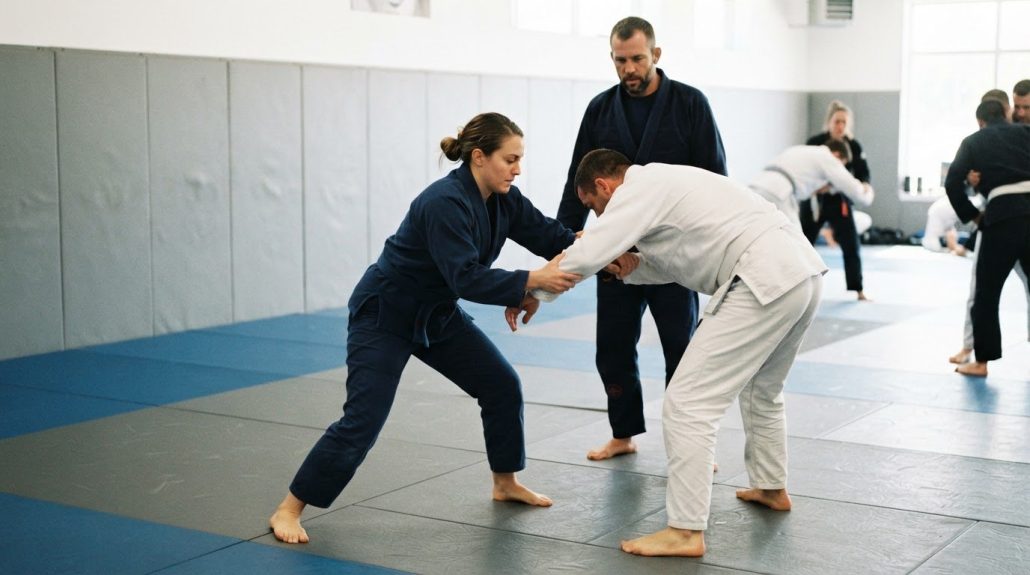
Partner drills involve physical contact, resistance, and the possibility of injury. A safer course moves from controlled actions to more demanding practice, with instructors explaining each technique before partners try it. Weapon-retention exercises, for example, need clear boundaries and close supervision. Participants should be able to pause if a drill becomes unsafe or causes pain.
Agencies arranging training can start by defining the audience, goals, and required topics. Then they can coordinate a schedule and clarify whether instruction should focus on officer tactics, knife-defense instructor preparation, or firearms instructor development. Separating these objectives makes the training request more precise.
Use-of-force principles and legal guidelines
Use-of-force instruction connects decisions to objective reasonableness, proportionality, and accountability. Officers assess a person’s behavior, the surroundings, available resources, and likely consequences. A changing threat, for example, may call for a different response than continued resistance alone. Training should relate each force option to the circumstances, rather than present techniques as automatic steps.
The New Hampshire Police Standards and Training Council’s annual in-service requirement is 24 hours. That training must be separate from defensive tactics, firearms training, and first aid. It must also be sanctioned by an agency or the Council. Agencies certify they met the annual requirement within 30 days after each calendar year ends. These rules do not set a defensive tactics hour total.
Force-options instruction helps officers recognize choices and assess when circumstances change. A scenario might begin with verbal direction, then introduce a new safety concern. Officers can practice identifying the change, selecting an appropriate response, and reassessing as the encounter develops. Objective reasonableness and proportionality guide that judgment; accountability means explaining the decision in light of what was observed.
Instructor courses serve different purposes. Force-options instructor training focuses on teaching decision frameworks and available responses. Use-of-force instructor training centers on instruction about force decisions. The Council’s annual in-service rule does not itself establish instructor credentials or course certification. Before scheduling either course, agencies can define the intended role, learning objectives, and connection to department policy.
Scenario-based practice can include a debrief that examines what the officer observed, which options were available, and why a response changed. A clear review connects decisions to behavior and conditions rather than hindsight alone. Agencies seeking additional physical-control practice can explore structured training for control skills.
These principles work together as officers assess a developing situation. Objective reasonableness frames the decision, proportionality relates the response to the circumstances, and accountability keeps the basis for that choice in view. Training can reinforce this connection by asking officers to link what they observe with the response they select, rather than separating a force decision from its context.
That assessment includes subject behavior, environmental factors, available resources, and potential consequences. Considering them together supports decisions grounded in the situation as it unfolds and helps officers explain how their observations informed their actions.
Command presence and de-escalation
Command presence starts with how an officer speaks and listens. In a New Hampshire encounter, clear, respectful communication can help prevent escalation. Officers can use a steady tone, concise directions, and attentive listening to lead without making the exchange needlessly confrontational. The goal is to communicate expectations while staying alert to changing behavior.
Practice turns those choices into usable habits. In a scenario, a person might ignore an initial direction or respond with frustration. The officer can pause, create space when appropriate, give one clear instruction, and listen to the response. A partner or instructor can then review whether the words were understandable and the tone stayed controlled. Small adjustments matter.
New Hampshire certified police, corrections, and probation/parole officers must complete 2 hours of de-escalation training each year to maintain certification. That requirement makes de-escalation a recurring part of professional learning. Training can connect communication to realistic situations, such as a person who becomes louder or refuses a request. Officers practice identifying the change and choosing a measured next step.
Command presence also means adapting rather than repeating a script. If a person seems confused, an officer can simplify the direction. If the person becomes more agitated, the officer can reassess tone, positioning, and available time. The response should follow the interaction instead of escalating automatically. Respectful language and clear choices keep communication focused.
Leadership shows in how officers manage pressure and maintain professional focus. Structured practice can include role-play, observation, and a short debrief. An instructor might ask what the person said, which words the officer used, and how the exchange changed. That review makes communication choices specific and actionable. Repeated practice helps officers recognize when to adjust their approach while keeping safety and clear direction in view.
Communication integrated with physical control
During physical control, communication remains part of the response. A clear instruction tells the person what the officer needs them to do. An officer might give a brief direction while adjusting position. The words should stay understandable and not compete with movement. Practice links voice, observation, and control instead of treating them as separate tasks.
Conditions can change quickly. If a person stops resisting, officers reassess the threat and adjust positioning and communication. If the person pulls away or reaches toward an unknown object, they reassess again. Training can help officers notice the change, communicate it, and choose an appropriate next response. The sequence matters: observe, reassess, communicate, then adapt.
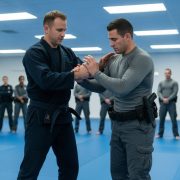
Scenario-based drills give officers a place to rehearse those decisions. An instructor can introduce a change in behavior during a controlled exercise, giving officers a chance to maintain clear communication while responding physically. A structured debrief can review what changed, which words were used, and how positioning affected the exchange. This makes the learning specific to the scenario, rather than a general reminder to communicate.
Partner coordination also matters. One officer may communicate while another maintains awareness of the person and surroundings. A simple verbal update can help partners understand when the situation changes. Practice should address who speaks, what information matters, and how partners avoid giving conflicting directions. Instructors can repeat the scenario with different responses, then discuss how those choices affected control and clarity. For professional instruction that develops physical-control practice, explore structured training options.
Reassessment should continue throughout an encounter, not happen only at the outset. Officers practice reassessing threat levels and adjusting positioning or communication as conditions change. Rehearsing these adjustments can help keep physical responses and spoken directions aligned. Officers can also consider whether a change in position makes an instruction easier to understand, or whether communication needs to shift as the situation develops. The aim is a responsive approach: stay aware, adjust when needed, and keep communication connected to physical control.
Renzo Gracie NH: Law Enforcement Jiu-Jitsu Training
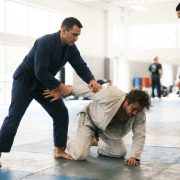
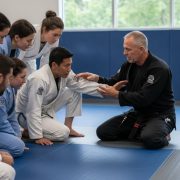
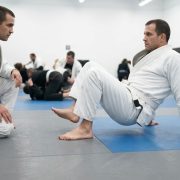
Renzo Gracie NH offers Law Enforcement Jiu-Jitsu Training for professionals seeking practical physical-control training through Jiu-Jitsu. It can complement agency instruction by giving officers another setting to develop movement and control skills. Agency policies, use-of-force guidance, and required training remain central to professional preparation.
Officers interested in ongoing practice can also explore the Adult Jiu Jitsu Program. A Free Introductory Class offers a first step to experience the instruction. These options suit different starting points, from specialized law enforcement training to general adult practice.
Contact Renzo Gracie NH to learn more about its Law Enforcement Jiu-Jitsu Training.
Build the Next Stage of Training
For agencies considering law enforcement defensive tactics training in NH, start by choosing practice that supports professional development alongside agency policies and instruction. Renzo Gracie NH offers Law Enforcement Jiu-Jitsu Training for officers seeking continued physical-control practice. Officers in Windham, Manchester, and Exeter can explore whether this training fits their professional development goals and agency plan.
Jiu-Jitsu can also be a shared family activity. Renzo Gracie NH offers an Adult Jiu Jitsu Program and a Kids Jiu Jitsu Program, giving adults and children their own ways to learn. Each can build focus and perseverance through their program.
Explore whether this training fits your goals and next steps. Contact Renzo Gracie NH to learn more. Keep building with discipline, confidence, and respect.
Frequently Asked Questions
What law enforcement defensive tactics training programs are available in New Hampshire?
Renzo Gracie NH offers Law Enforcement Jiu-Jitsu Training for officers seeking specialized grappling and control instruction. The academy serves communities including Windham, Manchester, and Exeter. This is a Jiu-Jitsu training option, not a substitute for agency policies or required department training. Officers can consider whether its practical focus fits their professional development goals and existing agency plan.