
What to Do if My Child Is Bullied in Windham
Listen first, then act. Reassure your child that bullying isn’t their fault, and calmly ask what happened, where, and who was involved. If you’re wondering what to do if your child is being bullied in Windham, write down the details, share them with the school, and follow up with your child and school staff to see whether the behavior stops. If anyone is in immediate danger, call 911, according to the National 911 Program.
It’s natural to want to fix the problem quickly, but first your child needs to know you believe and support them. Don’t tell them to ignore the bullying or retaliate. Focus on safety, steady communication, and practical help.
This guide explains how to support your child, work with school staff, and consider a school change if your child remains unsupported. It also covers preserving evidence of cyberbullying and recognizing when to seek further help, so you can take the next step with a clearer plan.
Key Takeaways
- Help your child rehearse a short, calm response to repeated teasing, while making clear they should walk away and get help rather than retaliate.
- Before changing schools, consider whether the current school is addressing the behavior and helping your child feel safer and supported.
- If the bullying continues, keep a record of what happens and return to school staff with specific examples and a request for next steps.
- Encourage friendships and activities that help your child build confidence, and keep checking in about changes in mood, behavior, or school participation.
1. My Child is Being Bullied – How Can I Help Them?
Bullying involves intentional aggression and an imbalance of power or strength. It often happens repeatedly, unlike a one-time disagreement between peers. Notice whether a child repeatedly targets yours, controls interactions, or uses status or strength to intimidate. Behaviors can include physical aggression, name-calling, exclusion, rumors, and hurtful online messages.
Look for changes after incidents, such as anxiety about school, loneliness, low self-esteem, missed classes, or physical complaints. Bullying can affect a child’s mental health, so notice changes in sleep, mood, friendships, and participation. Gently ask what has changed and when it began. A child who suddenly avoids the bus or stops joining a favorite activity may be signaling distress.
Practice a safe response, not a fight. Try a steady voice, eye contact if comfortable, and a short phrase such as, “Stop. That’s not okay.” Then have your child move toward a trusted adult, teacher, or nearby group. Rehearse where to go during recess or on the bus. Make clear that walking away and reporting the behavior show good judgment, not weakness.
For repeated teasing by the same child, educator Rick Lavoie suggests a brief retort may help a child regain control of the interaction. Practice neutral lines such as, “I’m not interested in this,” or “That was unkind,” then leaving without trading insults. A retort is not a guarantee or a substitute for adult help. Stop role-play if it makes your child feel less safe, and ask which response feels manageable.
If your child is accused of bullying, take the behavior seriously rather than dismissing it as a phase. Ask what happened and what needs to change. Sadness, anger, loneliness, insecurity, or major changes at home or school may contribute to harmful behavior, but they don’t excuse it. Consider whether your child needs support learning respectful ways to relate to peers.
When teasing targets a protected characteristic, bullying may overlap with discriminatory harassment covered by federal civil rights laws, according to the U.S. Department of Education. Share specific incidents with school staff so they can assess what happened and respond.
2. Changing schools when a child feels unsupported
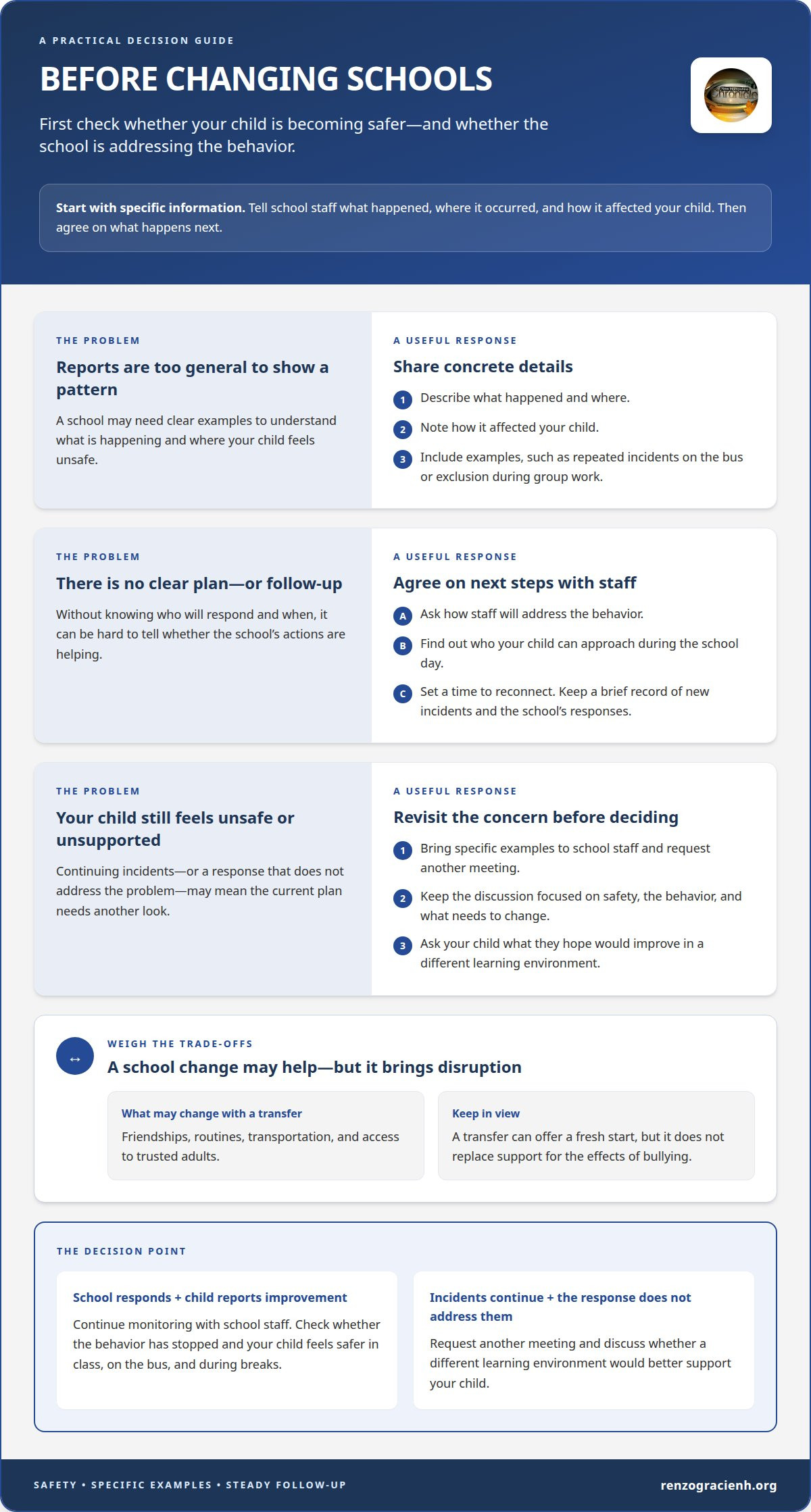
Before deciding to transfer, give school staff specific information and ask for a plan to stop the bullying. Describe what happened, where it occurred, and how it affected your child. For example, note repeated incidents on the bus or exclusion during group work. Ask who will follow up and how the school will address the behavior.
In Windham, students can turn to school rules and policies that set expectations for how students treat one another. Staff can help prevent bullying by establishing and enforcing those rules. If the behavior overlaps with discriminatory harassment, federal civil rights laws may apply, according to the U.S. Department of Education.
Make follow-up specific. Ask the teacher or school counselor what steps staff will take, which adult your child can approach during the school day, and when you should reconnect. Keep a brief record of new incidents and the school’s responses. Check whether the behavior has stopped and your child feels safer in class, on the bus, and during breaks.
Consider a school change seriously if your child continues to feel unsafe or unsupported despite clear communication and school involvement. Weigh the impact of staying against the disruption of a new school, including changes to friendships, routines, transportation, and access to trusted adults. Ask your child what they hope would improve. A transfer can offer a fresh start, but it doesn’t replace support for the effects of bullying.
Set a decision point: if the school responds and your child reports meaningful improvement, keep monitoring with staff. If incidents continue or the school’s response does not address the problem, request another meeting and discuss whether a different learning environment would better support your child. Keep the conversation focused on safety, specific behavior, and what needs to change.
3. Getting help when efforts have not worked or someone is in immediate danger
Act promptly when a threat becomes immediate. If your child or another person is in immediate danger, call 911, according to the National 911 Program. Move to a safer place if possible, and tell the dispatcher where help is needed. Once immediate safety is addressed, record what happened and notify school staff.
If earlier reports haven’t stopped the bullying, contact the teacher, counselor, or school administrator again. Share dates, locations, names, and examples of repeated behavior. Ask what steps the school will take, who will handle the concern, and when you can follow up. If the behavior continues, report new incidents and request another conversation with school authorities.
For online incidents, save screenshots, messages, usernames, and dates. Don’t reply to harmful posts or contact the students involved directly. Share the saved information with school officials so they can understand the pattern and decide how to respond. Keep copies of your reports and note any changes in your child’s attendance, mood, or relationships.
In Windham, a school counselor or teacher is a practical starting point for emotional and school-related support. Ask the counselor about family support or counseling suited to your child’s needs. Help your child name feelings by offering specific choices, such as, “Are you worried, angry, or embarrassed about lunch?” Then listen without rushing to solve every detail.
Children may find it hard to explain what they need. Practice a clear request together, such as, “I need help feeling safe on the bus.” If speaking feels difficult, your child could write down what they want an adult to know. Check in after they report the bullying and notice changes in sleep, mood, friendships, or school participation. If distress persists, share your observations with the counselor and ask about further support.
4. How parents can listen and support their child
Choose a calm moment, such as a quiet drive home, and let your child explain the situation in their own words. Ask who was involved, where it happened, and what happened next. Give them time to answer. A pause can help more than a rapid series of questions.
Start with clear support: “I’m glad you told me. Bullying is wrong, and it isn’t your fault.” Don’t blame your child, assume they provoked the behavior, or criticize how they reacted. Whether they pushed back or stayed silent, first focus on understanding what they experienced and what would help them feel safer now.
Keep communication open with a simple daily check-in, such as, “What felt hard at school today?” Don’t tell your child to ignore bullying. Instead, ask what they want you to know and whether they’d like help talking with a teacher or counselor. A loving, steady home gives them room to share without fearing judgment.
Watch for changes after incidents, including loneliness, anxiety, low self-esteem, school avoidance, or physical complaints. Ask whether these are affecting friendships, attendance, sleep, or activities. If distress continues, or your child struggles to manage feelings or peer relationships, talk with a school counselor or seek counseling support. A counselor can help a child build coping skills and understand social interactions.
Support confidence through activities your child enjoys, such as art, music, or athletics. Let them choose what feels welcoming, rather than treating an activity as a way to confront the bully. Notice specific strengths: “You kept practicing that song,” or “You asked your friend to join you.” These moments reinforce an identity beyond the bullying and create positive opportunities to connect with others.
Renzo Gracie NH
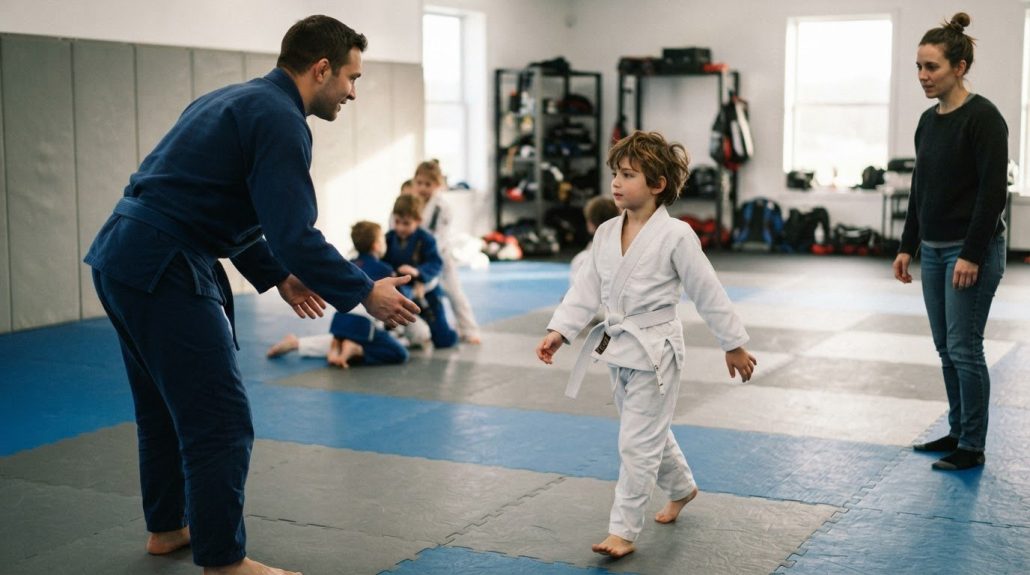
Renzo Gracie NH offers children and families a structured place to build confidence, focus, and respect alongside the support they’re already seeking. The Kids Jiu Jitsu Program emphasizes learning and personal progress; the Adult Jiu Jitsu Program gives parents a chance to share an activity with their child. A Free Introductory Class lets families experience the instruction.
Jiu-Jitsu isn’t a substitute for reporting bullying, working with school staff, or seeking counseling when a child needs emotional support. It shouldn’t be presented as a way to physically confront a bully, either. Consider it a positive activity where your child can practice perseverance and connect with others in a structured setting.
If Jiu-Jitsu feels like a good fit for your family, contact Renzo Gracie NH to get started with a free introductory class.
Take the Next Step With Confidence
If you’re deciding what to do if your child is being bullied in Windham, remember that support can combine practical action with positive opportunities for growth. Keep working with the school and emotional support professionals as needed. A martial arts class is an additional activity, not a replacement for those steps or a way to physically confront a bully.
Renzo Gracie NH offers Adult Jiu Jitsu and Kids Jiu Jitsu programs, as well as Law Enforcement Jiu-Jitsu Training. Families can consider whether practicing respect, focus, and perseverance together suits their child’s needs. Every child responds differently, so keep their comfort and interests at the center of the decision.
For information about taking a next step, contact Renzo Gracie NH. Continue listening, keep supportive adults involved, and help your child build confidence at a pace that feels right for them.
Frequently Asked Questions
My Child is Being Bullied – How Can I Help Them?
Start by letting your child choose a trusted adult at school they feel comfortable approaching. For families deciding what to do if their child is being bullied in Windham, that might be a teacher, counselor, or another staff member your child knows. Agree on a simple way to ask for help, such as naming the adult or showing them a prepared note. Revisit the plan after school.
Why do kids bully?
Children may bully when they feel angry, lonely, sad, or insecure, and changes at home or school can contribute to those feelings. A child who bullies may also be mistreated by someone else. These factors can help explain the behavior, but they don’t make it acceptable. Ask what happened, set a clear expectation that it must stop, and help the child identify a respectful way to repair harm.
What should a parent do first if their child is being bullied?
Start with a calm conversation in a private setting, such as at home after dinner. Let your child tell the story in their own words before deciding what to do next. You might ask, “What would help you feel more comfortable going to school tomorrow?” Their answer can help you distinguish an immediate safety concern from a need for adult support or a school meeting.
How can I document and report bullying at school?
Keep a dated record with a brief description of each incident, where it happened, who was present, and how your child was affected. For online behavior, preserve the original messages or screenshots along with the date and account name. Send the information to an appropriate school staff member and keep a copy of your report. A clear timeline can help staff see whether incidents form a pattern.
What is Windham school district’s bullying and harassment policy?
Windham school rules and policies set expectations for how students treat one another, and staff can enforce them to address bullying. For a specific concern, ask the school administration which policy applies and how families can report an incident. You can also ask how the school reviews reports and communicates next steps.
What can parents do if the school does not address bullying?
Follow up with the school in writing, referring to your earlier report and describing any new incidents or effects on your child. Request a meeting with school administration and ask for a clear plan, including who will oversee it and when you’ll discuss progress. Keep your messages and the school’s responses together. If the behavior continues, share the updated timeline with school authorities and request further action.