Self Defense for Women Over 50 in Windham
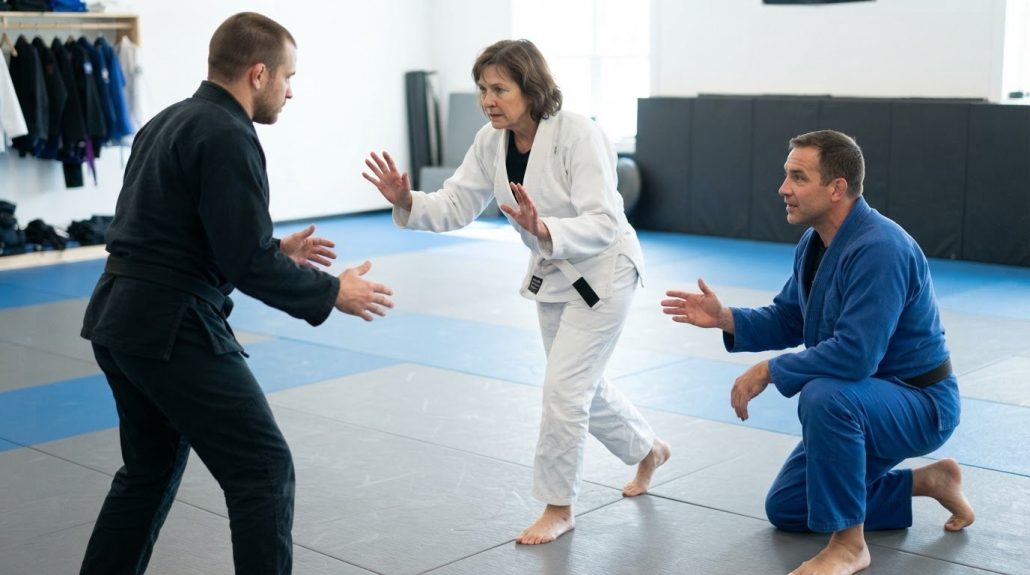
What if you realize someone is following you? Self defense for women over 50 in Windham should focus on practical choices: noticing warning signs, creating space, drawing attention, and moving toward safety rather than trying to win a fight. Your instincts matter. Training can help you think through your options with greater confidence.
It’s reasonable to want a class that respects your experience, comfort, and fitness level. You don’t need martial arts experience or a particular level of strength to begin learning. A good instructor explains how techniques work and what to expect during practice.
This guide explains what professional, reality-based self-defense training may cover, what to discuss with an instructor, and how to assess whether a class fits your needs. You’ll also find guidance on responding to the concern behind many people’s first question: what to do when you think someone is following you.
Key Takeaways
- Learn how instructors build awareness and practice calm responses to warning signs, including the concern of being followed.
- Explore how reality-based training can focus on practical ways to create space and break free from holds.
- Discuss your experience, comfort, and fitness level with an instructor to understand how class activities can suit your starting point.
- Review class schedules, location, and age requirements to find a training option that fits your needs.
How instructors teach risk awareness, de-escalation, and trusting your instincts
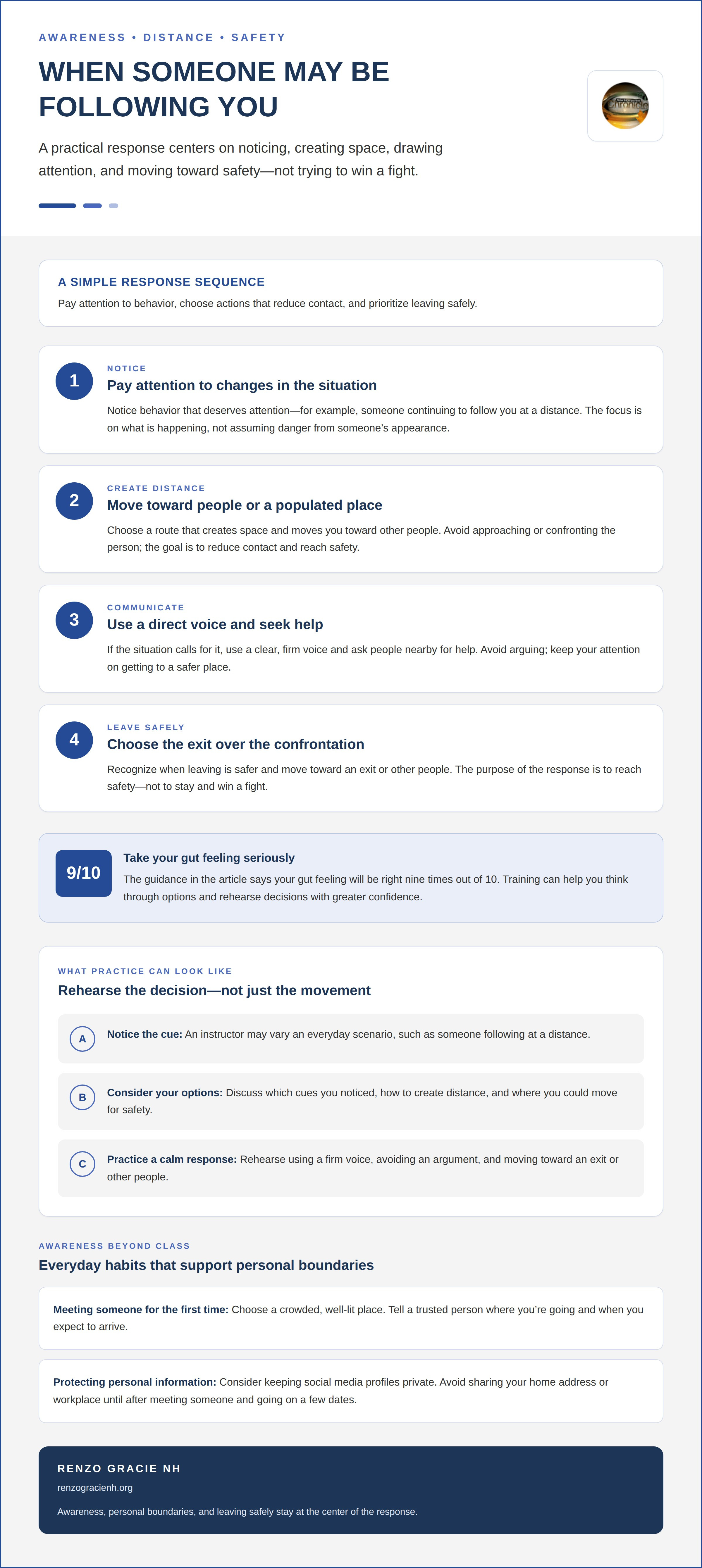
Risk awareness begins with noticing changes in a situation, not assuming danger from someone’s appearance. An instructor can use everyday scenarios to help students identify behavior that deserves attention, such as someone following at a distance. The lesson is to notice, create distance, and move toward a populated place. Trusting your gut feeling will be right nine times out of 10, according to the guidance used for this topic.
De-escalation focuses on choices that reduce contact and help you reach safety. In a practice scenario, an instructor might have a student use a clear, firm voice, avoid arguing, and move toward an exit or other people. The goal isn’t to win a confrontation. It’s to recognize when leaving is safer and rehearse that decision under pressure.
Instructors can also connect awareness to routines outside class. For example, they may discuss meeting someone for the first time in a crowded, well-lit place and telling a trusted person where you’re going and when you expect to arrive. They may recommend keeping social media profiles private to limit personal information. Avoid sharing your home address or workplace until after meeting someone and going on a few dates.
- Notice: Pay attention to changes, such as a person continuing to follow you.
- Create distance: Move toward a populated place instead of approaching or confronting the person.
- Communicate: Use a direct voice and seek help from people nearby when needed.
Practicing decisions can make them easier to recall. An instructor can vary a scenario, then discuss which cues the student noticed and what options were available. For women considering self-defense training in Windham, this can help clarify a response plan while keeping awareness, personal boundaries, and leaving safely at the center.
Reality-based self-defense training
Reality-based training connects physical techniques to a clear purpose: creating an opportunity to escape. An instructor may teach basic strikes, punches, and kicks, then use a scenario in which the student makes space and moves away. The emphasis is on choosing a practical response, not performing a long sequence or staying to fight.
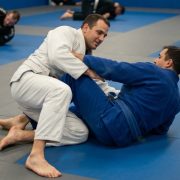
Classes may also cover responding to a grab or hold. An instructor can demonstrate how balance and body positioning help someone work free, then guide students through controlled partner practice. The exercise can focus on positioning and the next safe movement rather than relying on strength alone.
Some programs teach strikes using hands, elbows, knees, or feet, including techniques aimed at vulnerable areas such as the eyes, throat, or groin. These require careful instruction and practice. A qualified teacher explains the risks and supervises the drill, with the purpose of interrupting contact long enough to get away, not continuing an altercation.
- Escaping a hold: Practice balance and body positioning against a controlled grab.
- Creating space: Learn how a simple strike may help open a route to leave.
- Using a deterrent: Discuss options such as mace and other deterrents with the instructor.
A realistic lesson includes decision-making as well as movement. In a supervised drill, a partner might approach or grab; the student practices responding, disengaging, and moving toward a safe exit. The instructor can review whether the response created space and whether the student left promptly.
Ask how techniques are introduced, practiced, and adjusted to your comfort level. If a class covers disarming or using a deterrent, ask how that option fits the scenario and supports escape. Look for step-by-step instruction, clear supervision, and a consistent emphasis on getting to safety.
Self-defense classes for beginners and different fitness levels
A suitable class builds skills progressively, giving beginners time to focus on technique before adding speed or resistance. The format, instructor guidance, and amount of partner practice all affect whether it feels like a good fit.
Beginner and Fitness-Level Options
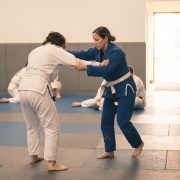
Ask how a beginner’s first session works and whether movements can be practiced slowly. An instructor might demonstrate a movement, guide you through it, then introduce a controlled partner drill. Notice whether each step is explained clearly and whether movements can be adapted to your mobility or stamina.
In-person classes let instructors observe movement and offer immediate guidance; online courses don’t include in-person partner practice. Private lessons can focus on individual goals, while group classes offer practice with partners. If you’re looking at options near Windham, decide whether you prefer a women-only setting or a mixed group.
Instructor and Class Selection
Look for an instructor who explains the purpose of each technique, supervises practice, and welcomes questions about comfort or physical limitations. A useful class teaches movements in stages and doesn’t pressure students to move faster than they can manage. Notice how the instructor responds when someone needs an adjustment.
Self-defense workshops may be held at police departments, community centers, or senior organizations. A workshop can introduce core ideas, while ongoing classes allow for repeated instruction and practice.
For women over 50, compare the learning experience, not just the class label. Ask what beginners practice, how partner drills are supervised, and whether instruction covers leaving a situation safely. If you’re weighing a group class against private lessons, consider whether you learn best through shared practice or individual feedback. A clear explanation of class structure helps you choose training that fits your experience and fitness level.
What are the schedules, locations, and age requirements for local self-defense classes?
Local training options vary by format, schedule, travel needs, and age range. A monthly, two-day hands-on training is one possible workshop format; ongoing classes offer a different rhythm for learning and practice.
When comparing schedules, distinguish a short workshop from a recurring class. A two-day format concentrates instruction into a set block, while regular sessions let you revisit skills over time. Compare the dates and times with your routine, travel time, and preferred pace. A manageable schedule is easier to maintain.
Consider more than the venue’s address. Think about how you’ll get there, how accessible it is, and how much travel time adds to the commitment. A nearby community space may work well for a brief workshop, while a longer course can make travel and regular attendance more important. These details can help you choose a format that fits your life.
Age requirements depend on the class’s intended participants and enrollment rules. Look for a clearly identified adult class rather than assuming a youth program is designed for mature students. For women over 50, the key question is whether the instruction and practice format match adult learners, not whether a class title promises a particular age group.
Before choosing, compare these details:
- Schedule: Is it a monthly workshop, a two-day session, or recurring instruction?
- Location: Can you reach the venue comfortably and attend the full session?
- Age range: Is the class intended for adults, with instruction suited to adult participants?
- Format: Does the session allow time for hands-on practice and instructor feedback?
Use the schedule and age information to narrow your options, then choose a format that leaves room for steady participation. To take a practical first step, explore a free introductory class and experience guided training firsthand.
Renzo Gracie NH
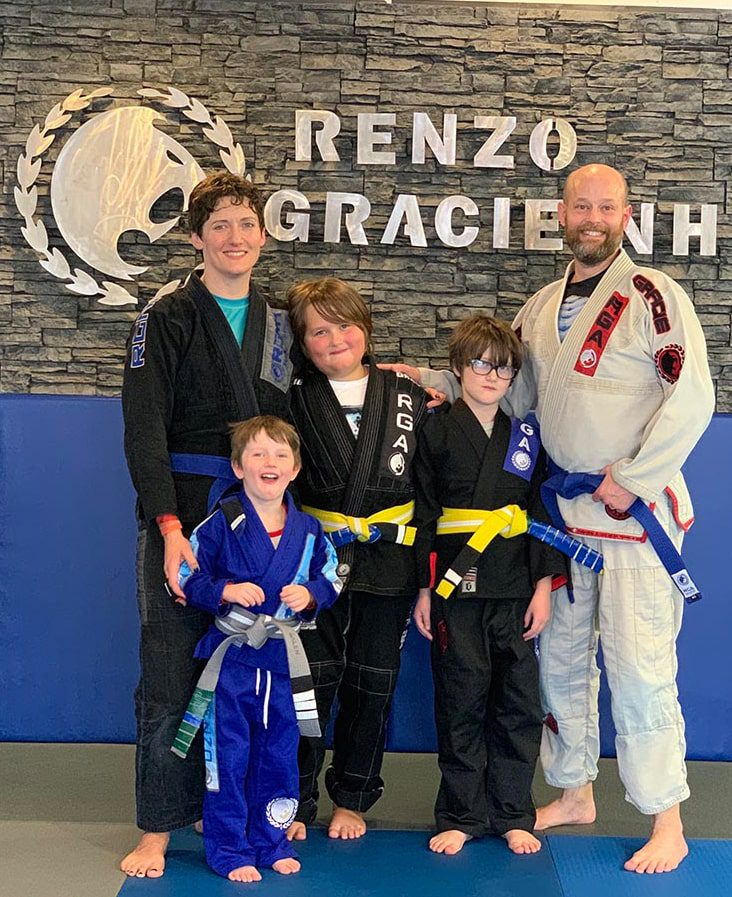
Renzo Gracie NH offers an Adult Jiu Jitsu Program for adults seeking structured martial arts instruction and skills developed through practice. If you’re considering ongoing training after exploring self-defense classes, Jiu Jitsu offers a guided way to keep developing movement, focus, and confidence. It differs from a short workshop, so consider which format better suits your goals. Renzo Gracie NH has locations in Windham, Manchester, and Exeter.
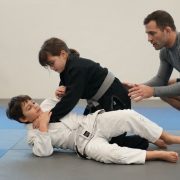
A Free Introductory Class lets you experience instruction before deciding whether ongoing training feels right for you. Renzo Gracie NH also offers a Kids Jiu Jitsu Program and Law Enforcement Jiu-Jitsu Training for different participants and purposes.
To explore whether adult Jiu Jitsu is right for you, contact Renzo Gracie NH and arrange a free introductory class.
Take Your Next Step With Confidence
Choosing self-defense training for women over 50 in Windham is a personal decision, shaped by what you want to practice and how you prefer to learn. Before starting, identify one goal that matters to you, such as feeling more prepared in everyday situations or becoming comfortable practicing movement with a partner. Bring that goal into your first conversation with an instructor. It gives you a practical starting point and helps you discuss what feels comfortable, what you hope to learn, and how you’d like to progress. You can also decide which questions you want answered before stepping onto the mat.
You don’t need every answer before beginning. A thoughtful first step is learning about the training environment and considering whether it suits your goals. With respectful instruction and a pace that works for you, practice can become a steady way to develop skills and confidence. Contact Renzo Gracie NH to explore that next step. Your progress starts with one choice, and you can build from there.
Frequently Asked Questions
What If You Are Being Followed?
If you think someone is following you, move toward a staffed business or another place where people are present and ask for help. Avoid going somewhere isolated or confronting the person. If you face immediate danger, contact emergency services. Once you’re safe, tell someone you trust what happened. Training can help you consider possible responses in advance, so you have options under pressure.
What self-defense classes for women over 50 are available in Windham, New Hampshire?
In Windham, New Hampshire, Renzo Gracie NH offers an Adult Jiu Jitsu Program for adults interested in martial arts instruction. It is not specifically described as a women-over-50 self-defense class. If you’re considering this option, think about whether ongoing Jiu Jitsu training suits your goals and preferred learning style. A Free Introductory Class provides a chance to experience instruction firsthand.
What self-defense classes for women over 50 are available near Manchester and Exeter, New Hampshire?
Renzo Gracie NH serves Windham, Manchester, and Exeter, New Hampshire, with an Adult Jiu Jitsu Program. This is adult martial arts training, not a specifically identified women-over-50 self-defense course. Consider whether you want continuing martial arts practice or a short, focused self-defense workshop. Your preferred location and learning format can help narrow the right next step.
Which martial arts or self-defense styles are suitable for beginners over 50?
No single style suits every beginner over 50. Look for instruction that explains techniques clearly, progresses at a manageable pace, and gives you time to become comfortable with partner practice. Brazilian Jiu Jitsu is one adult martial arts option. Consider your goals and preferences, including whether you want ongoing skill development or a shorter course focused on specific self-defense scenarios.
What safety precautions and fitness modifications do instructors offer for older adults?
Before practice, tell the instructor about movements or activities that concern you. Ask how a drill works and whether you can learn its movements gradually. For example, find out whether an exercise involves floor transitions or partner contact before taking part. Clear explanations and supervised practice help you make an informed decision about participating.